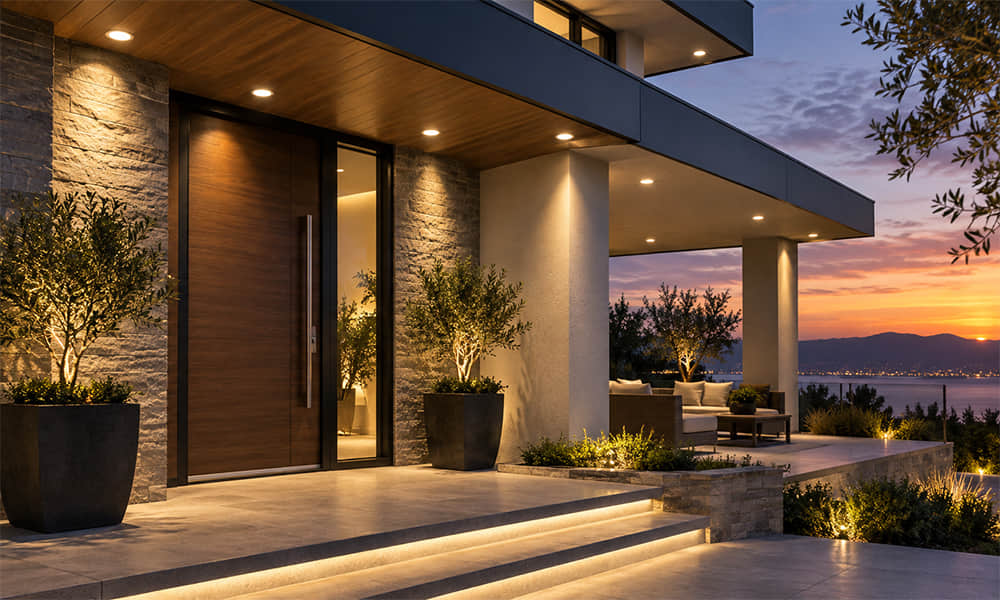
Excellent outdoor landscape lighting is often an exercise in restraint. In high-end architectural and landscape design, the philosophy of "seeing the light, not the fixture" has become the ultimate standard. Among various outdoor fixtures, the LED underground light is arguably the best vehicle for executing this minimalist vision.
However, in actual project installations, we often see disappointing results: light projected onto walls is overly concentrated, forming harsh, isolated "light pillars," or blinding glare strikes pedestrians as they walk by. The core reason for these failures is a lack of systematic understanding of the wall washing effect, combined with poor choices in light distribution and optical lens selection.
This article will break down the underlying technical logic of in-ground wall washing and provide a practical guide, taking you from precise optics selection to flawless on-site installation.
What is the In-Ground Wall Washing Effect?
To truly utilize in-ground lighting effectively, one must first understand the professional concept of "wall washing."
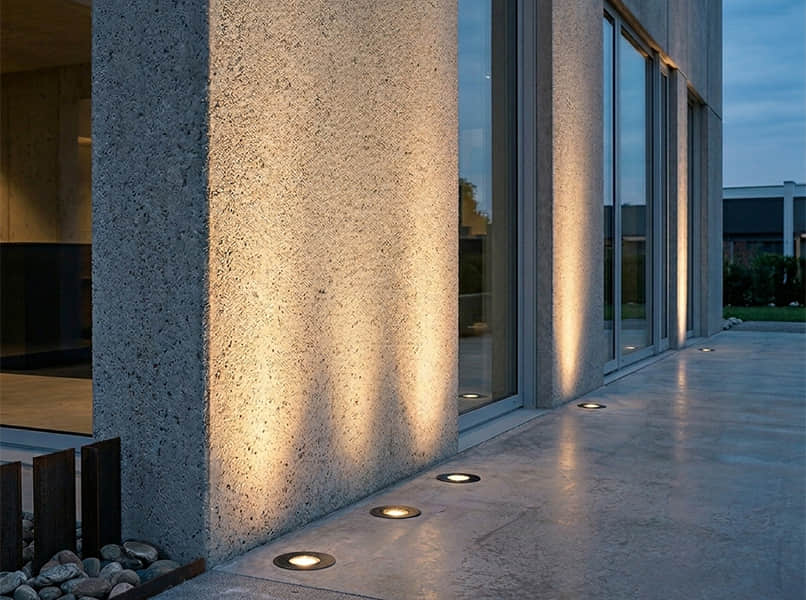
The wall washing effect refers to light flowing evenly and smoothly over a vertical surface, much like water cascading down a wall. In this distribution pattern, the light does not leave abrupt, harsh lines of contrast or glaring central hotspots. Instead, it presents a soft, layered, and continuous gradient. This technique maximizes the visual impact of the illuminated surface's texture—whether it is the rough, historic masonry of a heritage site or the sleek, fine concrete of a modern facade, wall washing brings the material to life.
So, if dedicated linear wall washers already exist, why use LED underground lights to achieve this effect?
This brings us to the irreplaceable nature of the in-ground wall washer in modern architectural lighting. Traditional linear LED wall washers, while providing even light, are often bulky and must be surface-mounted using visible brackets. For historical buildings where architectural preservation is paramount, or for modern structures pursuing extreme minimalism, attaching protruding fixtures to the facade severely disrupts the original design intent.
By utilizing LED underground lights equipped with polarized or precision wide-angle optical designs, and installing them flush with the pavement at a calculated distance from the wall, designers can achieve a flawless bottom-up wash. This approach ensures zero structural damage and zero visual obstruction. It truly returns the physical fixture to the ground while dedicating the pure light and shadow entirely to the architecture.
The optical lenses determines the wall washing effect.
The difference between a mediocre underground light and a professional-grade in-ground wall washer lies almost entirely beneath the protective glass: the optical lens. It is the secondary optical design that acts as the "core engine," directing the raw LED light exactly where it needs to go. Without precision optics, an underground light is merely a glaring hole in the ground.
To achieve that seamless, uniform wash without creating visual discomfort, lighting professionals rely on three fundamental optical strategies:
1. The Physics of Polarized Lenses (Asymmetric Light Distribution)
When illuminating a facade from the ground, standard symmetrical lenses throw a significant portion of light outward, away from the wall, wasting energy and causing severe glare for passersby.
The solution is the polarized lens (or asymmetric lens). Utilizing precise optical refraction principles, these lenses intentionally tilt the light beam at a specific angle (e.g., bending the light 25° towards the wall). This "sweeps" the light directly onto the vertical surface rather than spilling it into the environment.
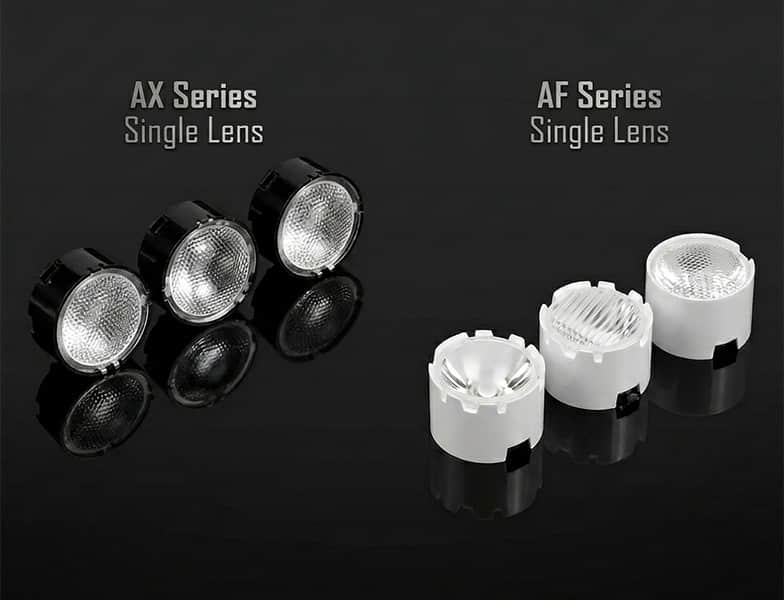
For high-end applications demanding extremely compact fixtures but powerful asymmetric throws, lighting manufacturers often utilize specialized optics. For instance, the Asahi AF Series (22mm) features a wall-washer design that elegantly achieves this tilted distribution. Its compact 22mm footprint allows fixture designers to maintain a minimal surface profile while guaranteeing that the light output is strictly directed toward the architectural target.
2. Selecting the Right Beam Angle for the Task
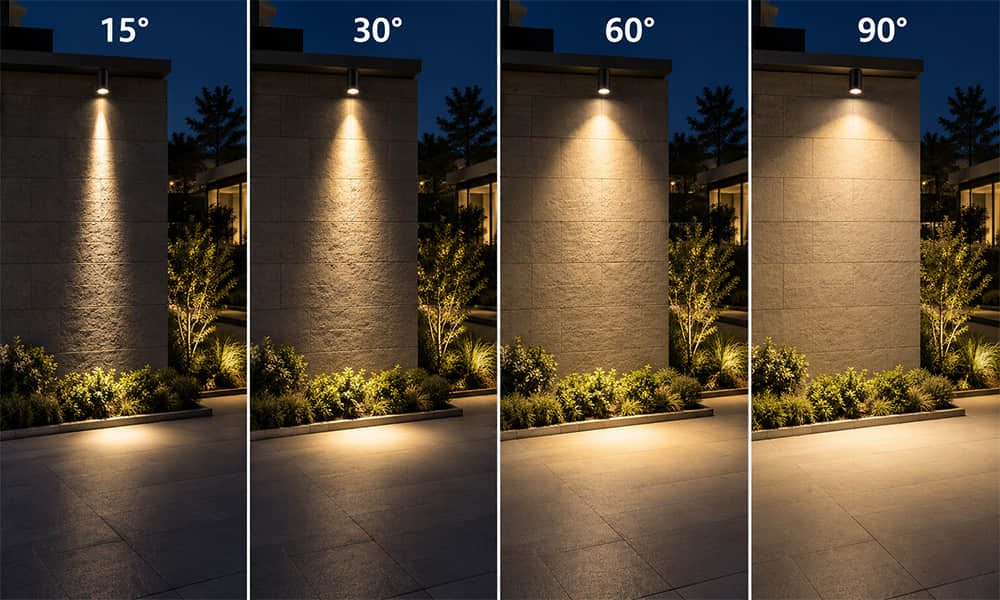
The evenness of a wall wash heavily depends on matching the lens's beam angle to the height and texture of the surface:
-
Narrow Beam (8° - 15°) : Ideal for highlighting specific architectural details, soaring columns, or tall statues, pushing the light high without horizontal spill.
-
Medium Beam (30° - 45°) : The standard choice for washing the general facades of commercial buildings or creating silhouette effects on landscape greenery.
-
Wide or Oval Beam: Best used when a large, expansive surface requires a soft, uniform glow without dramatic focal points.
When a project requires a tightly controlled medium-to-narrow beam in a similarly small form factor, optics like the Asahi AX Series (22mm) provide the necessary precision. Its distribution is perfect for focusing intense, clean light upwards, making it ideal for grazing textured stone walls or highlighting tall landscape elements.
3. Essential Anti-Glare Design
The most common complaint regarding underground lighting is the blinding glare it produces when pedestrians look down or walk near the fixture. Professional optical design mitigates this. High-quality PMMA optical lenses are engineered with micro-structures that mix the light thoroughly, eliminating harsh LED hotspots and ensuring color uniformity. By combining these advanced lenses with deep-recessed LED chips or internal honeycomb louvers, manufacturers can achieve true "dark light" performance, where the illuminated wall is visible, but the light source remains comfortably hidden from normal viewing angles.
How to Choose the Right In-Ground Light for Wall Washing?
Achieving the perfect wall washing effect requires a holistic approach. While the precision lens dictates the light's direction and quality, the physical fixture must be engineered to survive the harshest outdoor environments. When specifying in-ground wall washers for a landscape or architectural project, designers and buyers should evaluate the following critical criteria:
1. Power and Lumen Output (Matching the Height)
The wattage of the fixture must correspond directly to the height of the illuminated surface and the ambient brightness of the surrounding area.
-
6W - 12W: Ideal for low retaining walls, garden steps, or residential facades (1 to 3 meters in height).
-
18W - 24W: The standard choice for single-story commercial buildings and medium-sized landscape structures.
-
36W - 54W+: Reserved for high-rise architectural facades, bridge pillars, and large-scale public monuments where light needs to be pushed high into the night sky.
2. Ingress Protection (IP Rating & Waterproofing)
The absolute biggest enemy of underground lighting is water ingress and internal condensation.
Never compromise on the IP rating. IP67 is the absolute minimum requirement, but IP68 is highly recommended for areas prone to heavy rain or poor drainage. Beyond the rating, look for fixtures that feature a "fully potted" or resin-sealed internal construction. This manufacturing process completely encapsulates the LED board and driver, virtually eliminating the risk of moisture damage.
3. Material Durability and Thermal Management
In-ground lights face constant physical stress from foot traffic, landscaping equipment, and even vehicles, alongside the challenge of dissipating heat while buried in dirt or concrete.
-
Faceplate: Must be constructed from 304 or 316 marine-grade stainless steel to resist rust and corrosion, especially in coastal areas.
-
Lens Cover: Thick, impact-resistant tempered glass is essential for walk-over or drive-over safety.
-
Housing: A robust die-cast aluminum body is crucial for pulling heat away from the LED chip, thereby extending the lifespan and maintaining the lumen output of the fixture.
4. Color Temperature (CCT) and Material Synergy
The color temperature should synergize with the texture and color of the illuminated wall. A warm 3000K works beautifully with natural materials like brick, wood, and historical stone, creating a welcoming and elegant atmosphere. Conversely, a neutral 4000K is preferred for modern structures made of glass, steel, and fair-faced concrete, offering a crisp, clean, and highly contemporary aesthetic.
Three Core Application Scenarios and Optical Solutions
Understanding the technical specifications is only the first step; applying the right fixture and optical configuration to the specific environment is what brings a project to life. Here are three primary application scenarios for in-ground wall washing:
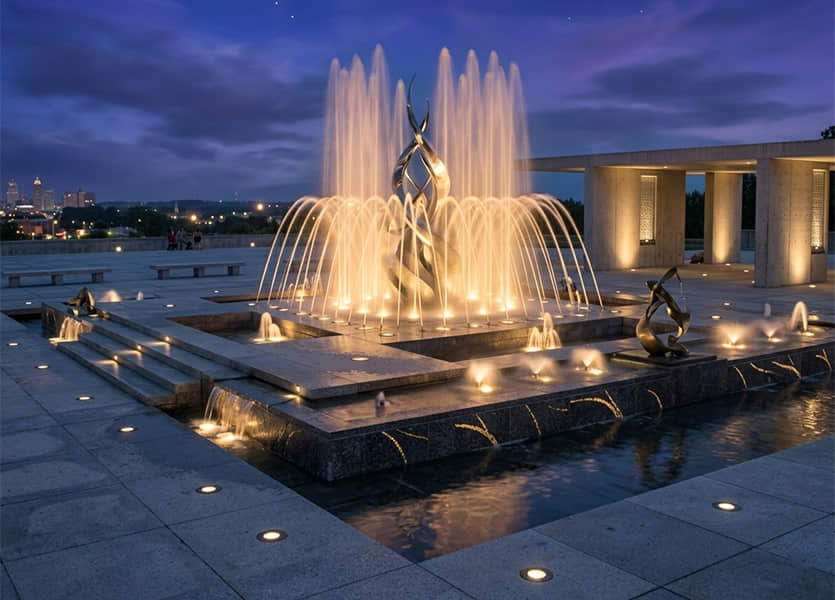
Scenario 1: Architectural Facade Illumination
When illuminating the exterior walls of commercial buildings, museums, or hotels, the goal is to highlight the architectural structure without causing light pollution.
-
Optical Strategy: Use polarized lenses (asymmetric distribution) or medium beam angles (30° - 45°). The light should be directed exclusively onto the facade, reaching the upper levels while keeping the surrounding pedestrian area in comfortable darkness.
-
Design Tip: Spacing is critical. Fixtures should be spaced close enough to ensure the light beams overlap slightly on the wall, creating a continuous wash without dark gaps between fixtures.
Scenario 2: Plazas and Pedestrian Walkways
In public squares or wide pathways, in-ground lights serve a dual purpose: they provide safety and guidance while enhancing the ground-level aesthetic.
-
Optical Strategy: A wide beam angle (60° or more) is preferred here. Rather than shooting light high into the air, a wider beam gently spreads the light across the paving stones or lower retaining walls, creating a safe, clearly defined boundary for pedestrians.
-
Design Tip: For these areas, extreme anti-glare design (such as honeycomb louvers or frosted covers) is mandatory, as pedestrians will frequently look down towards the light source.
Scenario 3: Landscape Greenery and Sculptures
Illuminating trees, tall shrubs, or landscape sculptures requires a more focused approach to bring out the textures of nature or art.
-
Optical Strategy: Utilize narrow beam angles (8° - 15°) or targeted symmetrical lenses like the Asahi AX Series. This focused intensity penetrates the canopy of a tree or grazes the intricate details of a sculpture without the light bleeding outward into the night sky.
-
Design Tip: Positioning the fixture slightly off-center and aiming the light upwards through the branches creates striking, dramatic shadows, adding immense depth to the landscape.
Installation Best Practices and Common Pitfalls
Even the highest quality in-ground light will fail if installed incorrectly. Proper installation ensures both the desired wall-washing effect and the longevity of the fixture.
The Golden Rule of Distance
A frequent question is: "How far from the wall should the in-ground light be installed?" While this depends slightly on the height of the wall and the specific lens angle, a general rule of thumb for standard wall washing is to place the fixture 30 cm to 50 cm away from the wall base.
-
Placing it too close creates an intense, blown-out hot spot at the bottom of the wall, ruining the uniform wash.
-
Placing it too far reduces the intensity of the light reaching the upper portions of the facade and increases the risk of glare for people walking between the light and the wall.
Crucial Installation Tips to Avoid Failure
-
The Drainage Foundation is Vital: Never bury an in-ground light directly in soil. You must excavate at least 20-30 cm below the fixture and fill the space with crushed gravel. This creates a drainage layer that prevents the fixture from sitting in pooled rainwater.
-
Utilize the Pre-Installation Sleeve: Always use the provided plastic or metal pre-burial sleeve. This sleeve acts as a protective barrier against concrete expansion during installation and provides a clean housing that allows the fixture to be easily removed for future maintenance.
-
Cable Sealing: The most common point of water entry is not the glass face, but the cable entry point at the bottom. Ensure all underground wiring connections are sealed using IP68 waterproof junction boxes or resin-filled splice kits.
Conclusion: The Perfect Wash Requires Precision and Planning
Achieving the perfect in-ground wall washing effect is a delicate balance between architectural vision, optical physics, and rigorous engineering. As we have explored, it is not simply about burying a luminaire in the ground; it is about manipulating light to graze a surface flawlessly without causing visual discomfort.
The success of a landscape lighting project heavily relies on the "core engine" of the fixture—the secondary optical lens. Whether utilizing the precise asymmetric throw of a polarized lens or the focused intensity of a symmetrical architectural lens, specifying high-quality optical components (such as those from Asahi Optics) is the critical first step. When this optical precision is combined with robust waterproofing (IP67/IP68), optimal thermal management, and meticulous installation practices—especially regarding drainage and wall-to-fixture distance—the result is a stunning, long-lasting illumination that elevates the nighttime aesthetic of any architecture.
By prioritizing these technical details, lighting designers and contractors can successfully transform the ground beneath our feet into the ultimate canvas for architectural light and shadow.
FAQ: Common Questions About In-Ground Wall Washing
Q: Why is my in-ground wall washing effect uneven, with noticeable dark spots between the lights
A: This issue is typically caused by improper fixture spacing or selecting a lens with an incorrect beam angle. To achieve a seamless wash, the distance between the fixtures must allow the light beams to overlap slightly on the wall. If the fixtures are placed too far apart for their specific beam angle, dark gaps will appear.
Q: Can in-ground wall washers be installed in driveways or areas with vehicle traffic
A: Yes, but you must select fixtures specifically rated for "drive-over" applications. These fixtures feature heavy-duty, thickened tempered glass, reinforced die-cast aluminum or stainless steel housings, and strict IP67/IP68 waterproof ratings. Standard walk-over lights will crack under the weight of a vehicle.
Q: Can I achieve a professional wall wash effect using RGBW color-changing in-ground lights
A: Absolutely. The key is the optics. As long as the RGBW LED chips are paired with high-quality polarized or asymmetric lenses that ensure proper color mixing, you can achieve a vibrant, uniform color wash. This is highly popular for dynamic facade lighting, theme parks, and holiday displays.