Outdoor areas serve as the vibrant hubs of urban life, fostering social interaction, cultural events, and community engagement long after sunset. Whether it is a bustling shopping mall parking lot, a university campus, or a public town square, proper lighting plays a crucial role in ensuring these spaces remain accessible and inviting. However, creating a well-lit environment is an engineering challenge that goes far beyond simply installing bright lamps.
For urban planners and lighting designers, the goal is to balance Lumen Output with Visual Comfort. A typical area lighting project might involve mounting fixtures at heights of 15 to 30 feet, requiring powerful outputs ranging from 10,000 to over 50,000 lumens. Yet, without sophisticated control, this raw power can result in blinding glare or light pollution. True mastery of area lighting lies in the intersection of efficient LED fixtures and precise optical design, ensuring that wide beam spreads (typically 90°-140°) are distributed uniformly across the ground. In this guide, we will explore how high-performance LED lenses transform simple floodlights into intelligent area lighting solutions that enhance safety, aesthetics, and operational flexibility.
The Evolution of Area Light Fixtures
For decades, the standard for illuminating large outdoor spaces was the metal halide (MH) lamp. While effective, they were plagued by high energy consumption, slow start-up times, and rapid lumen depreciation. Today, LED lighting serves as an energy-efficient, eco-friendly, and cost-effective replacement for these traditional sources. But the transition to LED is not just about changing the bulb; it is about reimagining the entire fixture architecture.
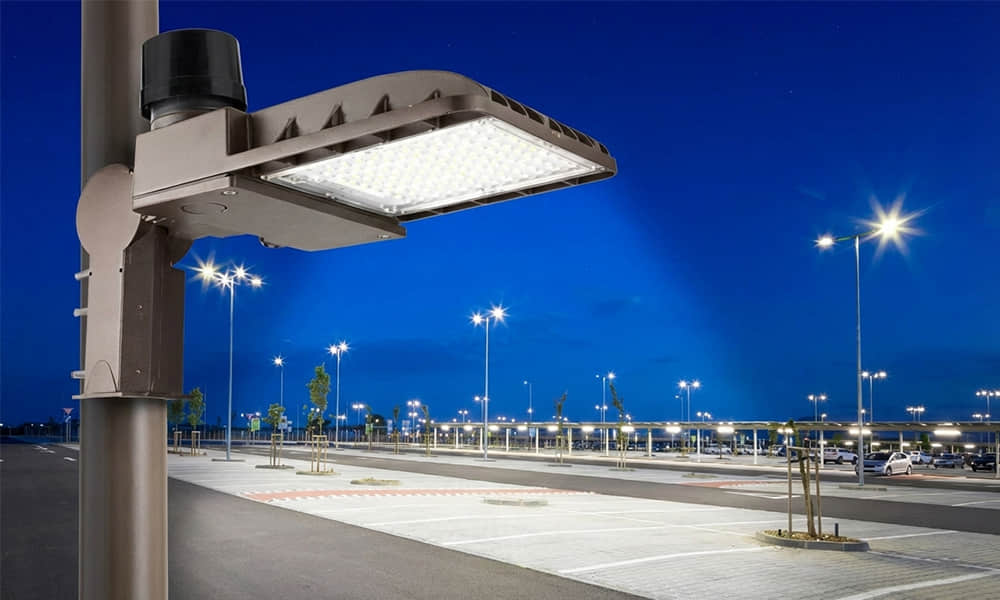
For infrastructure projects requiring wide-area illumination with uniform light distribution, modern LED floodlights and "Shoebox" lights are the recommended solution. These fixtures are engineered systems designed to maximize the potential of the LED source through two key innovations: modular thermal design and smart connectivity.
Modular Housing & Thermal Management
In the past, higher wattage meant a physically larger bulb. In the LED era, higher wattage means more heat. A premium area light fixture features a housing made of high-pressure die-cast aluminum with integrated fins. These fins are critical for air convection, keeping the LED junction temperature low to ensure a 50,000+ hour lifespan.
More importantly, the industry is shifting towards Modular Design. Instead of creating a unique housing for every power level, manufacturers use standardized LED modules (often paired with IP66 waterproof LED optics) that can be combined. For example, a 100W fixture might use two modules, while a 300W fixture uses six. This scalability reduces tooling costs for manufacturers and allows for easier maintenance.
Smart Control Readiness (NEMA & Zhaga)
Modern area lighting is part of the Internet of Things (IoT). High-quality fixtures now come equipped with standard NEMA (7-pin) or Zhaga sockets on the top surface. This allows for the integration of photocells (for dusk-to-dawn operation) or motion sensors.
While controls handle when the light turns on, the optics handle how the light behaves when dimmed. A superior optical design ensures that even when a parking lot light is dimmed to 30% for energy savings, the beam pattern remains stable and uniform, maintaining security without the full energy cost.
The Role of Optics in Fixture Versatility
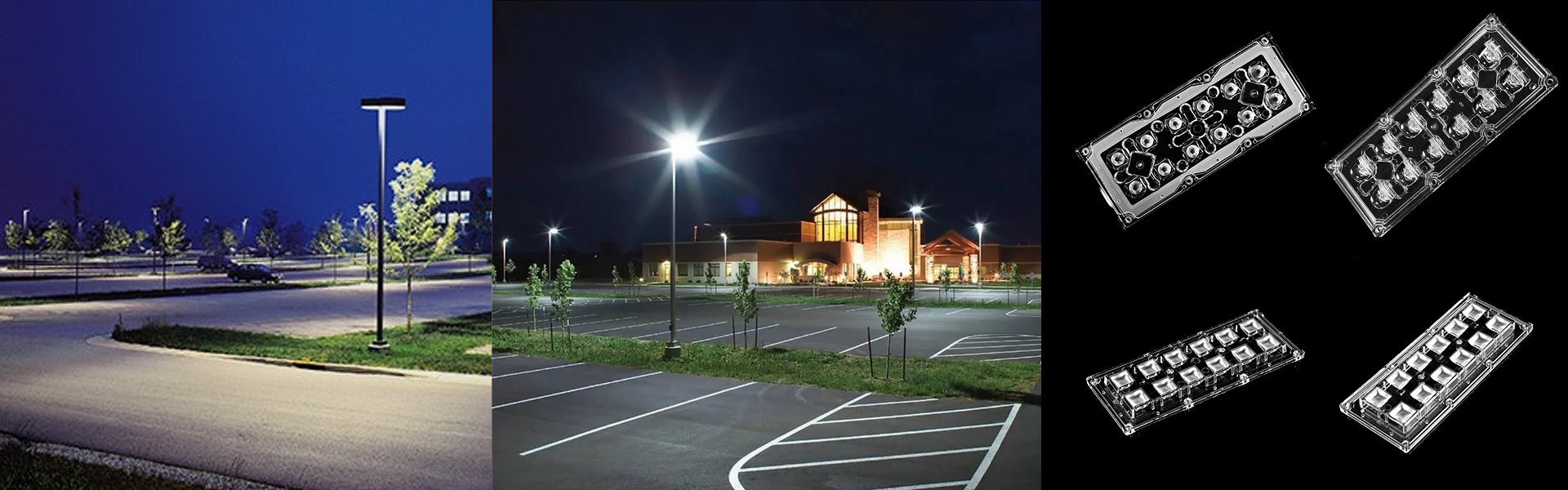
LEDs have revolutionised outdoor lighting with their high efficiency and long life. However, without sophisticated optics, even the best LEDs will underperform—scattering light into the sky or creating "hot spots" on the ground. This is where LED lenses make the difference, transforming a raw light source into a precise tool.
In area lighting, the choice of lens is often dictated by the Mounting Method (e.g., Slip Fitter vs. Rigid Arm) and the fixture's location relative to the target area. Asahi Optics offers specialized solutions for both scenarios using our high-transmittance (>88%) PC materials.
Symmetrical Beam Angles (60° & 90°) for Central Illumination
When a fixture is mounted on a high mast or equipped with an adjustable Slip Fitter, it can be physically tilted to aim at the target. In these cases, Symmetrical Beam Angles are the ideal choice. They project a uniform, circular or square pattern that is perfect for lighting up large, open spaces like public plazas or sports courts from a central point.
-
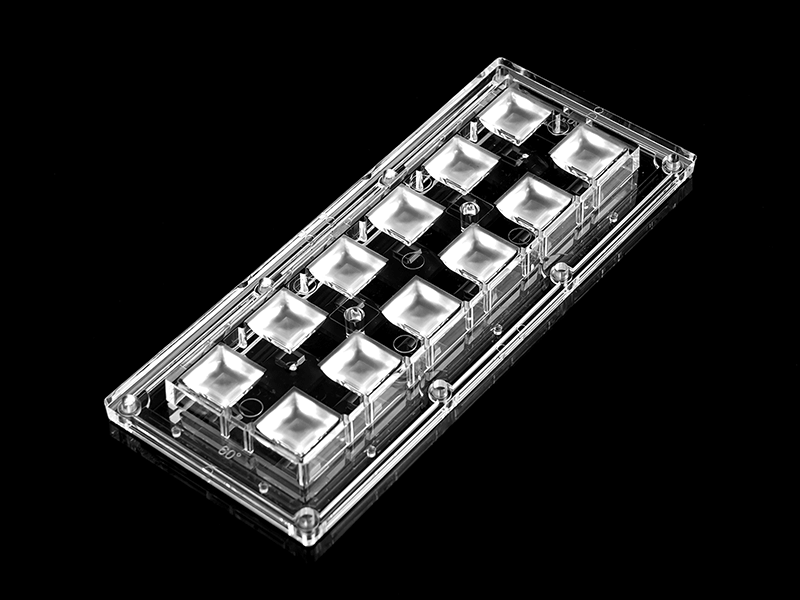
Model ALHB173D12LED60G (60°): A narrower beam for higher mounting heights (25-30ft+), punching light down to the ground with intensity.
-
Model ALHB173D12LED90G (90°): A wider flood beam for general coverage at medium heights.
These lenses are often found in our Sport Stadium Lighting Lens series, where high-intensity, focused illumination is required to ensure visibility without wasting light on the surrounding neighborhood.
Asymmetrical "Forward Throw" (Type IV/V) for Perimeters
For parking lots and streets, fixtures are often installed on Rigid Arm Mounts (Shoebox style) that point straight down to reduce wind load and uplight. Since the fixture cannot be tilted, the Lens must do the work of "throwing" the light forward.
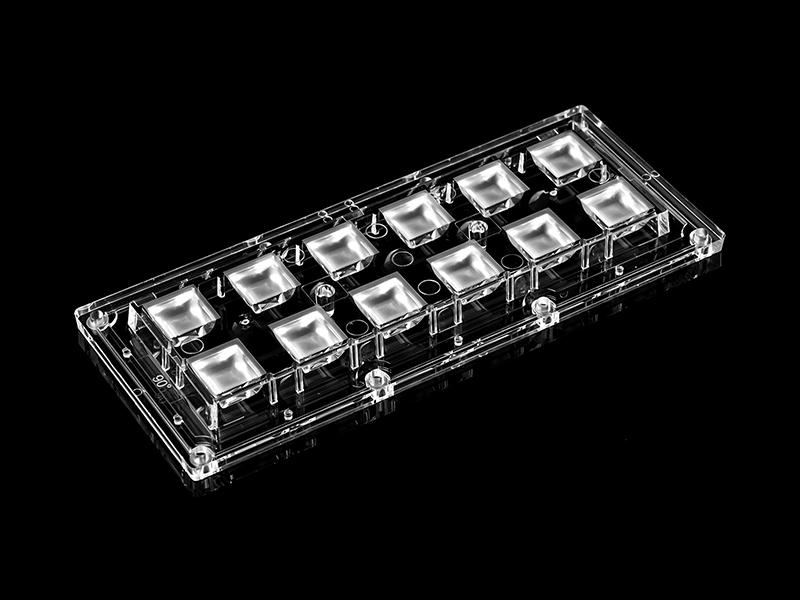
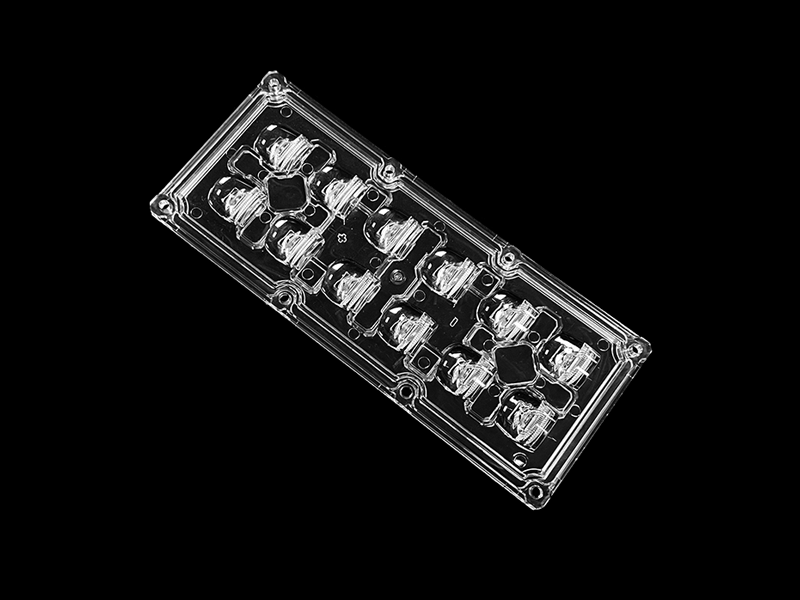
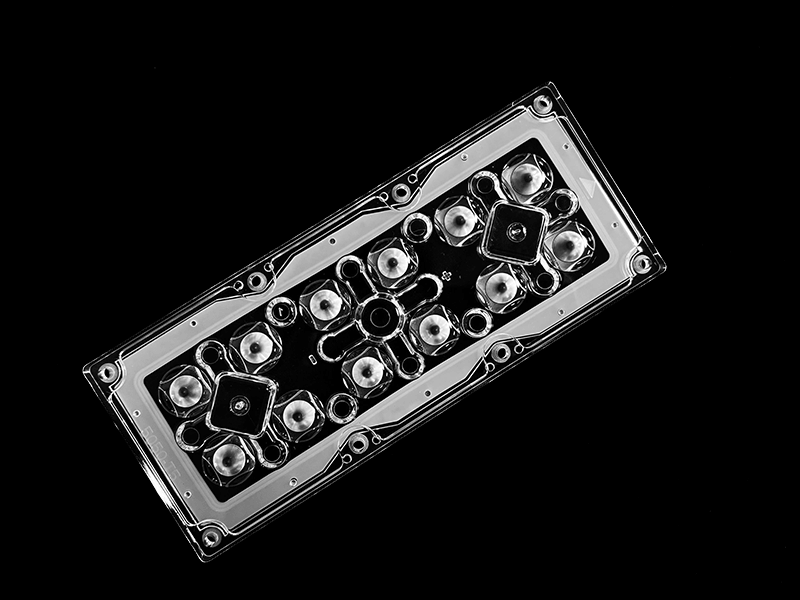
This is where Asymmetrical Lenses like the lP66 2x6 lens 173mm series excel. They use sophisticated free-form surfaces to push light away from the pole, covering a wide area in front of the fixture while cutting off light behind it (Backlight Shielding).
-
Type IV (Model AJST173D12LEDT4B): Known as "Forward Throw," this optic is crucial for perimeter lighting. It throws a semicircular pattern forward, making it perfect for the edges of parking lots where you don't want to trespass light onto adjacent properties.
-
Type V (Model AJST173D12LEDT5): Provides a wider, square-like distribution (e.g., 140° spread) for the center of parking aisles, ensuring overlapping coverage between widely spaced poles.
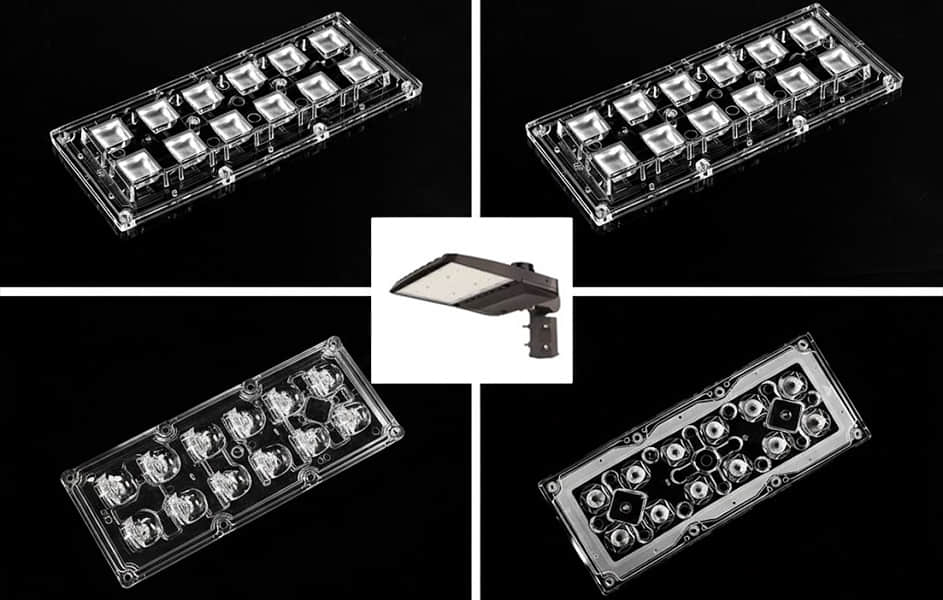
For detailed specifications on these distribution patterns, please refer to our Street And Area Lighting Lens catalog.
The Advantage of TIR Structure
Unlike traditional aluminum reflectors which only control about 60% of the light, our lenses utilize TIR (Total Internal Reflection) technology.
-
Efficiency: The smooth TIR structure captures virtually every photon from the LED source, achieving a transmittance rate of >88%.
-
Maintenance: The solid optical surface reduces dust accumulation compared to exposed LED arrays.
-
Durability: Made from PC materials that pass the IK08 test, these lenses are scratch, UV, and impact resistant, ensuring they maintain their integrity and appearance for many years in harsh outdoor environments.
Conclusion
Mastering area lighting is about more than just lumen output; it is about precision control. By incorporating energy-efficient LEDs with strategically engineered optics, urban planners can promote nighttime usability, deter crime, and encourage extended public use.
The difference between a standard floodlight and a professional area lighting solution lies in the details of the lens. Whether using a symmetrical 60° beam for high-mast applications or an asymmetrical Type IV (T4B) forward throw for parking lots, the goal remains the same: to deliver uniform light exactly where it is needed while minimizing waste. With robust features like IP66 waterproofing, IK08 impact resistance, and high-efficiency TIR structures, modern optical lenses ensure that outdoor lighting systems are as resilient as they are effective, maintaining performance in the face of environmental challenges.