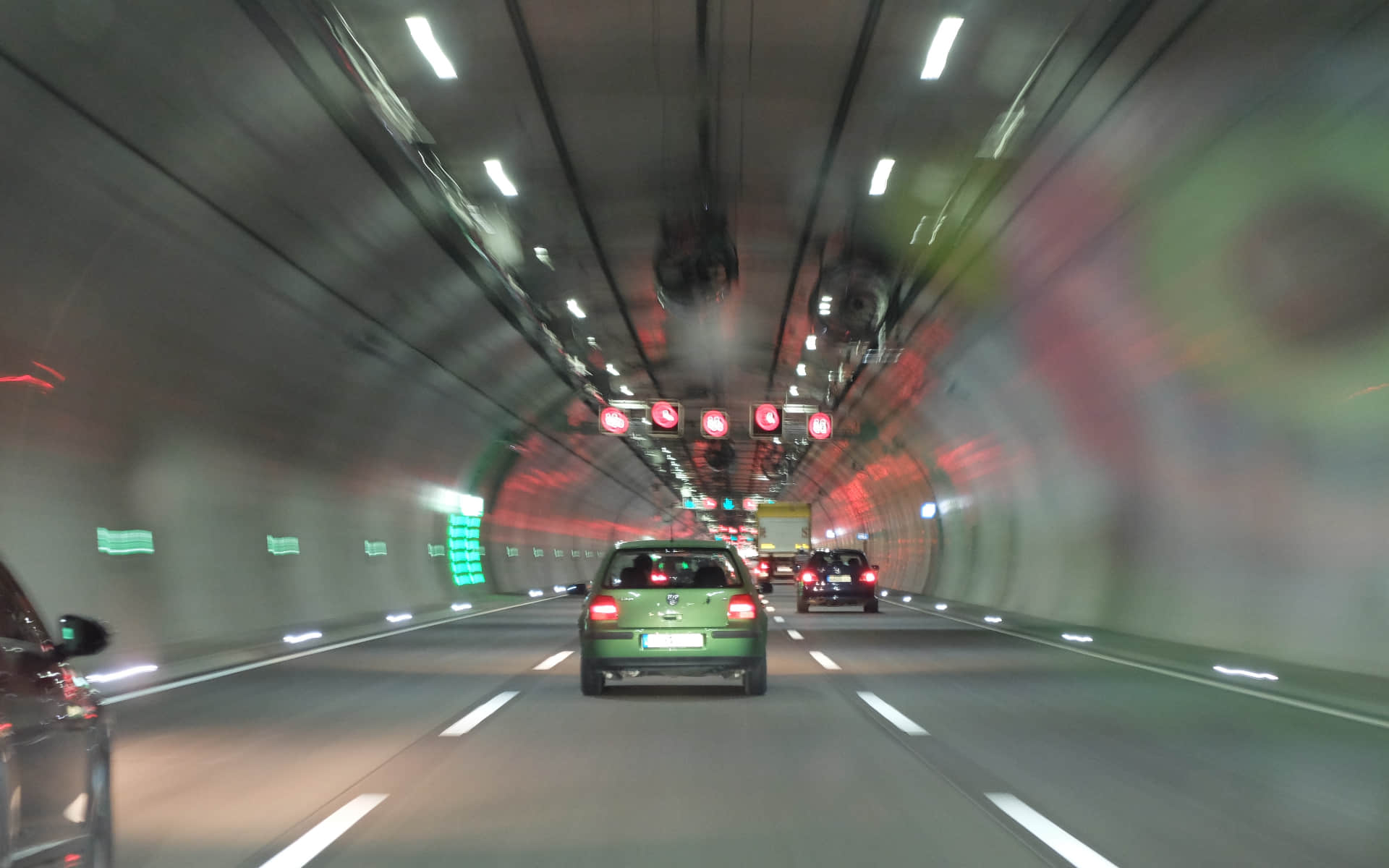
For lighting engineers and fixture manufacturers, tunnel illumination is not merely about brightening a dark road; it is universally recognized as the ultimate optical challenge. When a driver approaches a tunnel entrance at highway speeds on a bright, sunny day, their eyes face a severe physiological crisis known as the Black Hole Effect. The sudden plunge from brilliant daylight into an enclosed structure can render a driver momentarily blind, making it impossible to spot obstacles, debris, or braking vehicles ahead. Conversely, speeding out of the tunnel triggers the equally blinding White Hole Effect.
Therefore, the core mission of tunnel lighting transcends simple illumination. It is a matter of absolute life safety. The ultimate goal is to ensure seamless visual continuity, completely eliminate hazardous blind spots, and create a safe visual corridor that allows the human eye to adapt smoothly and securely at 100 kilometers per hour.
The 5 Critical Zones of Tunnel Illumination
The fundamental crisis of tunnel driving is biological. The human pupil requires several seconds to dilate or constrict when moving between extreme brightness and darkness. However, a vehicle traveling at 100 km/h covers nearly 30 meters in a single second. This dangerous mismatch between biological adaptation time and vehicle speed causes the blinding Black Hole and White Hole effects, leading to fatal rear-end collisions and driver panic.
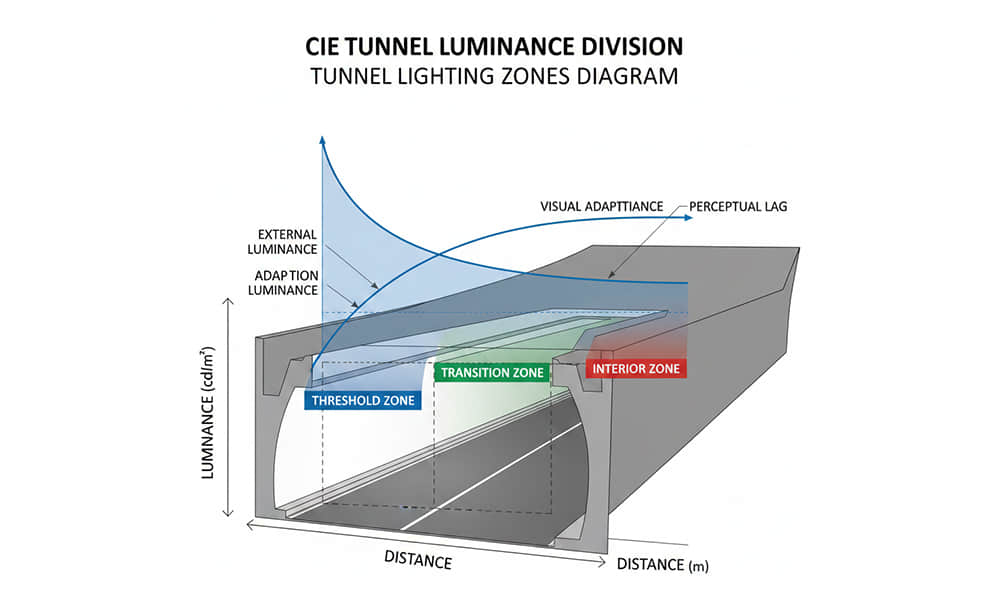
To eliminate this risk, lighting engineers do not use a single brightness level. Instead, they artificially manipulate the light environment to perfectly match the human eye's adaptation curve. According to CIE (International Commission on Illumination) standards, a tunnel must be divided into five precise luminance zones:
-
Threshold Zone: This is the crucial first step. To completely shatter the Black Hole Effect, this zone blasts the entrance with exceptionally high luminance, allowing the driver to see deep into the tunnel before entering it.
-
Transition Zone: Once inside, the eye begins to adjust. Here, the lighting levels are stepped down gradually in a smooth gradient. A sudden drop would cause temporary blindness; a slow transition ensures continuous visual tracking.
-
Interior Zone: This is the longest stretch of the tunnel. The brightness drops to its lowest, constant baseline. Here, the primary optical focus shifts away from raw brightness and entirely toward extreme uniformity and glare prevention.
-
Exit Zone: Approaching the end, the driver faces the blinding glare of natural daylight (the White Hole). The lighting must aggressively ramp back up to shrink the driver's pupils before they break out into the sun, providing a critical visual buffer.
-
Connecting Road: Finally, the external road lighting must seamlessly blend with the tunnel's exit, preventing a secondary visual shock during nighttime driving.
Core Optical Design Pain Points
Even if a tunnel is divided into the correct zones, the actual design of the luminaires presents brutal optical challenges. Merely packing more LEDs into a fixture does not equal safety; in fact, poor optical control creates deadly hazards.
1. Glare Control
Tunnels suffer from severe height restrictions, often with ceilings lower than 5 meters. If the light from the fixture hits the driver's windshield directly, it causes Disability Glare—scattering light inside the eye, reducing contrast, and blinding the driver to obstacles.
2. Uniformity
If fixtures project narrow, focused pools of light, the road becomes a rapid succession of bright spots and dark gaps. At highway speeds, driving through this alternating pattern creates a strobe-like Zebra Effect (or flicker effect). This repetitive flashing induces severe driver fatigue, visual hypnosis, and nausea.
3. Color Rendering (CRI) and Color Temperature (CCT) in Smog
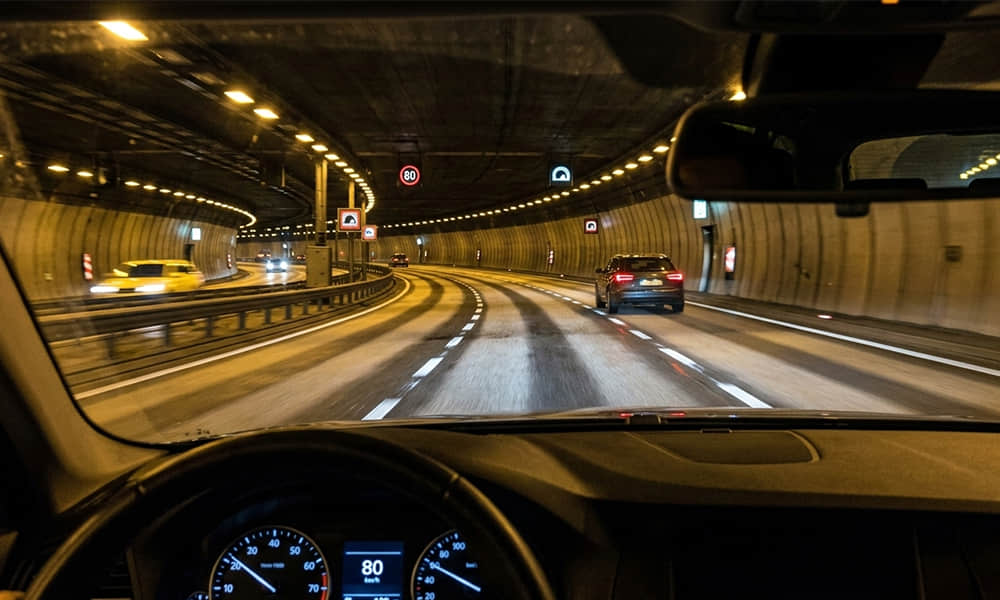
The air inside a tunnel is heavily polluted with exhaust fumes, micro-particulates, and dust. Under poor lighting, this smog washes out colors, making a piece of dark tire debris indistinguishable from the gray asphalt, or delaying the recognition of red brake lights. Maintaining a stable CCT (typically around 4000K to 5000K) and high CRI ensures sharp contrast. High-transmittance optical lenses are required to punch through the particulate matter without color shifting, ensuring drivers instantly recognize hazards.
Hardware Survival in Extreme Environments
While optical precision prevents accidents, the sheer durability of the lighting fixture prevents catastrophic maintenance failures. Tunnels are incredibly hostile environments; they are essentially concrete tubes filled with corrosive chemicals, extreme temperatures, and relentless moisture. A flawless optical design on a computer screen means nothing if the physical lens degrades within months of installation.
1. The Assault of Corrosion and Cleaning
Tunnel fixtures face a constant bombardment from acidic vehicle exhaust fumes, trapped humidity, and, in colder climates, aerosolized road salt (de-icing chemicals). Furthermore, maintenance crews regularly blast the tunnel walls and fixtures with high-pressure water jets and aggressive detergents to remove accumulated soot. To survive this, the optical lenses cannot be fragile or porous. They must offer exceptional chemical resistance and integrate seamlessly with IP66+ fixture housings to maintain a watertight seal.
2. The Zero-Maintenance Mandate
The cost of replacing a failed street light is minimal. The cost of replacing a failed tunnel light is astronomical, often requiring partial or full lane closures, rerouting highway traffic, and deploying specialized high-lift equipment. Therefore, tunnel operators demand zero-maintenance solutions. The optical lenses must guarantee long-term performance without yellowing (UV degradation from the LEDs themselves) or losing transmittance over a decade or more.
To conquer these extreme conditions, ordinary plastics are insufficient. Lighting manufacturers must turn to advanced, engineering-grade polymers. This is exactly where the strategic material selection of high-performance Polycarbonate (PC) —specifically engineered for brutal outdoor and industrial applications—becomes the defining factor between a fixture that fails and a fixture that endures.
The Asahi Optics Solution
To build a tunnel luminaire that survives the harsh reality of the environment while delivering flawless visual safety, manufacturers must start at the core: the optical engine. Solving the dual crisis of optical precision and physical degradation requires a highly specialized approach to both material science and beam control.
1. The Material Mandate
Addressing the zero-maintenance requirement in a highly corrosive, high-temperature concrete tube means standard plastics are obsolete. For our high-performance tunnel and parking area optics, Asahi Optics strictly utilizes premium optical-grade polycarbonate (PC) , specifically TEIJIN PC-1250Z and IDEMITSU TARFLON PC-LEV2200.
These specific PC resins are chosen to solve the tunnel environment's exact pain points. They offer exceptional thermal stability, preventing the lens from warping or yellowing under the continuous 24/7 heat load of high-power LEDs. Furthermore, their extreme mechanical toughness acts as a protective shield, allowing the final lighting fixture to easily achieve stringent IK08 or IK10 impact resistance standards, effectively surviving flying debris and the brutal force of high-pressure maintenance washing.
2. The Optical Execution: Taming the Beam
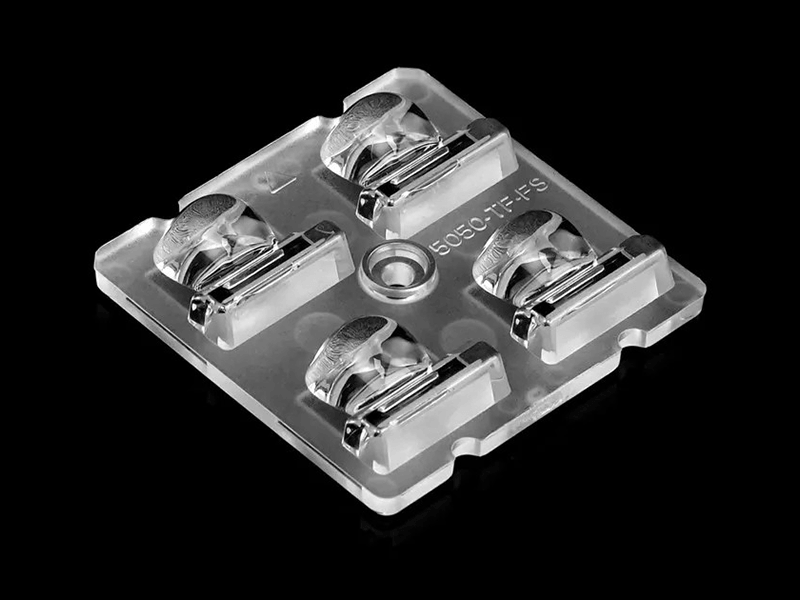
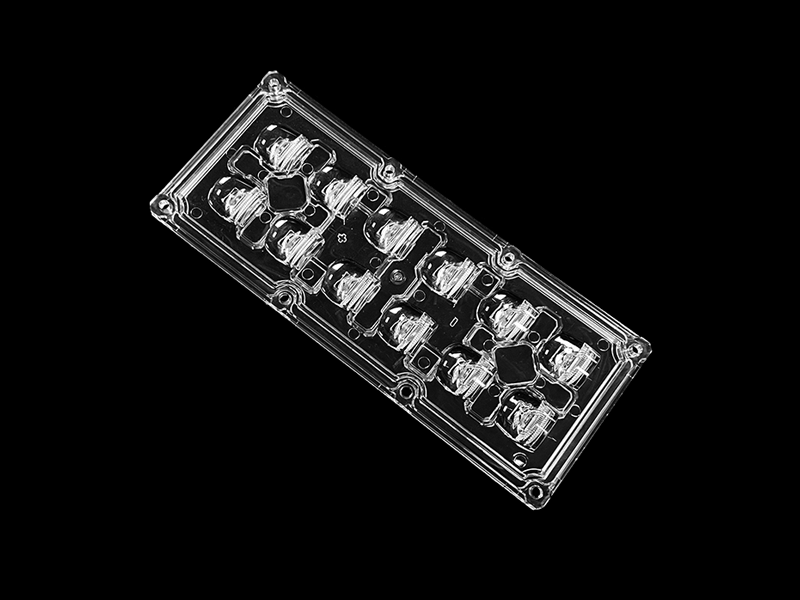
However, a durable lens is useless if it creates glare. In tunnel applications—where fixtures are often wall-mounted or installed on very low ceilings—using standard symmetrical lenses is dangerous. Symmetrical light bounces off the ceiling (wasting energy) and shines directly into the driver's windshield (causing disability glare).
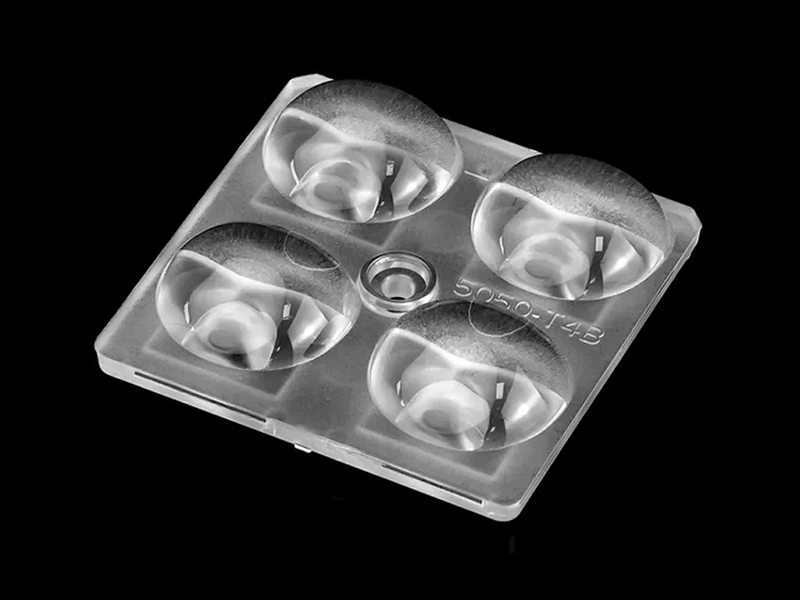
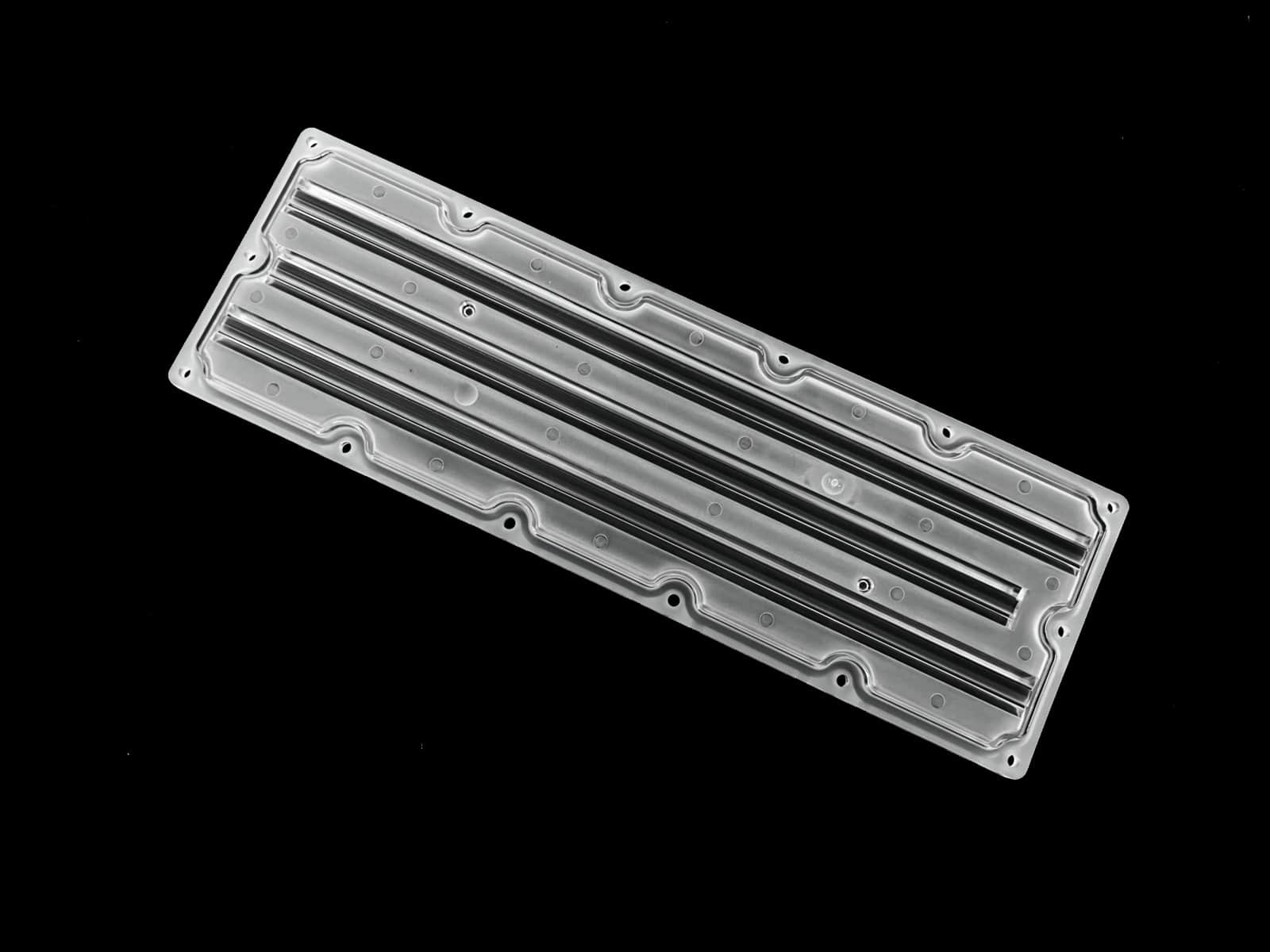
A prime example of this problem-solving geometry is the Asahi ALST50D4LED5050T4B, a highly specialized Type IV 5050LED High Power Lens.
Designed as a compact 2x2 array (50x50mm footprint, 9.49mm height) and boasting a transmittance of >90%, this lens is engineered to maximize the efficacy of high-lumen 5050 LED packages. The critical feature is its T4-Very Short beam angle. This asymmetric optic acts like a precision blade. It drastically cuts off high-angle light to completely eliminate upward light spill and direct glare. Instead, it pushes the intense LED output down and forward, spreading it smoothly along the longitudinal axis of the road and the lower tunnel walls.
When integrated into professional tunnel fixtures, this precise forward-throw distribution is what allows manufacturers to meet strict CIE luminance standards. By projecting light perfectly forward, it seamlessly bridges the gap between fixtures, successfully erasing the dangerous Zebra Effect and maintaining a perfectly uniform, unbroken visual corridor for the driver.
Trends in Energy Savings & Smart Control

While ensuring driver safety is the absolute priority, tunnel operators and municipalities face a secondary, massive challenge: energy consumption. Because the Threshold and Transition zones require immense luminance to combat the Black Hole Effect during peak daylight, tunnels are notorious energy sinks.
The modern solution lies in the integration of Adaptive Dimming Systems and high-efficiency optical networks. Exterior luminance sensors continuously monitor the ambient sunlight. On a heavily overcast day, the system automatically dims the entrance lighting, as the visual shock for the driver is significantly reduced compared to a bright, cloudless afternoon.
However, smart control systems are only as effective as the optics they command. This is where the sheer optical efficiency of the lens becomes a vital economic asset. When lighting manufacturers utilize premium PC lenses—like those achieving >90% transmittance—less raw LED power is required to hit the strict luminance targets of the road surface. By eliminating wasted upward light through precise asymmetric distributions (like Type IV), every watt of energy is utilized. In a tunnel containing thousands of fixtures operating 24/7, this high optical efficiency translates to massive reductions in Operating Expenses (OPEX) and directly supports global carbon neutrality initiatives.
Conclusion
Ultimately, tunnel illumination is the most unforgiving application in the outdoor lighting industry. It is a space where poor design does not merely result in a dark road; it results in visual disorientation, fatigue, and fatal accidents.
The key to tunnel lighting is the LED optical lens. It is not just a piece of plastic; it is the critical bridge between raw LED power and human safety. By merging engineering-grade Polycarbonate materials with masterful, asymmetric light distributions, lighting manufacturers can move beyond merely making lights. Together, we engineer a flawless, unbroken visual corridor that guides drivers safely through the dark.