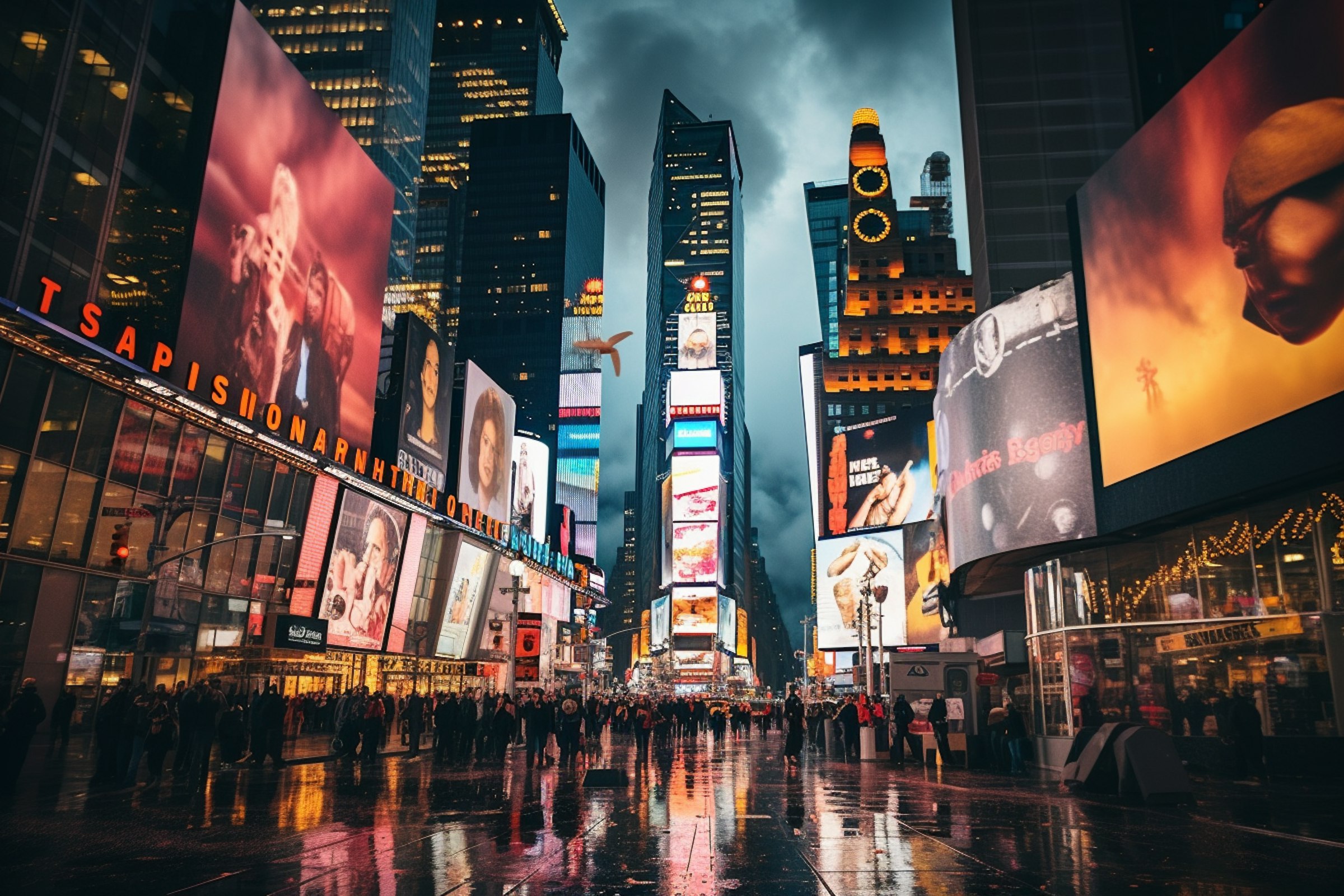
When we think of billboards, we often picture massive signs towering over highways. However, in today's urban landscape, the most high-value advertising spaces are much closer to the consumer: the sleek, backlit AD light boxes lining subway corridors, airport terminals, and high-end retail stores.
For these indoor and semi-outdoor applications, visual perfection is non-negotiable. Brands invest heavily in high-resolution graphics, but this investment is instantly undermined if the illumination behind the canvas is flawed. If a light box suffers from harsh LED hotspots or dark zebra stripes, the premium brand image is instantly compromised.
The secret to a flawless, captivating display does not lie solely in the LED chip or the printed fabric. The true deciding factor is the microscopic optical control mounted directly above the light source: the TV Backlight Lens.
These specialized lenses are the invisible engines of modern signage and panel lights. Designed to sit just behind the display surface, their primary job is to powerfully diffuse and evenly distribute light across the entire screen.
Thin Profiles vs. Uniform Illumination
The commercial display market is driven by aesthetics, and the undisputed trend across the industry is the demand for ultra-thin profiles. Whether it is a sleek menu board or a large-scale promotional display, designers want fixtures as unobtrusive as possible. However, this push for slimmer designs introduces a massive optical dilemma centered around Optical Distance.
The Physics of the Hotspot
In a traditional deep light box, light has space to travel and spread out. Light cones from adjacent LEDs overlap and blend before hitting the front screen, resulting in a smooth, even glow.
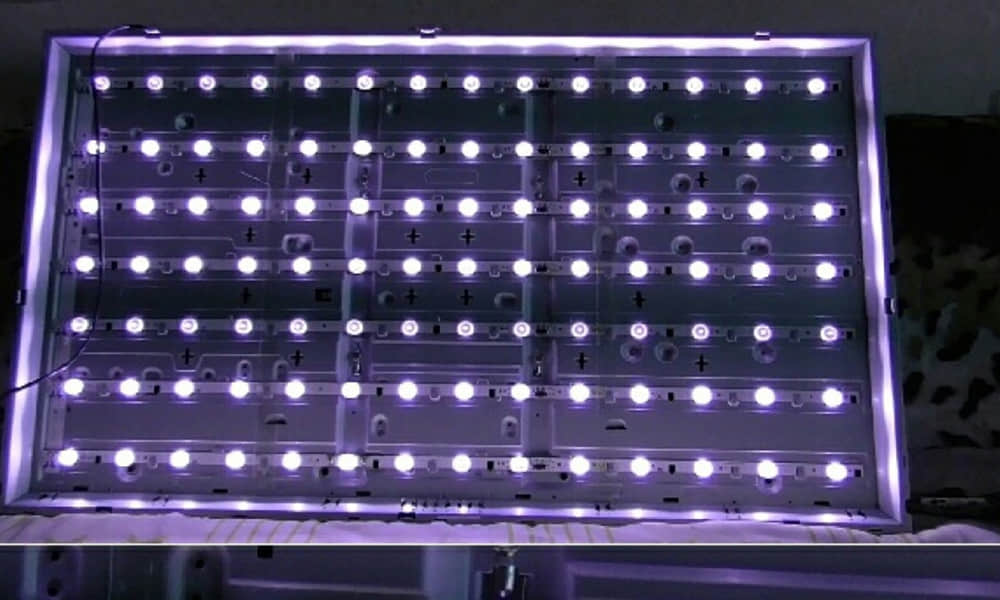
When manufacturers compress the depth, they shrink this optical cavity. Light hits the front fabric almost immediately, creating intense localized bright spots above each LED—hotspots—surrounded by dark shadows. This uneven illumination looks cheap and damages the visual impact.

The Flawed Brute Force Solution
To eliminate hotspots without advanced optics, a manufacturer might pack LEDs closer together. This creates three new problems:
-
Skyrocketing Costs: Doubling the number of LED chips drastically increases the Bill of Materials.
-
Thermal Nightmares: High-density LEDs in an enclosed space generate excessive heat, warping panels and degrading graphics.
-
Energy Inefficiency: It consumes far more energy than necessary.
The only sustainable, cost-effective solution is to manipulate the light itself with optics capable of taking a standard LED beam and forcefully stretching it horizontally.
How TV Backlight Lenses Work
To solve the dilemma of ultra-thin profiles, optical engineers developed the TV Backlight Lens. Positioned directly over the LED chip, this lens acts as a sophisticated light manipulator. Instead of allowing the LED to emit its natural forward-facing cone, the lens utilizes complex internal reflection and refraction micro-structures.
Its primary function is to suppress intense light radiating upwards and aggressively bend it outwards, parallel to the backplate. By transforming a standard LED beam into an ultra-wide 160° distribution curve, the lens forces light to travel laterally, diffusing evenly across the screen surface.
This extreme widening is the secret to perfect uniformity in shallow cavities. Because the light spreads so broadly, beams from adjacent LEDs overlap and mix beautifully before reaching the front canvas, completely erasing harsh central hotspots and filling dark gaps between LEDs.

Asahi's ATV Series for AD Boards
Understanding this critical need for precision diffusion, Asahi Optics has developed the ATV Series, a portfolio of specialized TV Backlight Lenses engineered for AD light boxes, light bars, and ultra-thin panel lights. Our solutions allow signage manufacturers to achieve maximum uniformity while reducing the total number of LEDs required.
Two flagship models illustrate this capability: the ATVH57-64-46W and the ATV16D22X.
1. Ultra-Compact Form Factors for Extreme Thinness
Both models boast incredibly small footprints, making them ideal for high-density light bars and exceptionally slim AD boards. These micro-dimensions allow integration into the slimmest enclosures without pressing against the front display fabric.
2. The 160° Advantage
Both lenses deliver a precise 160° viewing angle. This ultra-wide distribution drives even light across the screen. By maximizing lateral spread, manufacturers can increase the pitch between LED modules, significantly cutting LED chip costs, reducing power supply requirements, and mitigating thermal buildup.
3. Seamless LED Integration
Designed with manufacturing versatility in mind, both models are fully compatible with industry-standard 2835 and 3030 LED types, ensuring easy adoption into existing supply chains without costly PCB redesigns.
Versatility Across Applications
The superior light diffusion capabilities of the 160° TV Backlight Lens make it indispensable across a wide spectrum of commercial lighting and display applications.
-
Transit Hubs: Ensures flawless consistency across massive continuous light boxes in subways and airports.
-
Retail & Shop Fitting: Guarantees that lighting enhances merchandise in slim, backlit fabric frames and illuminated display cabinets.
-
General Indoor Lighting: Forms the backbone of modern direct-lit LED panel lights for offices, hospitals, and schools, delivering soft, glare-free ambient lighting.
Conclusion
An advertisement is a significant investment, but its impact is ultimately dictated by the quality of the light that illuminates it. A micro-optic component holds the power to make or break a million-dollar brand campaign.
The transition to ultra-thin AD light boxes and panel lights does not have to come at the cost of visual quality or thermal stability.
Don't let poor light distribution ruin a premium display. Ready to upgrade your light boxes and light bars? Contact the Asahi Optics engineering team today to request samples of our ATV series.