1. The Real-World Impact of Supermarket Lighting
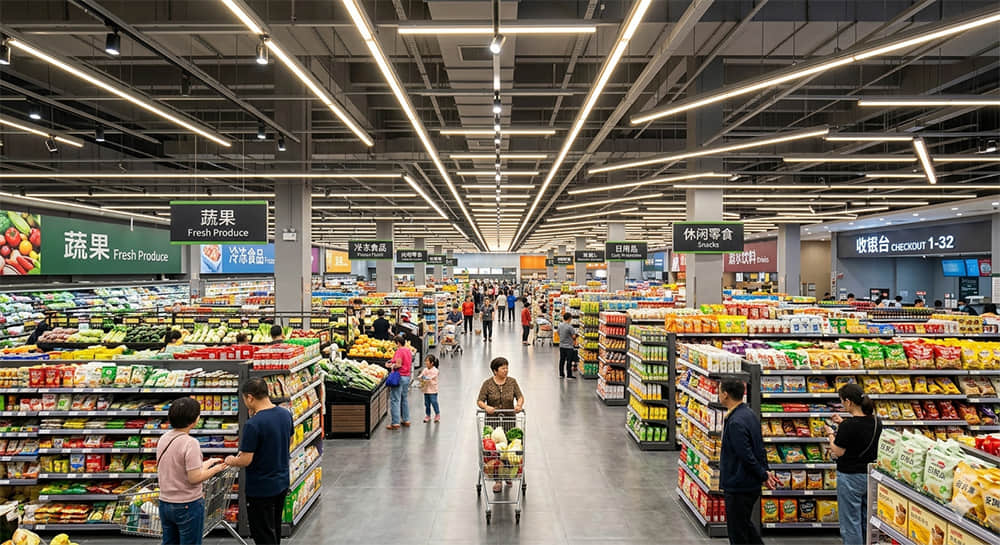
Imagine walking into a massive, multi-aisle grocery store. The sheer scale of the space can instantly feel overwhelming. In this environment, effective supermarket lighting acts as an invisible guide, transforming a cavernous warehouse into a welcoming, easy-to-navigate retail destination. In the real world, precision illumination solves immediate, practical problems: it eliminates the oppressive shadows created by tall shelving units, empowers shoppers to effortlessly read fine print on nutritional labels, and completely prevents the harsh, aggressive glare that causes severe eye strain during a long grocery run.
Beyond basic visibility, light dictates human perception and emotional response. Have you ever noticed how a display of fresh tomatoes looks vibrant and mouth-watering in one store, yet dull and unappetizing in another? That difference is the power of premium retail lighting solutions. High-quality illumination restores the authentic, rich colors of fresh produce, premium meats, and baked goods, instantly communicating freshness and hygiene to the consumer. It shifts the shopper's mindset from "rushing to finish chores" to "enjoying a comfortable culinary exploration."
Ultimately, the advantages of a superior visual environment directly impact a supermarket's bottom line. When a retail space is visually comfortable—free from exhausting light contrasts and blinding hotspots—shoppers naturally relax and slow their pace. This reduction in visual fatigue significantly increases customer "dwell time." Decades of retail psychology prove that the longer a customer comfortably browses, the more likely they are to engage with new products, leading to higher impulse purchases and larger basket sizes. The right lighting is never just a utility; it is a silent, highly effective sales mechanism that elevates the entire shopping experience.
2. The Limits of Luminaire Design: Can Hardware Alone Achieve Perfection?
In the pursuit of the perfect retail environment, lighting engineers and luminaire designers often face a critical crossroads: how to effectively control the raw, intense output of high-power LED chips. A common, traditional approach is to rely heavily on the physical architecture of the luminaire housing itself. To mitigate harsh glare and hide the brilliant light source from the shopper's direct line of sight, designers frequently employ mechanical shielding. This includes engineering deep recessed LED placements, adding intricate physical louvers, installing anti-glare baffles, or applying matte dark interior finishes specifically designed to absorb stray light.
While these structural modifications are undoubtedly effective at cutting off high-angle visual glare, they introduce a set of severe, unavoidable compromises. Mechanical shielding essentially acts as a blunt instrument. By definition, a metal louver or a plastic baffle works by intentionally blocking light. When you trap light inside the fixture's housing to protect the customer's eyes, you are inherently sacrificing a massive percentage of your luminaire's total lumen output. This drastic reduction in optical efficiency (lumens per watt) forces supermarkets to install higher-wattage fixtures or increase the total number of luminaires just to meet baseline ground illumination requirements. Ultimately, this hardware-only approach drives up both initial capital costs and long-term energy consumption.
Furthermore, relying solely on metal or plastic enclosures completely fails to address the most complex challenge in modern retail lighting solutions: precise spatial light distribution. A physical barrier can stop light, but it cannot bend, shape, or intelligently redirect it. If a lighting designer's goal is to uniformly wash a towering vertical supermarket shelf with vibrant light while simultaneously keeping the center walkway perfectly soft, a traditional aluminum reflector or grid simply cannot achieve this sophisticated beam manipulation. Additionally, adding deep baffles and heavy louvers inevitably makes the physical luminaire larger and bulkier, disrupting the clean, modern ceiling aesthetics that today's retail architects demand. As the industry pushes toward sleeker, miniaturized, and highly efficient fixture designs, bulky mechanical shields quickly become an outdated liability rather than an asset.
To break free from these physical limitations, we must stop trying to block light and start learning how to master it. The true secret to flawless illumination does not lie in the metal casing, but in the microsecond the photon leaves the diode. This requires a fundamental shift in engineering—moving away from mechanical obstruction and embracing the unparalleled precision of advanced optical lenses.

3. The Power of Optical Lenses: A Paradigm Shift in Light Control
To truly overcome the inherent limitations of traditional luminaire housing, the lighting industry must undergo a fundamental engineering shift: moving from the passive obstruction of light to its active, intelligent guidance. True photometric control does not happen after the beam has already scattered and crashed into an aluminum baffle; it happens in the exact microsecond the photon exits the LED chip. This is precisely where advanced optical lenses deliver a game-changing advantage, completely redefining what is possible in modern supermarket lighting.
First and foremost, high-quality optical lenses unlock unparalleled optical efficiency, eliminating the physical waste of energy that plagues traditional fixture designs. As previously discussed, any physical louver, deep-recessed bezel, or baffle fundamentally relies on absorbing or blocking "spill" light to reduce glare. This blunt methodology routinely sacrifices 20% to 40% of the luminaire's total lumen output. Precision optical lenses, however, operate on a vastly superior scientific principle. Utilizing advanced refraction and Total Internal Reflection (TIR) technologies, lenses capture and redirect the light rays internally without obstructing their path. This allows for an astonishing light transmittance rate of over 90%. Consequently, supermarket operators can significantly lower the overall wattage of their fixtures, drastically reducing energy consumption, while simultaneously achieving a brighter, more vibrant retail space.
Secondly, lenses grant engineers absolute mastery over spatial light distribution and beam angle control. The most critical geometric challenge in grocery stores is pushing light sideways onto towering vertical shelving units—where the merchandise actually sits—while keeping the central walking aisle soft and comfortable. Traditional metal housings and flat diffusers cannot bend light; they can only cast it straight down or aggressively chop it off. In contrast, by engineering complex, microscopic structures onto the surface of a lens, optical designers can sculpt the light beam into highly specific, asymmetric patterns. The lens actively pushes the highest intensity of light onto the vertical shelves, illuminating every product label and color perfectly, while precisely cutting off the light directed into the shopper's natural line of sight. This achieves flawless glare control without relying on a single piece of dark, light-absorbing metal.
Furthermore, the integration of precision optics paves the way for the ultimate miniaturization of luminaire design. When a fixture no longer relies on deep cavities, thick metal shields, or massive reflectors to mitigate glare, its physical footprint can be drastically reduced. A meticulously engineered micro-lens can execute the complex beam distribution that once required a bulky, intrusive hardware assembly. This spatial freedom allows commercial lighting designers to conceptualize ultra-slim, stealthy linear LED lenses and miniaturized track spotlights that seamlessly integrate into modern architectural ceilings. It empowers the creation of a "quiet" ceiling—where the light is brilliantly felt, but the fixture itself remains virtually invisible, allowing the shopper's focus to remain entirely on the retail displays below.
Ultimately, integrating superior optical lenses is far more than a simple component swap; it is the foundational restructuring of the entire retail lighting solutions ecosystem. By replacing crude physical barriers with elegant optical science, lenses grant lighting engineers unprecedented freedom. They maximize efficiency, master complex spatial illumination, and elevate luminaire aesthetics, proving that the smartest way to handle light is not to trap it, but to guide it flawlessly.
4. Tailored Extrusions and Standardized Modules for Every Supermarket Zone
A modern supermarket is not a singular, uniform box; it is a highly complex architectural ecosystem comprising distinct retail zones, each demanding a highly specific optical strategy. The lighting required to illuminate a towering forty-foot grocery aisle is fundamentally different from the lighting needed to highlight fresh produce, or the ambient illumination designed for a welcoming checkout area. Supplying a "one-size-fits-all" fixture to a complex commercial space inevitably results in a compromised shopping experience.
To empower lighting engineers, architects, and luminaire manufacturers with the ultimate creative and photometric freedom, Asahi Optics has developed a comprehensive arsenal of lighting solutions. This portfolio is spearheaded by our incredibly versatile PMMA Extrusion Linear Lenses—complete with matching aluminum housings—and supported by our high-volume 280x40mm Zhaga Standard Linear Lenses.
Zone-Specific Lighting with Versatile PMMA Extrusion Lenses
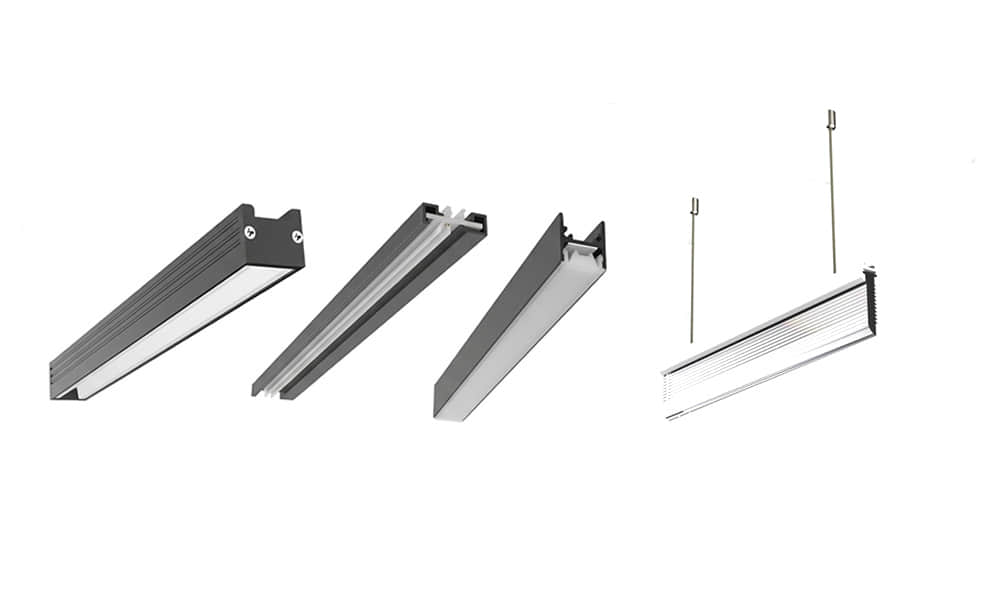
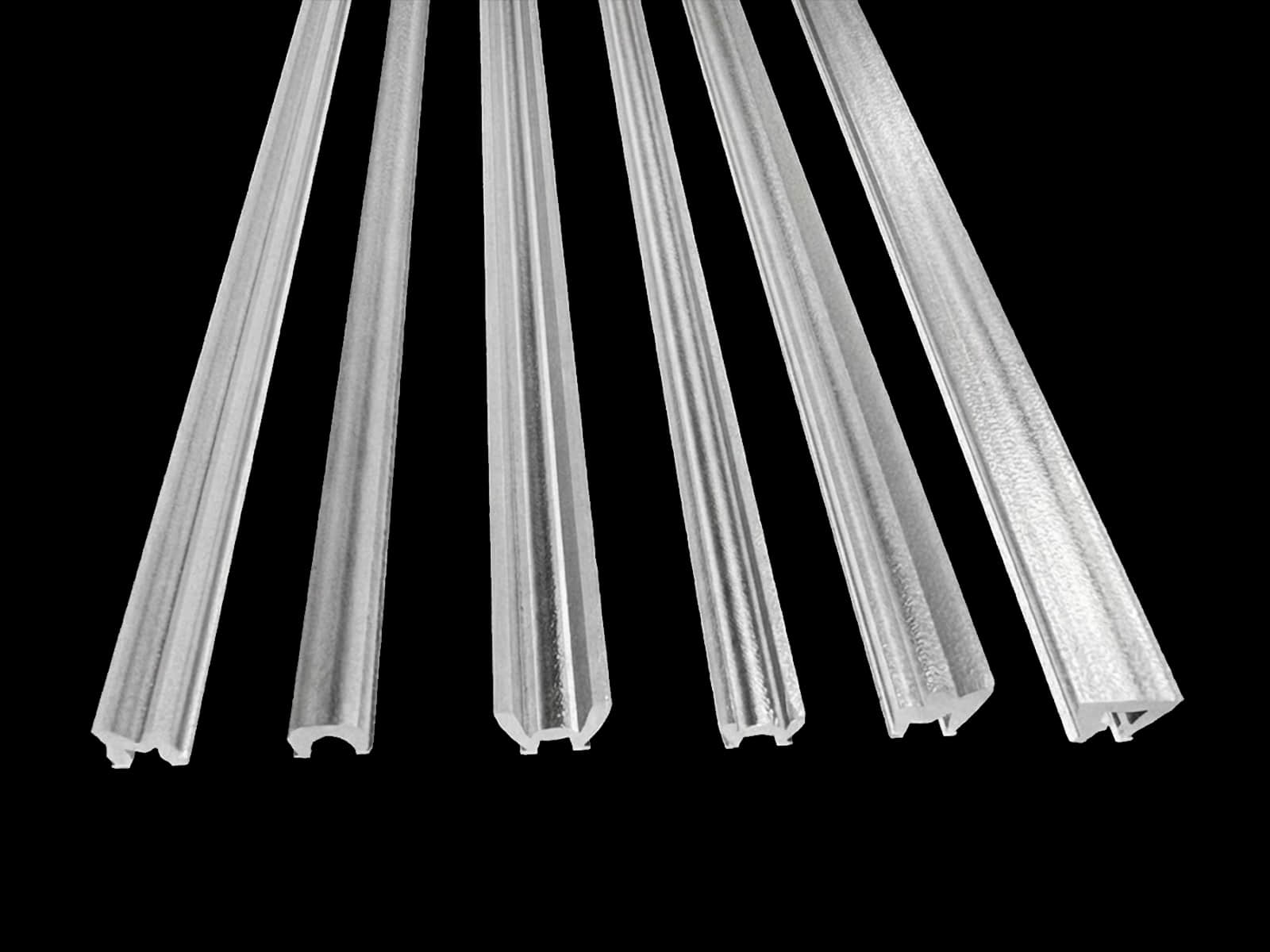
When designing a premium retail space, the visual goal is often a flawless, unbroken ribbon of light that eliminates the dark spots, light leakage, and mechanical joints associated with traditional modular plastics. Our continuous PMMA extrusion lenses (or PMMA stripe lenses) provide this seamless aesthetic, ensuring zero yellowing and maximum UV stability over years of operation. However, the true power of our extrusion technology lies in its immense variety, allowing designers to specify the perfect optical shape for every unique supermarket zone:
-
The Aisles (Navigation & Shelving): The core of any grocery store requires highly efficient, low-glare illumination that pushes light onto vertical products. For these massive runs, engineers rely on our Profile with Lenses, which integrate precise batwing distributions directly into the continuous extrusion. To maintain visual comfort and keep the Unified Glare Rating (UGR) strictly under 19, our specialized UGR Series extrusions are the perfect fit. These are frequently deployed as Suspension Linear Profiles, bringing the light source closer to the merchandise while maintaining a sleek, modern architectural feel.
-
Fresh Food & Produce (Color & Vibrancy): In areas displaying fresh meats, vegetables, and bakery items, color rendering and smooth, uniform washes of light are paramount. Here, our Surface Linear Profiles and Recessed Linear Profiles seamlessly integrate into bulkheads or low ceilings. They deliver a flawless, high-transmittance wash of light that makes the authentic colors of the food pop, instantly communicating freshness and quality to the consumer.
-
Checkout Zones, Cafes, & Architectural Highlights: Modern retail design is moving away from rigid straight lines, incorporating organic shapes to guide customer flow and establish brand identity. To support this creative vision, Asahi Optics offers an unparalleled selection of bespoke shapes. Designers can utilize our Custom Curved Profiles, dynamic Circle/Oval/Runway/Wave configurations, and flexible DIY Curved Modules to create breathtaking luminous centerpieces above checkout counters or in-store cafes. Furthermore, our Inward/Outward Profiles allow for stunning 3D spatial lighting structures that redefine interior retail geometry.
The Ultimate Engineer's Advantage: Perfectly Matched LED Extrusions
One of the most persistent and frustrating challenges for luminaire manufacturers is the procurement process. Sourcing a high-quality PMMA optical lens from one supplier and the aluminum housing from another almost always leads to assembly nightmares. Slight manufacturing tolerances clash, resulting in frustrating light leakage, compromised thermal dissipation for the LED chips, and fixtures that are incredibly difficult to assemble on the production line.
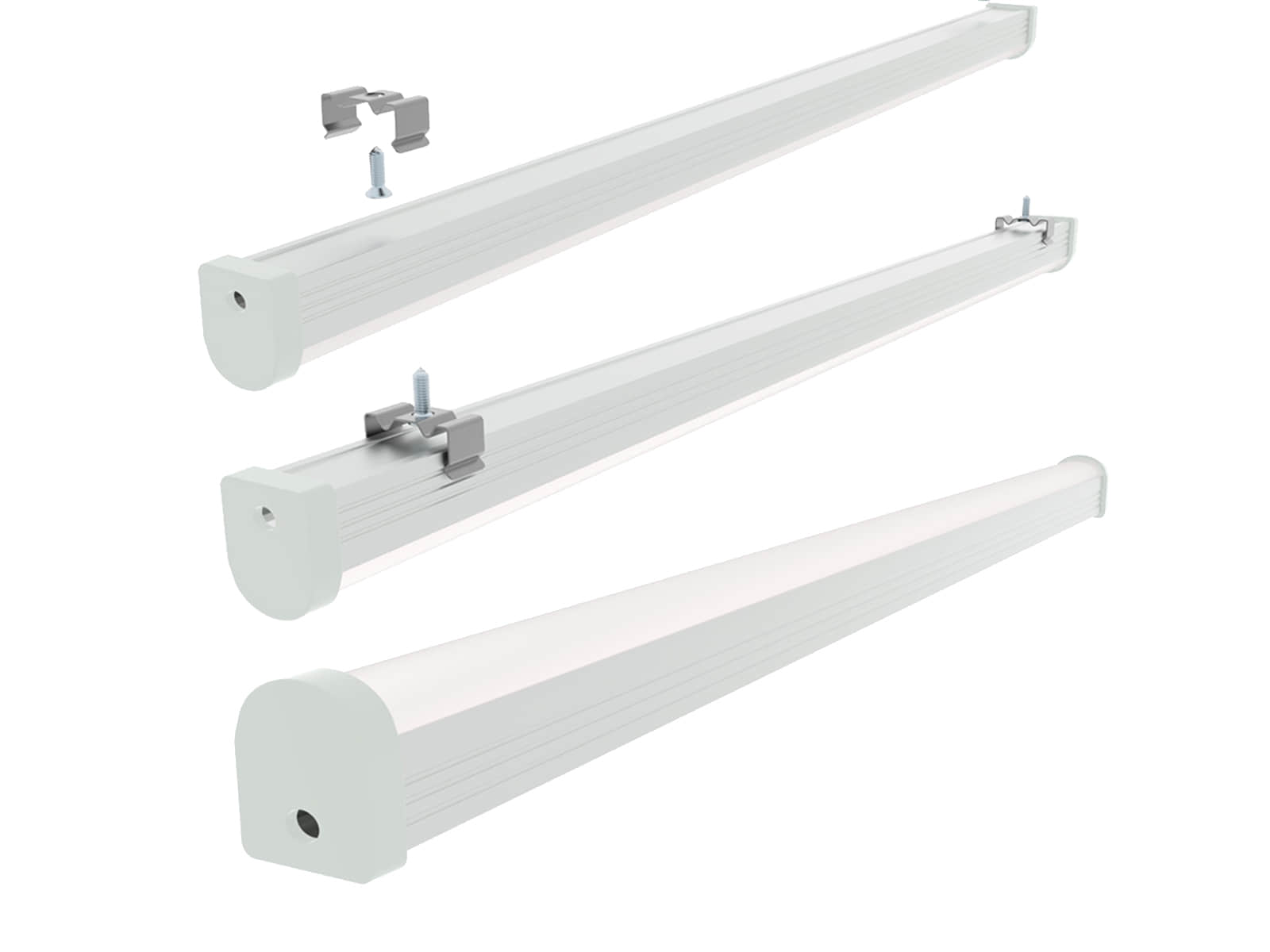
Asahi Optics completely eliminates this supply chain headache. We do not just sell the optical lens; we provide a fully integrated, one-stop solution. Every single PMMA extrusion lens we manufacture comes with a precisely engineered, perfectly matched aluminum LED Extrusion. By developing the optic and the aluminum profile together, we guarantee 100% flawless compatibility. This means zero light leaks, optimal thermal management, and rapid, friction-free assembly for your production team. Whether you are building sleek Panel Profiles, robust industrial trunking, or delicate AMER Series architectural fixtures, our matched sets ensure your final product looks and performs perfectly. We take the guesswork out of fixture engineering, allowing you to focus on design and sales.
We are constantly pushing the boundaries of what linear optics can achieve. We highly encourage lighting engineers and procurement managers to request free physical samples of our matched profile sets to test in their own laboratories. To explore our massive library of straight, curved, and optical profiles, please download our comprehensive guide: Asahi Optics Extrusion Lens Catalog 2026.
The High-Volume Workhorse: 280x40mm Zhaga Standard Linear Lenses
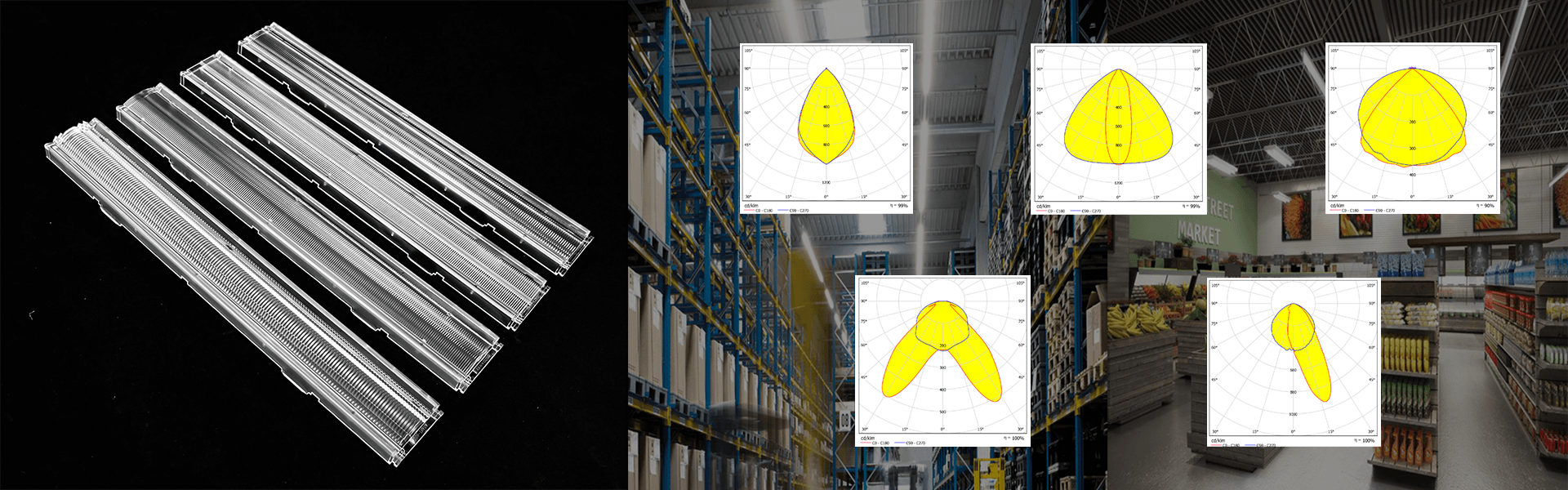
While bespoke extrusions dominate high-end architectural zones, massive hypermarkets and big-box discount chains often require rapid, highly standardized continuous row lighting (trunking systems) for their vast warehouse-style floors. For these high-volume, fast-paced projects, manufacturers need reliable, plug-and-play components.
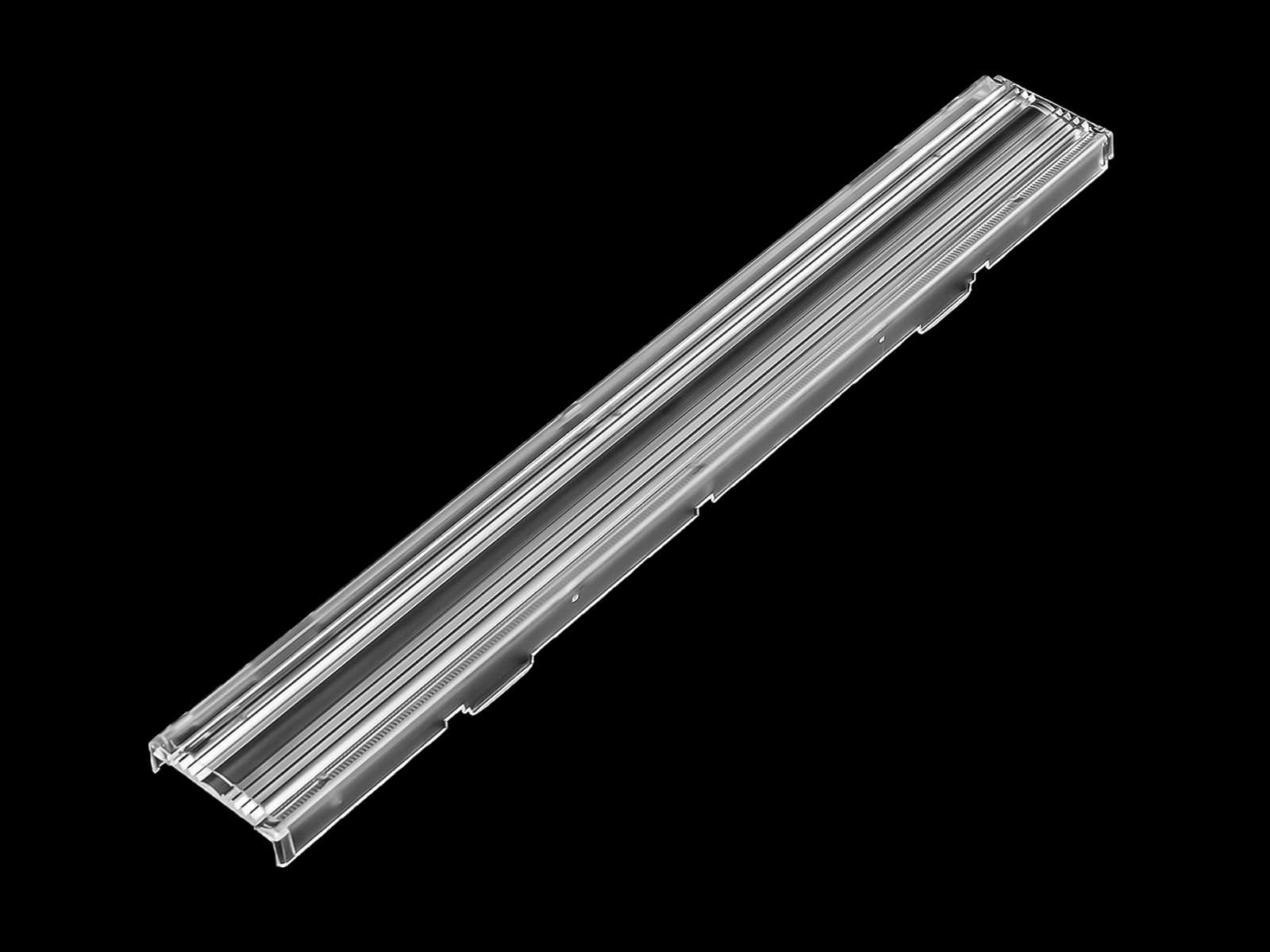
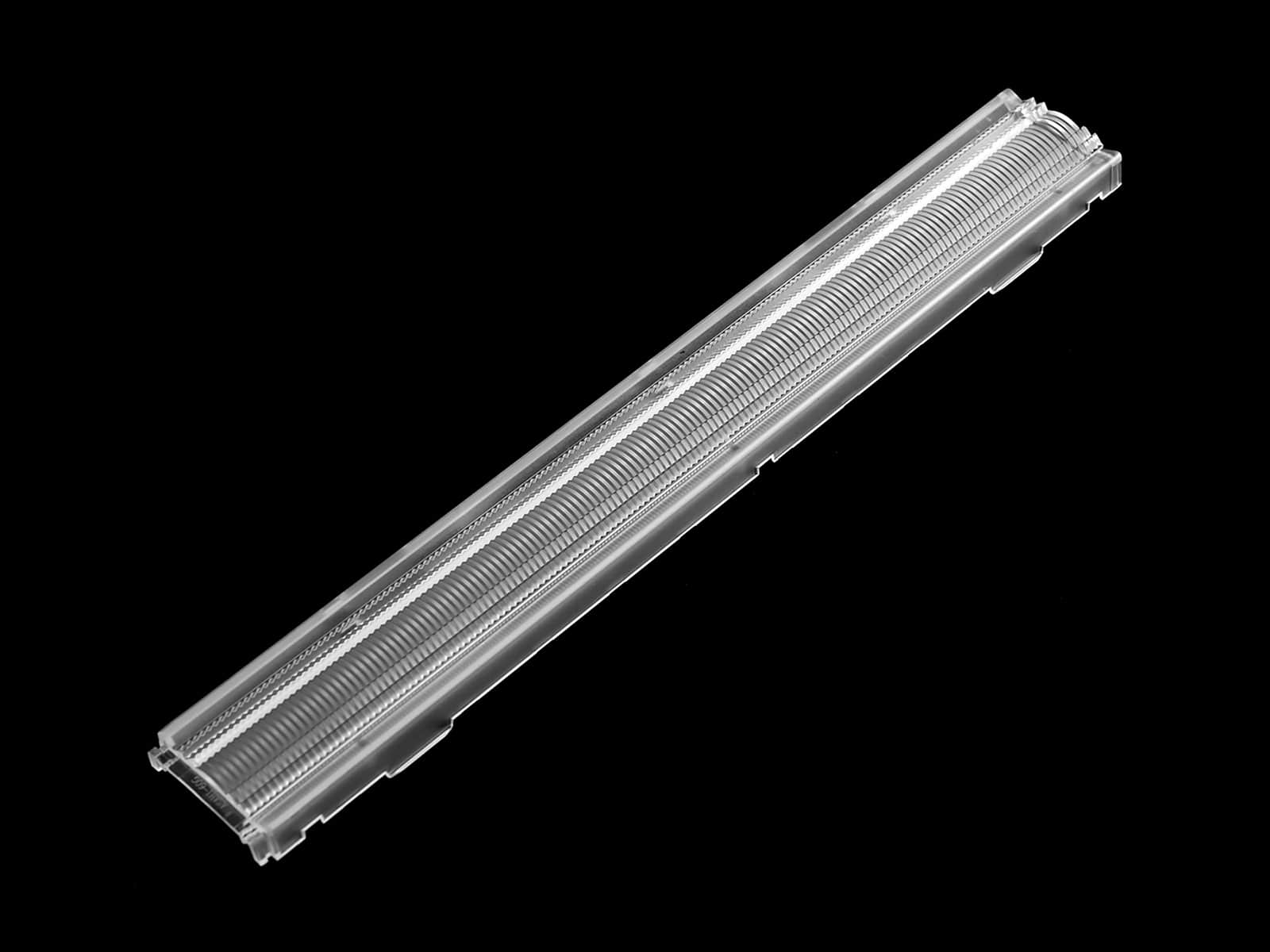
This is where our 280x40mm Zhaga Standard Linear Lenses excel. Designed strictly according to the globally recognized Zhaga Consortium specifications (Book 7 and Book 14), these modular multi-lens arrays are the backbone of modern commercial trunking. The 280x40mm footprint perfectly aligns with standard LED boards, allowing manufacturers to rapidly assemble high-performance fixtures without redesigning their PCBs. By simply swapping these modular lenses on the assembly line, a manufacturer can instantly change a fixture's beam angle from a wide 90° ambient wash to an aggressive double-asymmetric batwing distribution, drastically accelerating time-to-market for large-scale supermarket bids.
5. Custom Optical Empowerment
While our extensive catalog of PMMA extrusions and Zhaga standard linear lenses covers the vast majority of commercial applications, we understand that true architectural masterpieces often require something entirely unique. In the highly competitive world of retail design, settling for "good enough" is rarely an option. Far too often, brilliant lighting engineers and designers are forced to compromise their original vision simply because a standard off-the-shelf optic cannot achieve the exact photometric distribution or physical form factor their luminaire demands.
At Asahi Optics, we refuse to let your design be compromised by manufacturing limitations. When standard profiles cannot fulfill your specific requirements, our dedicated Custom Optical Design team steps in. We provide comprehensive, end-to-end engineering support—from initial photometric simulations and rapid prototyping to precision mold tooling and mass production. Whether you need a highly specialized asymmetric beam angle for a unique shelving layout, or a proprietary extrusion profile that perfectly matches your custom aluminum housing, we have the technological capability to bring it to life.
Ultimately, lighting design is an art form grounded in rigorous engineering. Our mission goes beyond merely supplying high-quality optical lenses; we exist to empower your creativity. We know the immense dedication it takes to develop a new luminaire from scratch. Our greatest reward is ensuring that when a lighting engineer walks into a newly illuminated supermarket, they do not see compromises or dark spots—they see their exact vision executed flawlessly. We want you to feel an absolute, undeniable sense of pride when you see your luminaire transforming a commercial space.
Do not let standard parts dictate your design. Partner with Asahi Optics to turn your most ambitious lighting concepts into a luminous reality. Submit your CAD drawings or project requirements to our engineering team today, and let us build a luminaire you will be truly proud of.