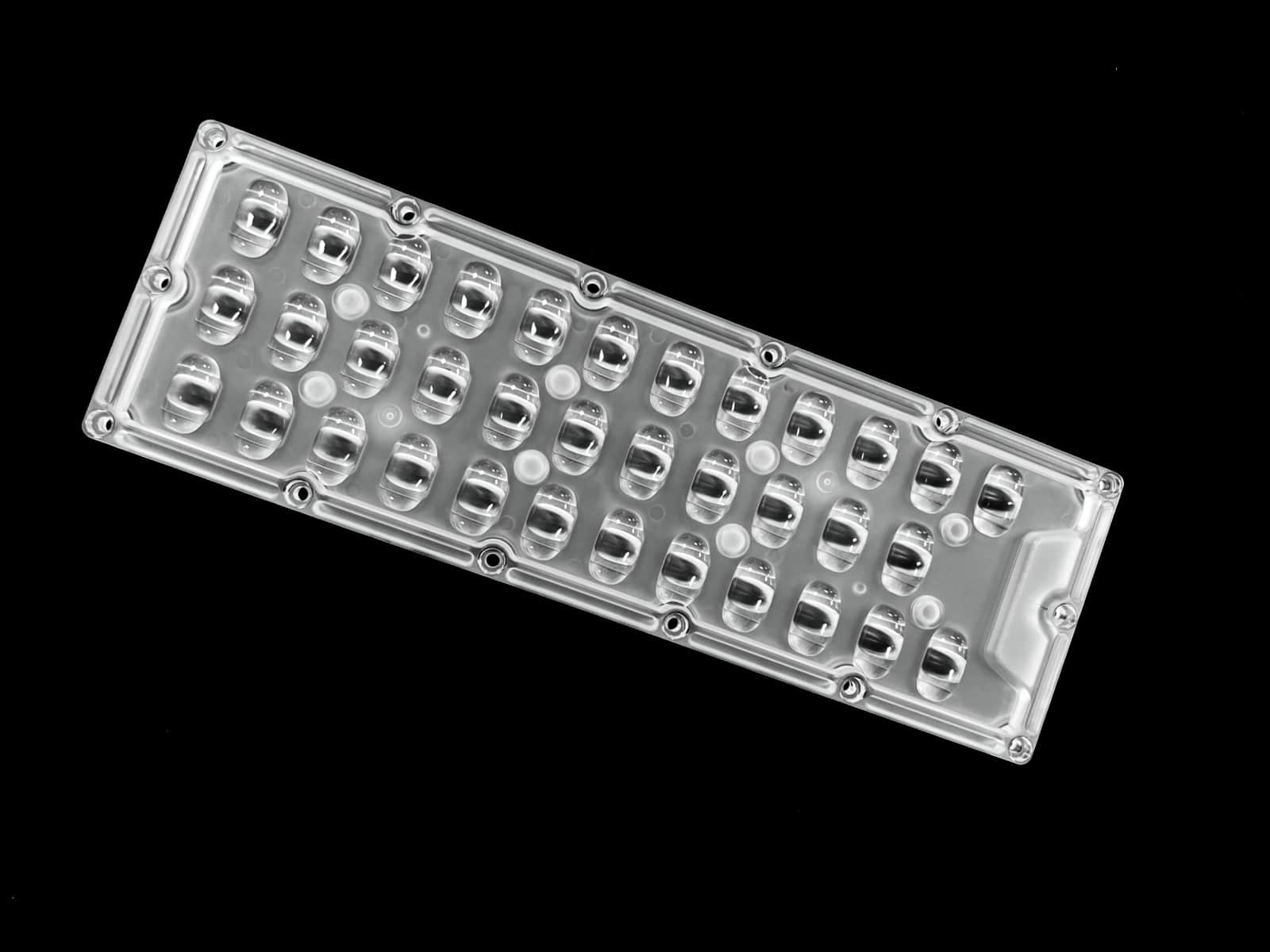
At present, there are different types of street lights manufactured by various companies which are made to fulfill several applications within the broader Outdoor Lighting sector. As a sub-category of outdoor illumination—alongside Area Lighting, Billboard Lighting, and Tunnel Lighting—Street Lighting carries the most rigorous requirements for public safety and long-term durability.
In order to illuminate numerous outdoor areas, there are street lights specially made for roads, highways, and residential paths. However, it can get confusing to choose the ideal type of light for market needs if one is not aware of the specific LED optics design that distinguishes roadway lighting from general area illumination. People may wonder about what type of lights are street lights, what type of bulbs are used, and what are their unique pros, cons, and applications in modern infrastructure.
What Are Street Lights?
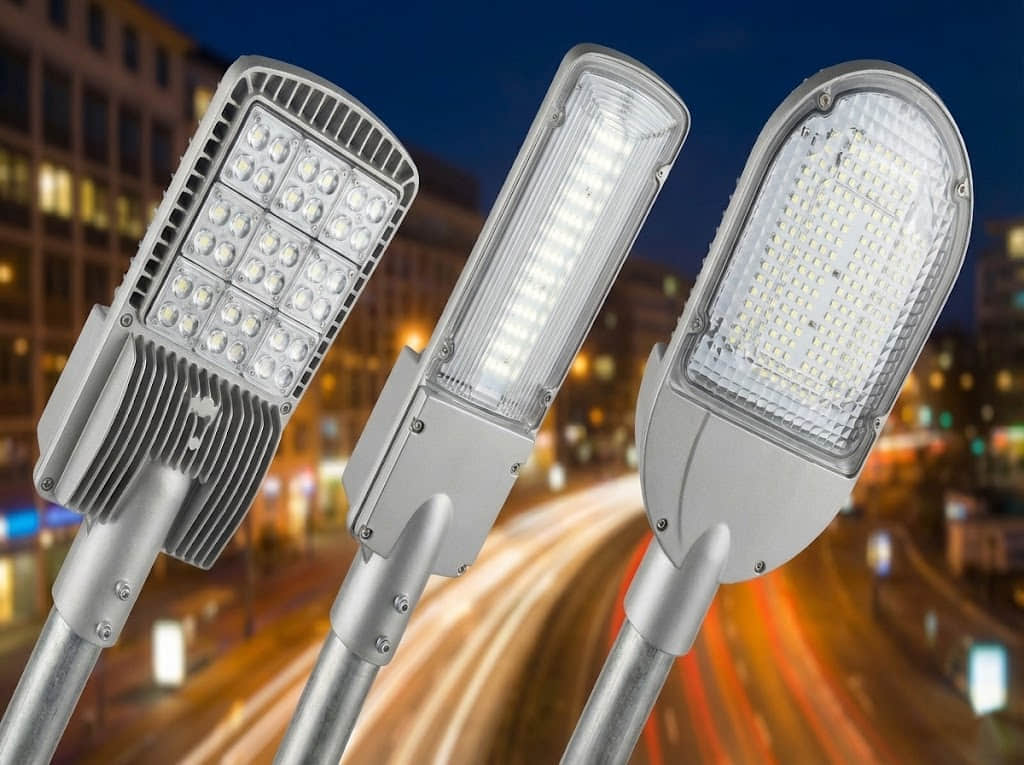
Street lights, also known as street lamps, are elevated light sources essential for illuminating roadways, walkways, and other public thoroughfares. While other Outdoor Lighting categories like Area Lighting focus on broad, 360-degree coverage for plazas, or Billboard Lighting focuses on high-intensity focal beams, Street Lighting is specifically engineered for linear uniformity and glare control to assist drivers and pedestrians.
By enhancing visibility in dark spaces, street lights significantly improve security and driving safety. They are often used alongside traffic safety devices to increase the visibility of road barriers, pedestrian crossings, and poorly lit intersections. The primary purpose of streetlights is to provide reliable illumination to areas that are dark and difficult to navigate at night, using various technologies—including LED, high-pressure sodium (HPS), and metal halide—to achieve the desired light quality and temperature.
Features and Specifications of Street Lights
In the competitive global market of 2026, the technical specifications of street lighting have become the benchmark for project tenders. Here are the typical features to consider:
- System Power (Wattage): Street lights are accessible in various power ranges, such as 100W, 150W, 200W, and 400W. To curtail total energy expenses, 2026 standards prioritize delivered lumens per watt (lm/W) rather than raw wattage.
- Operating Temperature: This is the specific range in which the light is constructed to operate. Unlike indoor fixtures, outdoor street lights must have a robust operating temperature (typically -40°C to +100°C) to resist extreme weather elements. Asahi utilizes high-grade Optical PC and PMMA to ensure thermal stability.
- Brightness (Luminous Flux): Brightness varies significantly from one model to another. While all decent street lights produce bright light, high-end street lamps generate super bright lighting to illuminate large areas using high-power 7070 LEDs.
- Supply Voltage: For global infrastructure, the supply voltage must be compatible with 90V-305V AC or 12V-24V DC for solar systems.
- Optics-Specific Activation: Almost all street lights come with a built-in photo sensor or smart IoT node (NEMA/Zhaga) to ensure that the light is on only when the surroundings are dark, further lessening operational expenses.
The Evolutionary History of Street Light
The history of street lighting is a journey from fire to photons, reflecting the progress of urban safety.
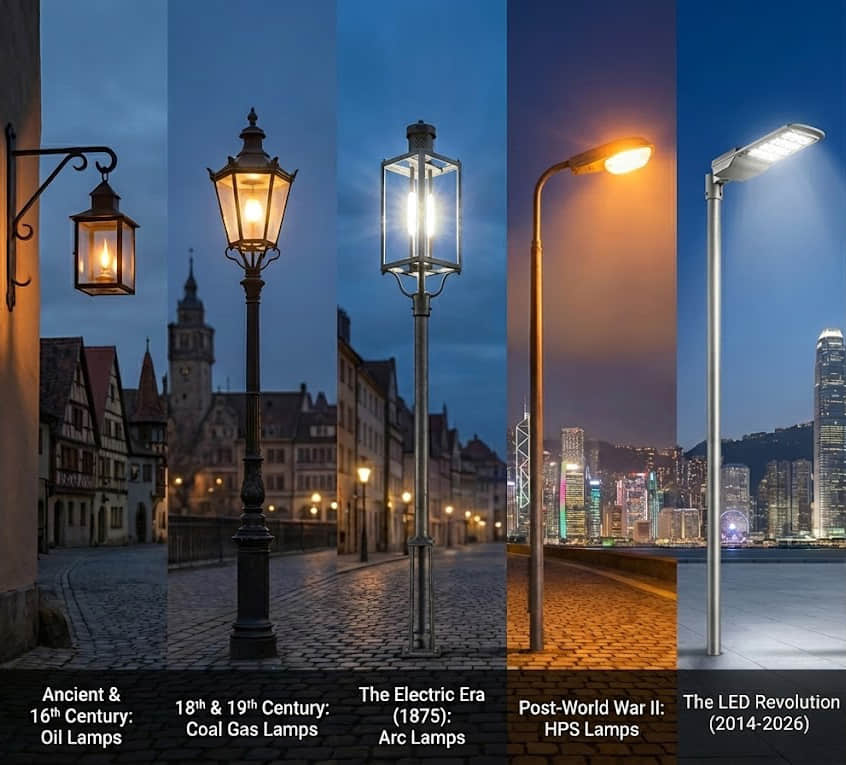
- Ancient & 16th Century: Street lighting began with oil lamps for security, evolving into the first public street lighting mandates in major cities like Paris and London.
- 18th & 19th Century: The 18th century saw the use of coal gas, which revolutionized nighttime navigation, followed by kerosene in the 19th century.
- The Electric Era (1875): Electric street lighting started in 1875 with “Electric candles” (Arc lamps), which were much brighter than gas but required frequent maintenance.
- Post-World War II: Sodium lamps (HPS) gained global popularity for their long lifespan and distinctive orange glow.
- The LED Revolution (2014-2026): The 2014 Nobel Prize in Physics for blue LEDs paved the way for energy-efficient LED streetlights. Today, the ability to use a customized LED lens has made LEDs the preferred choice for 70% of new municipal projects worldwide.
Types of Street Lights
This section explores the various technologies co-existing in the 2026 market, detailing their pros, cons, and specific applications for optimal outdoor illumination.
| Type of Light |
Pros |
Lifespan |
Best Outdoor Application |
| Incandescent |
Affordable, CRI 100 |
Short (<2,000h) |
Sentimental/Village paths |
| Fluorescent |
Less heat, more efficient |
7,500-20,000h |
Older parking lots |
| Mercury Vapor |
Bright, durable |
Varies |
Legacy high-mast lighting |
| HPS (Sodium) |
Long life, productive |
24,000h |
Industrial roadways |
| Metal Halide |
Bright, crisp white light |
12,000h |
Sports and Area lighting |
| Solar Street Light |
No electricity, eco-friendly |
15-20 years |
Rural/Remote highways |
| Advanced LED |
Max efficiency, precise optics |
100,000h |
Smart Cities & Highways |
#1 Incandescent Street Lights
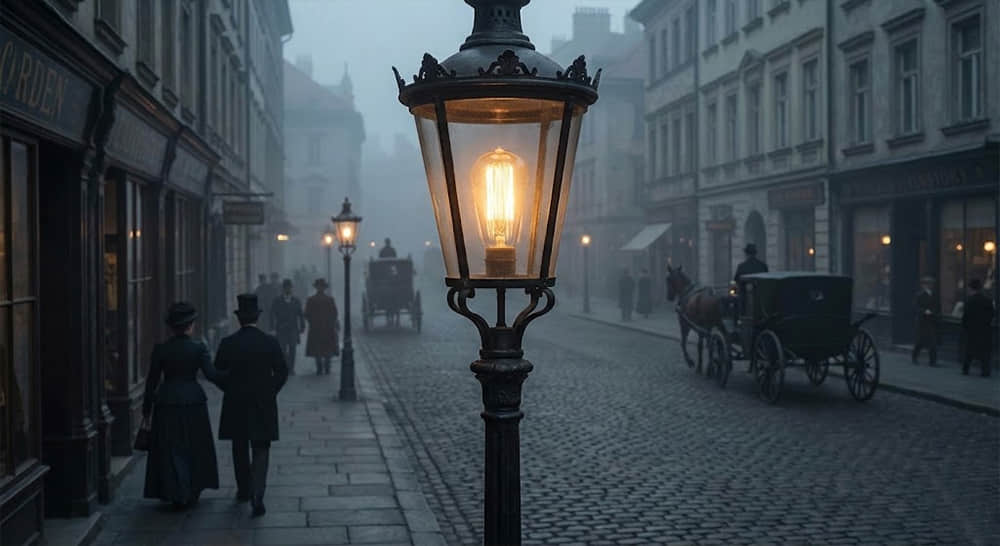
Since Thomas Edison created incandescent light more than a century ago, it has largely had a similar design, generating light via a tungsten filament. They are relatively ineffective and extremely hot to the touch. While a few villages continue to use them for sentimental appeal, they are not recommended for modern infrastructure.
#2 Mercury Vapor & Fluorescent Lights
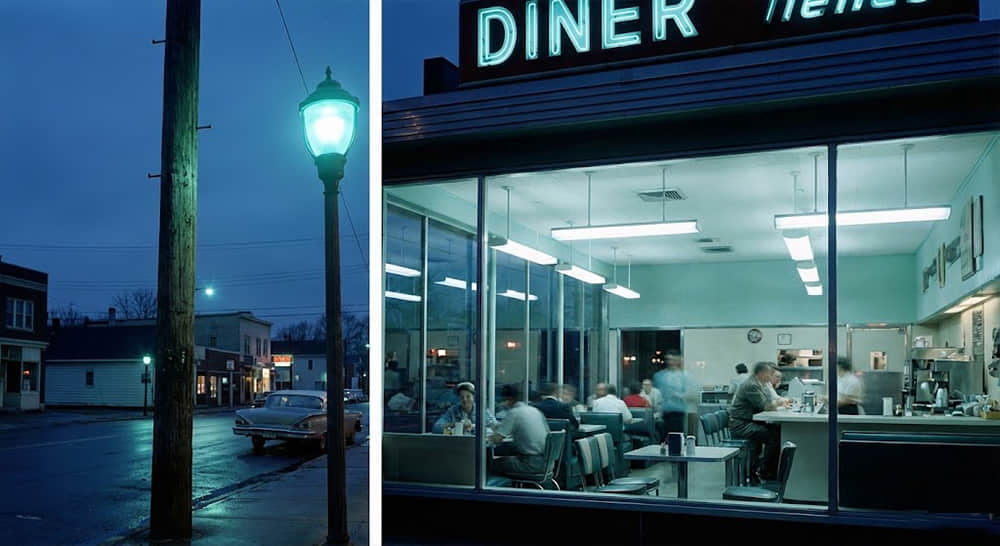
Fluorescent lights emit light by passing electricity via a gas, resulting in the phosphor coating within the tube shining. Mercury vapor lamps, identifiable by their bluish-green glow, were once a staple for big spaces like streets and stadiums. However, they are risky due to the presence of mercury and dangerous UV radiation if the outer quartz tube breaks.
#3 High-Pressure Sodium (HPS) Street Lights

HPS lamps are high-intensity discharge bulbs that produce an orange-white light. Preferred for indoor gardening and security, they have an efficiency of 100-150 lm/W. However, their poor color rendering makes them inferior to LED for modern roadway safety.
#4 Solar Street Lighting Systems
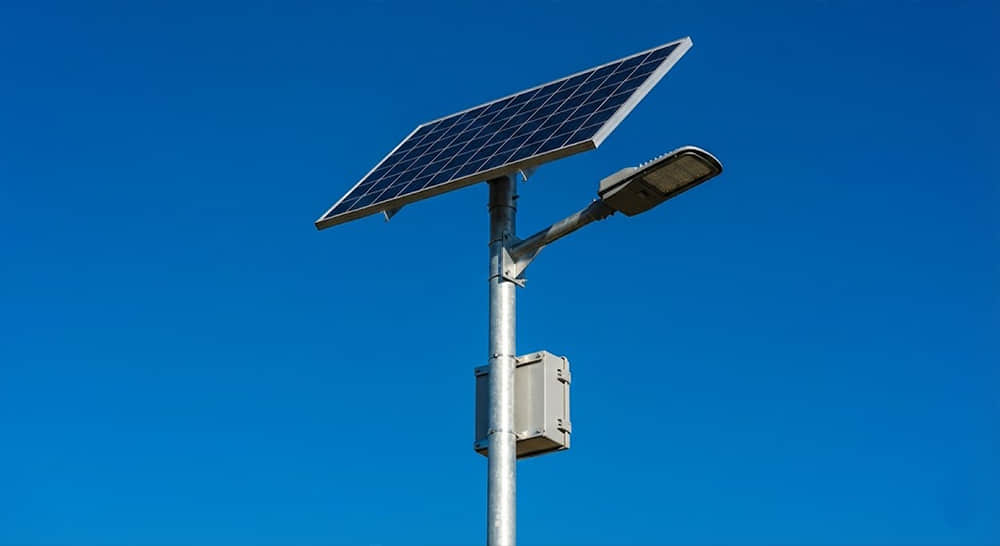
Photovoltaic technology is used in solar street lighting systems to renovate sunlight into DC power. For illuminating streets in isolated settlements, solar systems are suitable as they require no electricity and carry a longer lifespan with tubular batteries. These systems rely heavily on high-transmittance LED optical lenses to maximize the limited energy stored during the day.
How LED Street Light Technology Works
Compared to earlier lighting systems, LED streetlights can save between 30% and 70% of energy. LEDs do not “burn out” like incandescent bulbs; instead, they suffer from “lumen depreciation,” where brightness gradually decreases over 50,000 to 100,000 hours.
The "magic" happens when an electrical current flows through a microchip, igniting the tiny light sources known as LEDs. To deter performance difficulties, the heat generated is consumed in a heat sink. Most importantly, several LED streetlights include a secondary lens on the LED panel that is made to cast light in a specific rectangular structure. This is the core of Asahi Optics—our custom LED optics design ensures that light is never wasted on the surrounding area or the sky, but is focused purely on the pavement.
The Heart of Roadway Lighting: Secondary LED Optics
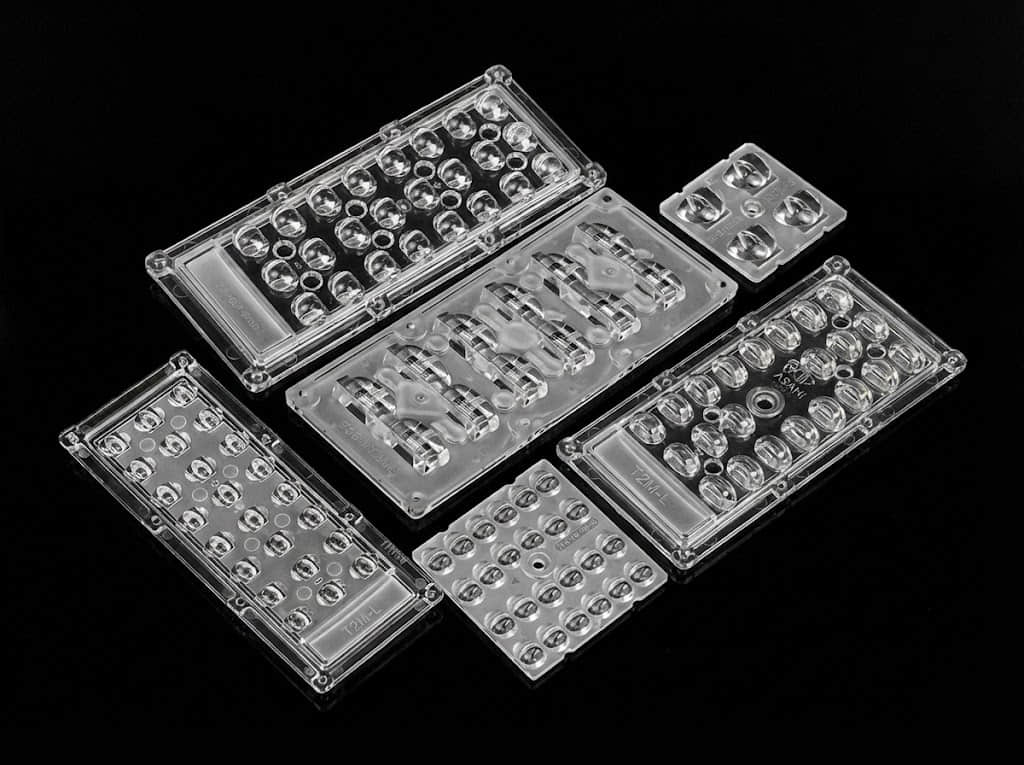
In the broader category of Outdoor Lighting, the defining factor for street lighting is the precision of its “Secondary Optics.” While the LED chip (Primary Optics) provides the raw light, it is the LED optical lens (Secondary Optics) that shapes that light into a functional beam.
At Asahi Optics, we utilize advanced refractive and reflective technologies to ensure that light is not merely “bright,” but “directed.” By mastering the interaction between the light source and the lens material, we achieve a light efficiency of over 90%, ensuring every watt is used to enhance road safety.
Understanding IESNA Light Distribution Types
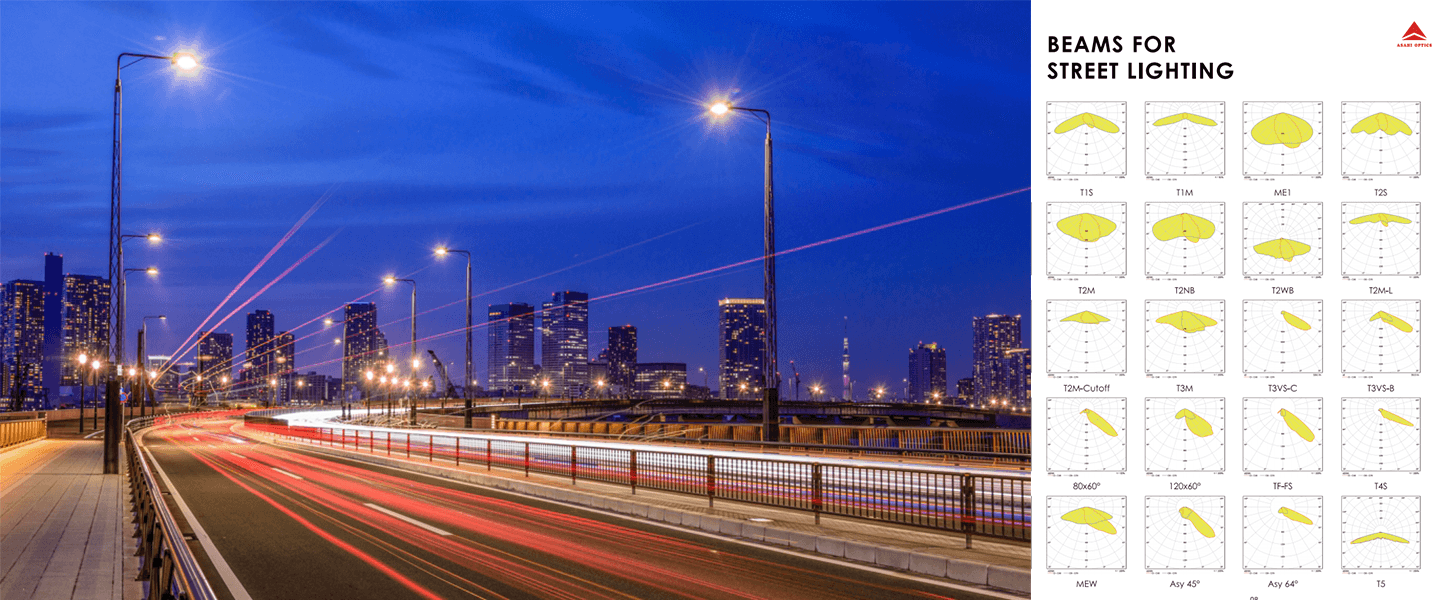
To help our global clients navigate the “confusing” market, we strictly adhere to the IESNA (Illuminating Engineering Society of North America) standards. For Street Lighting, choosing the right distribution type is critical to meeting municipal requirements like EN 13201 or NBR 5101.
#1 Type I: Narrow Paths & Sidewalks
Type I is a symmetric, lateral distribution designed for narrow paths where the light pole is located near the center of the walkway. It projects light in two directions along the length of the path.
#2 Type II: Narrow Roadways & Entrance Ramps
Type II is intended for narrow streets or entrance ramps where the road width is roughly equal to the mounting height of the pole.
#3 Type III: The Industry Standard (The Batwing)
Type III is the most widely utilized distribution for general roadway lighting. It projects light forward to cover the width of the road while maintaining a wide “Batwing” lateral spread to allow for maximum pole spacing.
#4 Type IV: Asymmetric Forward Throw
Commonly referred to as “Forward Throw,” Type IV is used for perimeters or when the pole is located far from the edge of the road. It pushes light far forward with minimal backlight.
#5 Type V: 360-Degree Symmetrical
Type V provides a circular or square pattern. While frequently used in Area Lighting for parking lots and plazas, in Street Lighting, it is the go-to choice for large highway intersections and roundabouts.
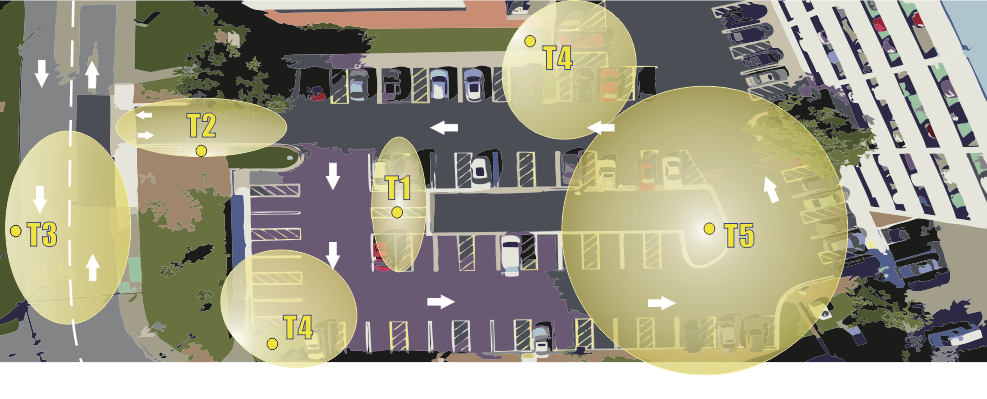
For more detailed IESNA standards, please proceed to: What are the light distribution types of T1, T2, T3, T4, and T5 defined by IESNA?
Matching Lenses to LEDs
A unique strength of Asahi Optics is our ability to design lenses that are compatible with a full range of LED chips, from 3535 and 5050 to the high-power 7070 LEDs.
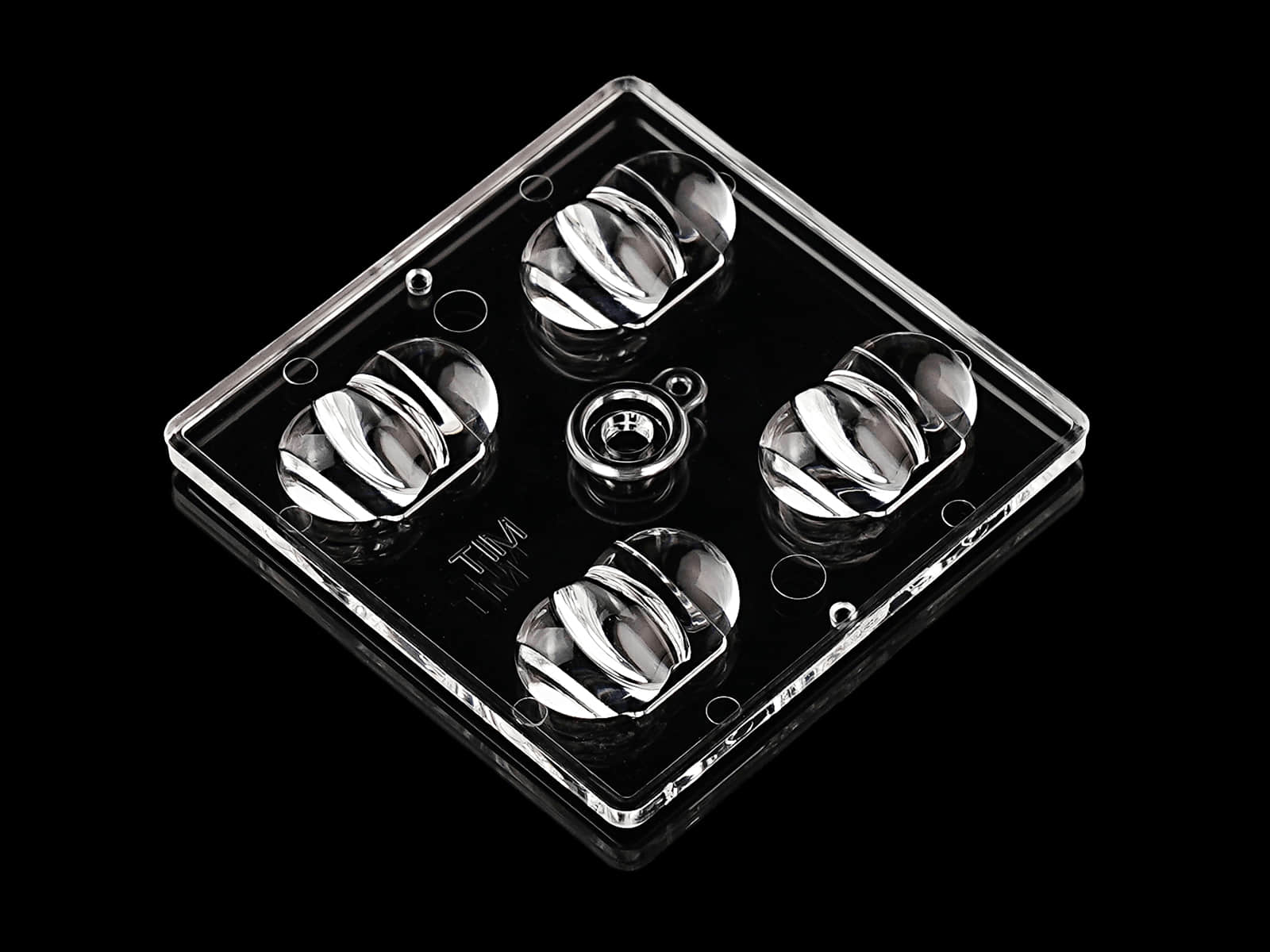
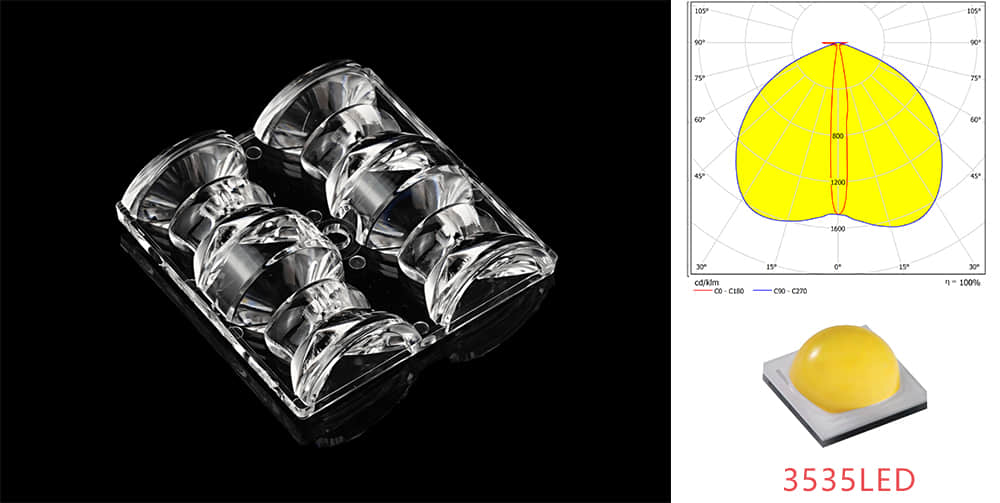
# 1 The 2x2 (50x50mm) Modular Series
The 2x2 modular array is the building block of modern street lighting.
-
Model Focus: AJST50D4LED15110G.
-
Features: Compact 50mm size, 4in1 design, and highly compatible with 3535 LED chips.
-
Application: Ideal for residential roads and urban paths where a modular approach allows for easy fixture maintenance and scalability.
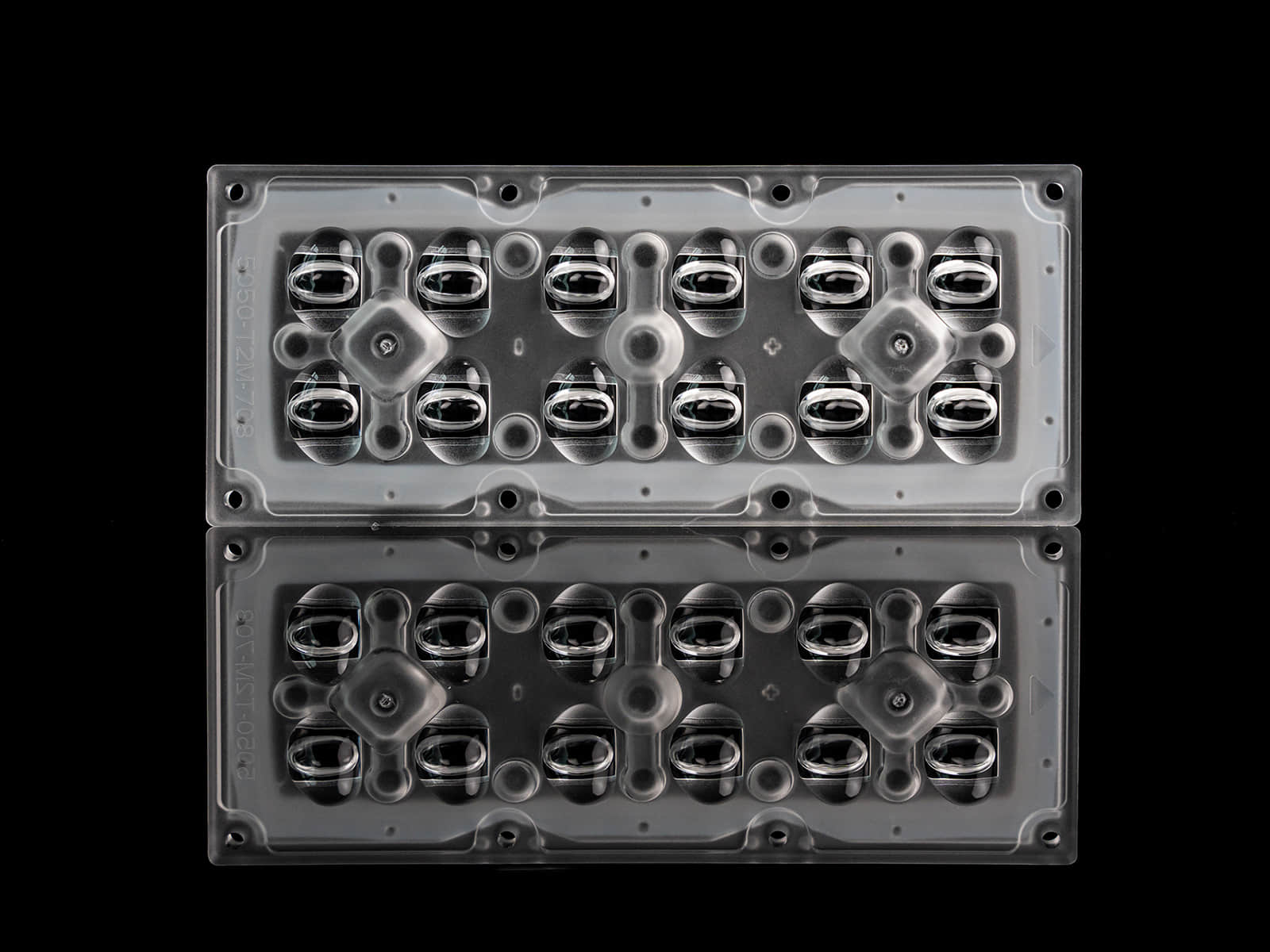
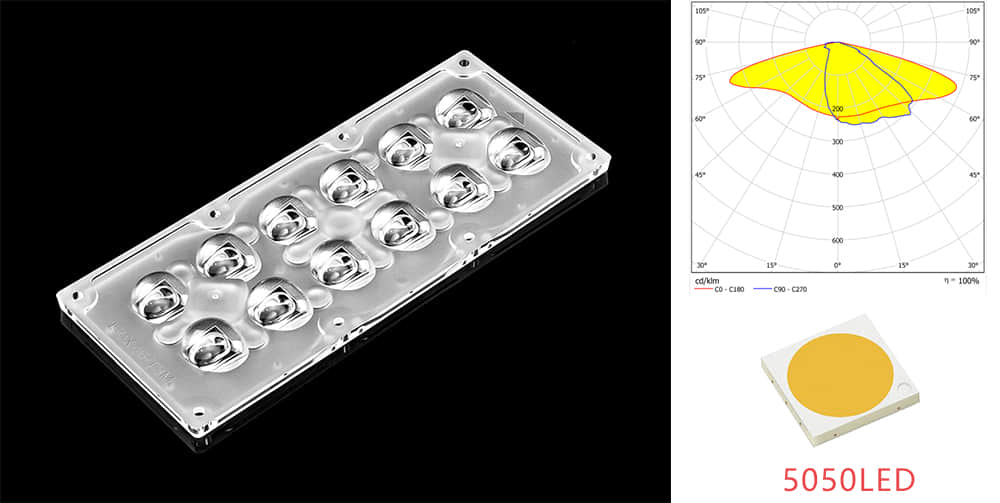
# 2 The 2x6 (12in1) IP67 Series
For high-wattage street lighting, the 2x6 integrated array is the industry favorite.
-
Model Focus: ALST173D12LED5050T3M.
-
Features: Integrated IP67 waterproof silicone gasket, durable Optical PC material, and a perfect Type III Medium distribution.
-
Application: Designed for main city arteries and industrial zone lighting where reliability under various weather elements is non-negotiable.
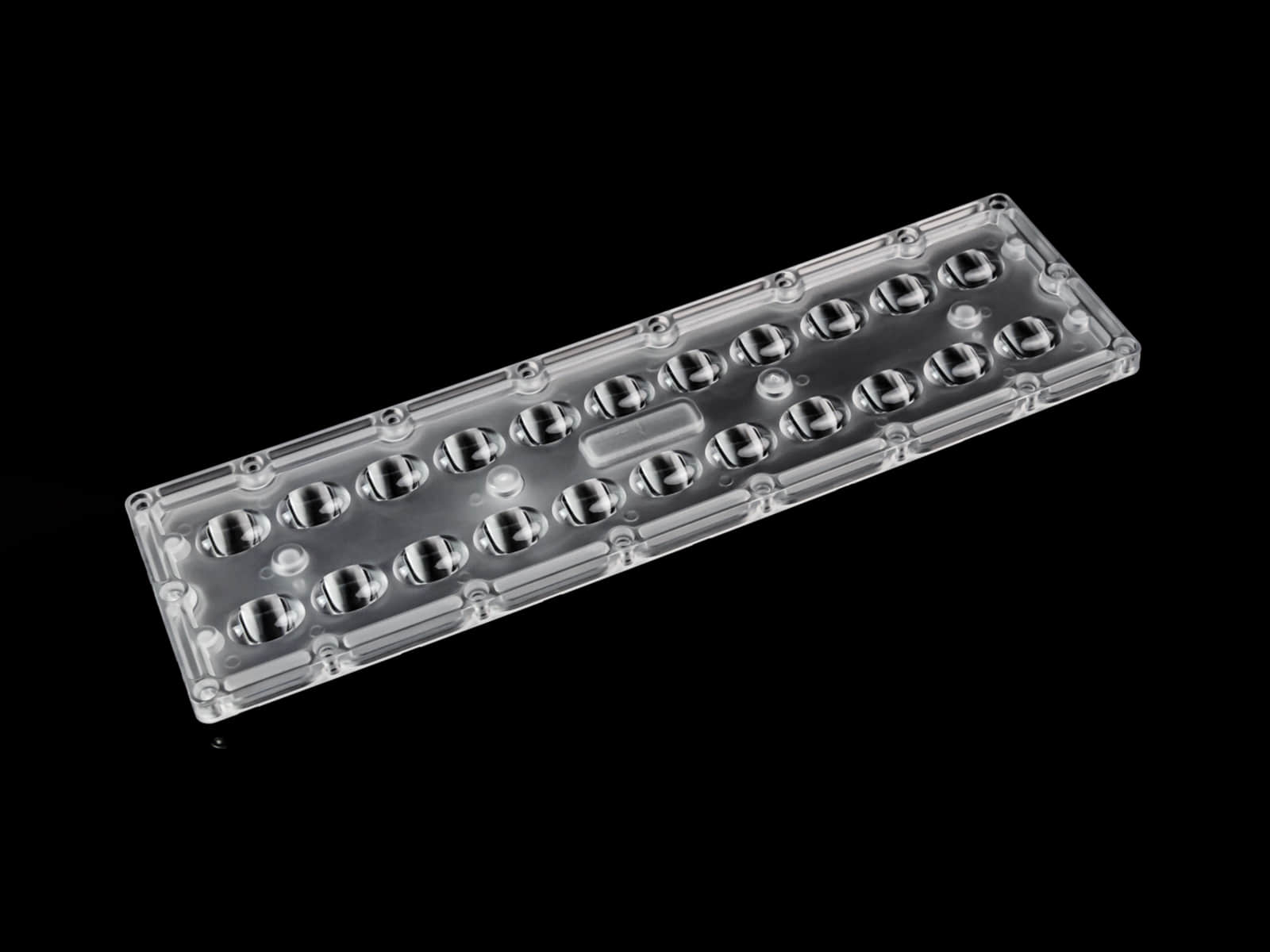
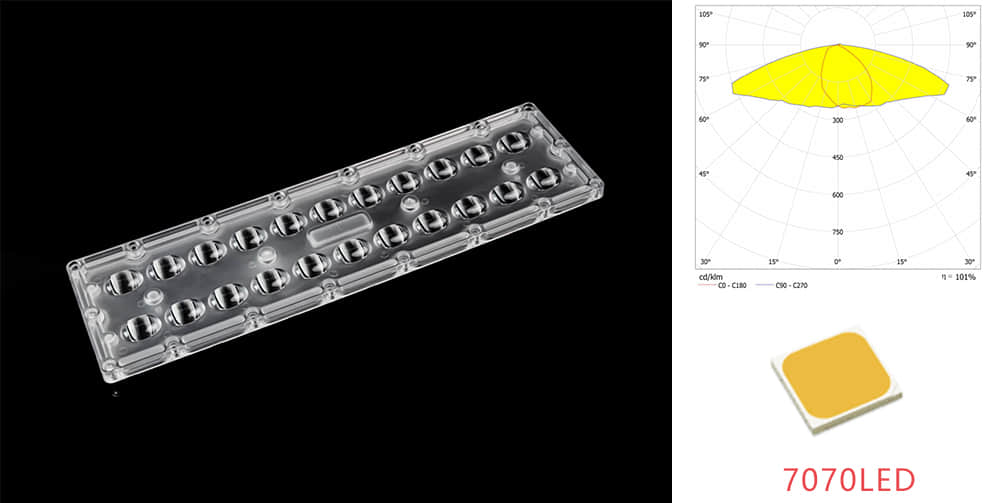
# 3 High-Power 7070 LED Solutions
The 7070 LED is becoming the trend for super-high-mast and highway lighting due to its immense lumen output.
-
Model Focus: AJST304D22LEDT2.
-
Features: Specialized optics for large-surface LEDs, maintaining a sharp “Cut-off” to reduce glare despite the high brightness.
-
Application: Multi-lane highways and high-speed interchanges where “super bright” lighting is required for maximum safety.
Uniformity and Glare Control
The quality of a street light is measured by its Uniformity Index (UI) and Glare Control (BUG Rating).
-
Uniformity: Asahi’s customized LED lens designs aim for a UI > 0.8. This ensures that the road surface appears as a continuous “carpet of light,” improving the driver's ability to react to obstacles.
-
Glare Control: Excessive glare can blind drivers. Our lenses feature a “Cut-off” design that strictly limits light intensity at high angles (above 80°). This not only enhances safety but also ensures “Dark Sky” compliance, protecting the surrounding area from light pollution.
Why PC Dominates Street Lighting
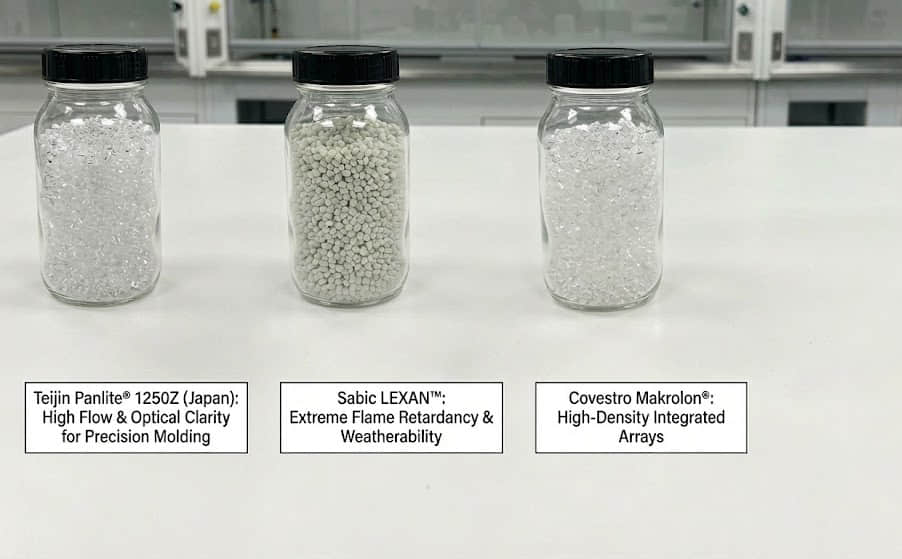
In the realm of Outdoor Lighting, materials are the first line of defense against the environment. While PMMA is excellent for indoor or low-impact applications, Street Lighting almost exclusively demands Optical PC (Polycarbonate).
At Asahi Optics, we don't just use “any” plastic; we select specific high-performance PC resins to ensure 10-year durability. PC is preferred for street light lenses because:
-
High Heat Resistance: Street lights, especially those using high-power 7070 LEDs, generate significant heat. PC can withstand operating temperatures up to 120°C without deformation.
-
Impact Resistance (IK Rating): Outdoor fixtures are prone to vandalism or falling debris. PC offers an IK08 to IK10 rating, making it virtually unbreakable compared to glass or PMMA.
-
UV Stability: We use UV-stabilized PC to prevent the “yellowing effect” caused by prolonged exposure to intense sunlight in regions like South America and Southern Europe.
# Specific PC Materials & Industry Partnerships
Asahi provides the flexibility to specify materials based on project requirements. We maintain deep partnerships with global material giants:
-
Teijin (Japan): Specifically the Panlite® 1250Z series, renowned for its high flow and optical clarity in precision lens molding.
-
Sabic (LEXAN™): Used for projects requiring extreme flame retardancy and weatherability.
-
Covestro (Makrolon®): Ideal for high-density integrated lens arrays.
Whether your project requires Flame Retardant (V0 rated), Diffused, or High-Transmittance Clear PC, Asahi can manufacture lenses using your designated material to ensure consistency with your supply chain.
Global Compliance
Winning a municipal tender requires more than just a bright light; it requires documented compliance. Asahi Optics acts as your technical consultant to meet the following regional standards:
-
Europe (EN 13201): We design optics that strictly control the G-rating (Glare) and ensure Uniformity (Uo/Ul) levels required for M1 to M6 road classes.
-
North America (IESNA): Our lenses are engineered to achieve high BUG (Backlight, Uplight, Glare) ratings, ensuring "Dark Sky" compliance.
-
Brazil & South America (NBR 5101): We understand the specific requirements for lateral spread and thermal resilience in high-humidity tropical environments.
By providing full IES files and Dialux simulations, we ensure that your fixtures pass laboratory testing on the first attempt.
Solve the problems in purchasing LED lenses
Choosing an optics manufacturer involves mitigating risks. Here is how Asahi solves common customer anxieties:
#1 "The light looks uniform in simulation but not in reality."
-
The Cause: Poor mold precision or material shrinkage during cooling.
-
Asahi Solution: We utilize high-precision CNC mold-making and constant-temperature injection environments. Our independent mold development ensures that the physical lens matches the optical design with a tolerance within microns.
#2 "Standard lenses don’t fit our customized housing."
#3 "Long development cycles delay our bid submission."
02
Lens dimension structure,2D/3D/PDF file
03
Target lES File/Dialux file
04
Fixture housing drawing
06
Lens material ,PC or PMMA
07
Lighting scenario information
Conclusion
As we have explored in this 4,000-word roadmap, Street Lighting is the most technically demanding segment of the Outdoor Lighting industry. It requires a perfect synergy of high-power LED technology, thermal management, and—most importantly—precision optical design.
Every street lighting project requires perfectly matched optical lenses to support it. Contact the best LED street light optical lens manufacturer for solutions.