The modern office has undergone a profound transformation in recent years. It is no longer just a physical location to complete tasks; it is a dynamic ecosystem designed to foster collaboration, ignite creativity, and prioritize employee well-being. At the very heart of this workplace evolution is the concept of illumination. Gone are the days when office lighting solutions simply meant flooding a room with enough lumens to see the desk. Today, the industry has shifted entirely towards Human-Centric Lighting (HCL) —a philosophy where light actively adapts to human physiological and psychological needs.
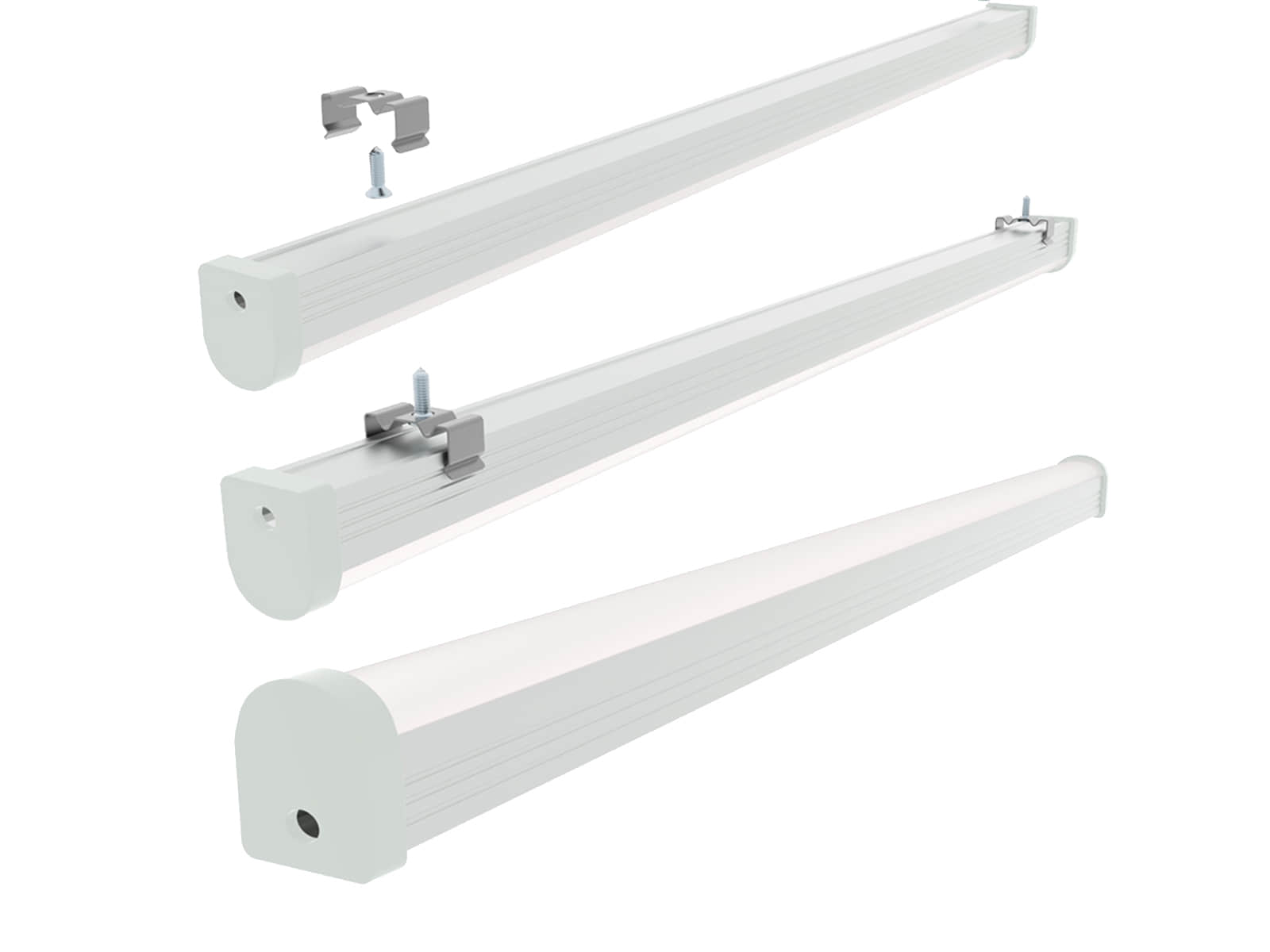
However, achieving this perfect harmony of light and human experience requires far more than just high-quality LED chips or sophisticated control systems. The true magic, and the ultimate control over the light environment, happens within the optical components. Specifically, advanced Extrusion Lenses and Linear Lenses have emerged as the absolute backbone of contemporary office luminaire design. These precision-engineered optics dictate everything from critical glare reduction and beam uniformity to the seamless, minimalist aesthetics of continuous suspended light runs.
In this comprehensive guide, we will unpack the entire spectrum of modern office lighting. From exploring how illumination profoundly affects human focus and eye health, to decoding strict European technical standards like UGR, to providing a detailed luminaire-and-lens matching map. Whether you are a lighting designer shaping a corporate headquarters or a luminaire manufacturer seeking the ultimate optical components for your next product line, this article will reveal how strategic lens selection transforms a standard office into an exceptional workspace.
How Illumination Shapes the Office Experience
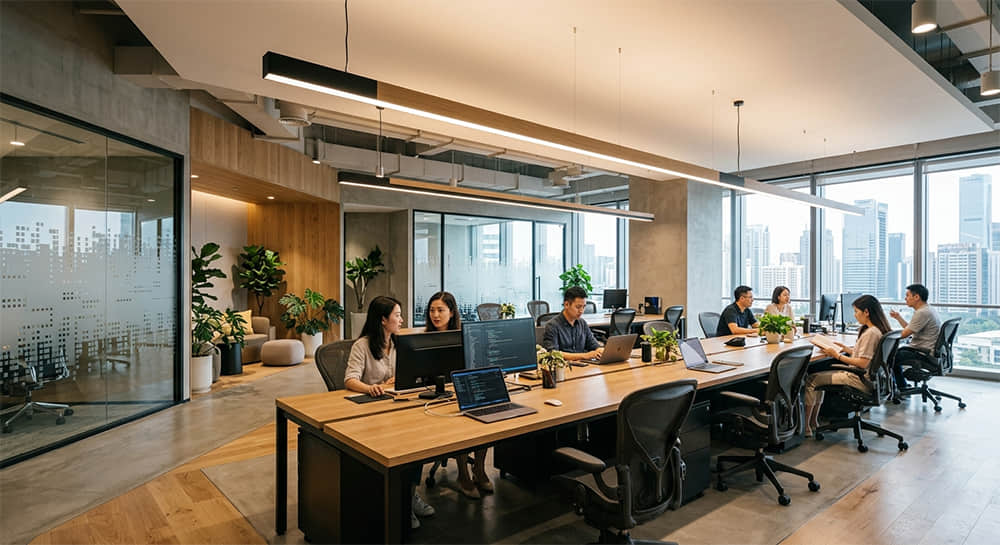
To understand the critical role of an Extrusion Lens or a Linear Lens, we must first understand the end-user: the human being. Human-Centric Lighting (HCL) is not merely an industry buzzword; it is a scientifically backed approach that recognizes light as a profound biological and psychological trigger. In a modern office setting where employees spend upwards of eight hours a day indoors, the quality of artificial illumination directly dictates their visual comfort, mental well-being, and overall productivity.
Visual Comfort and Eye Health
The contemporary workspace is dominated by digital screens, reflective surfaces, and continuous visual tasks. In this environment, poorly controlled lighting is the leading cause of Computer Vision Syndrome (CVS), which manifests as eye strain, headaches, and blurred vision. The primary culprit? Glare.
Direct glare from an exposed LED chip or reflected glare off a computer monitor instantly disrupts visual comfort. Here, the optical lens serves as the first and most critical line of defense. Advanced anti-glare lens designs, utilizing complex micro-prism arrays or carefully engineered frosted surfaces, actively intercept and redirect high-angle light rays. By softening the light exitance without sacrificing total lumen output, a high-quality lens eliminates the harsh piercing light that causes immediate discomfort.
Furthermore, the uniformity of light distribution is crucial for ocular health. If an office lighting layout creates a patchwork of bright hotspots and shadowy dark zones, the human pupil is forced to constantly dilate and constrict. Precision linear lenses are engineered to deliver flawlessly uniform light distribution, creating a smooth, consistent wash of illumination that allows the eyes to remain relaxed throughout the workday.
Psychological Security, Deep Focus, and the Circadian Rhythm
Beyond physical eye health, the spatial distribution of light profoundly influences an employee's psychological state. Environments with harsh shadows, noticeable flickering, or uneven light distribution can subconsciously trigger feelings of stress. Conversely, blind-spot-free lighting—achieved through continuous, seamless runs of extrusion lenses—visually expands the space, creating a welcoming atmosphere.
When it comes to productivity, a well-designed office utilizes a layered lighting approach. Broad beam linear lenses provide soothing, low-glare ambient lighting, while narrower, asymmetric lenses direct focused, high-intensity light exactly where it is needed for task lighting. This contrast gently anchors the employee's attention without overwhelming the surrounding environment.
Moreover, the best optical lenses today are designed to work in perfect synchrony with advanced smart lighting systems. As modern offices adopt Tunable White LEDs and DALI control protocols to mimic the natural progression of daylight (supporting the human circadian rhythm), the lens must flawlessly mix varying color temperatures. Whether the system is outputting a crisp, energizing 6000K cool white or a calming 3000K warm white, our advanced optical polymers ensure perfect color blending without any chromatic aberration.
European Office Lighting Standards
While visual comfort is a subjective human experience, in the commercial lighting industry, it must be translated into strict, measurable physical metrics. For luminaire manufacturers aiming to supply the European market, compliance with the EN 12464-1 standard (Light and lighting - Lighting of work places) is not merely a recommendation; it is a mandatory prerequisite. Achieving these exacting figures relies almost entirely on the precision of the optical lens.
Mastering UGR (Unified Glare Rating) in Offices
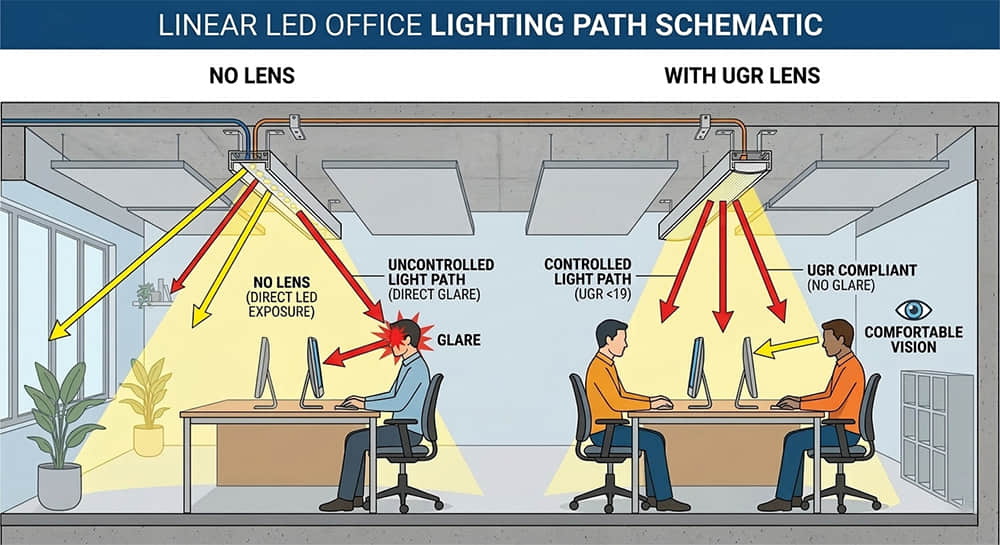
The most critical metric to conquer in office lighting is the Unified Glare Rating (UGR) . According to EN 12464-1, standard office tasks require a UGR of ≤ 19, while highly demanding visual tasks demand an even stricter UGR of ≤ 16.
Direct glare typically occurs when light exits the luminaire at angles greater than 65 degrees, striking the human eye directly. This is where advanced Extrusion Lenses engineered with sophisticated micro-prism structures come into play. Unlike a basic flat diffuser, a micro-prismatic extrusion lens features thousands of microscopic, geometrically precise cones or pyramids embossed directly onto its surface.
These micro-structures act as tiny optical funnels. Through the principles of Total Internal Reflection (TIR) and controlled refraction, they capture the omnidirectional light emitted by the LED strip and bend the high-angle rays downwards into the useful 0–60 degree cone, drastically cutting off the light at the glaring angles.
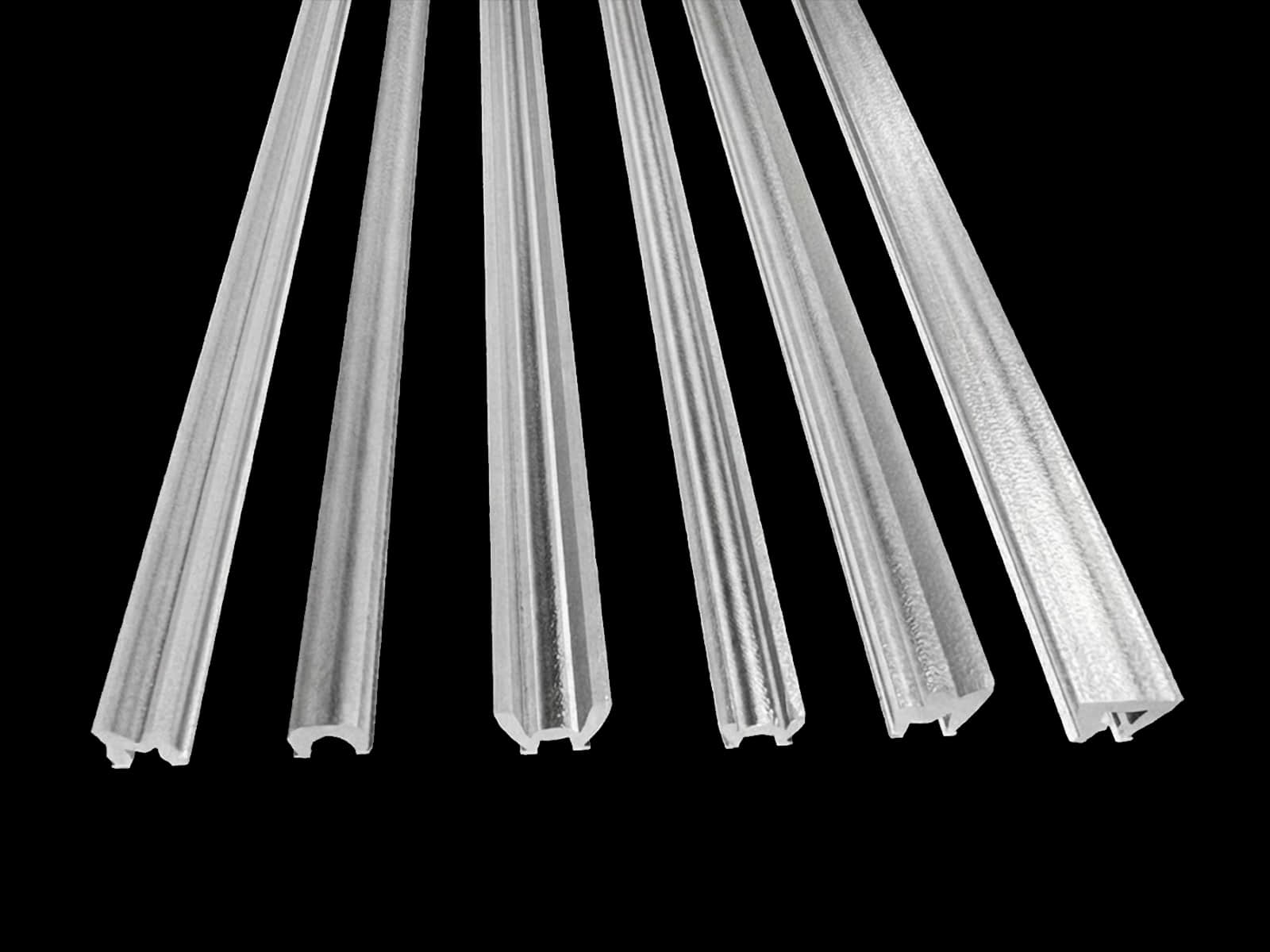
Furthermore, manufacturers must carefully choose the lens surface treatment. While a heavily frosted cover provides excellent LED dot-hiding capabilities, it scatters light in all directions, making strict UGR control nearly impossible. Conversely, a clear micro-prismatic surface offers precise beam control and significantly higher light transmittance. Asahi Optics excels in balancing these extremes, creating hybrid extrusion profiles that offer both flawless dot-free aesthetics and rigorous UGR < 19 compliance.
Illuminance Uniformity, Efficacy, and Energy Savings
Beyond glare, the EN 12464-1 standard dictates specific illuminance levels (e.g., 500 lux for standard office desks) and illuminance uniformity ($U_0$) . The standard typically requires $U_0 \ge 0.6$ on the task area. A poorly designed linear lens will create a bright hotspot directly underneath the luminaire while leaving the edges in shadow. Our high-precision linear optics utilize advanced freeform surface designs to distribute light evenly across broad areas.
Additionally, the role of the lens in energy saving cannot be overstated. High-quality optical-grade polymers combined with optimized internal refractive geometries ensure maximum luminous efficacy (lm/W) . By efficiently directing every lumen exactly where it is needed, our lenses allow luminaire manufacturers to hit target lux levels using fewer LEDs and lower driving currents.
Finally, superior optical materials guarantee zero color shift. Whether a project demands a standard Correlated Color Temperature (CCT) of 4000K or utilizes a dynamic Tunable White system, high-fidelity extrusion lenses preserve the original Color Rendering Index (CRI > 80) of the LED source.
The Luminaire & Lens Match Map for Office Environments
Modern office spaces utilize a diverse ecosystem of luminaire form factors, each demanding a specific optical strategy. To streamline the engineering process, we have developed a comprehensive matching matrix aligning common architectural office luminaires with their optimal optical solutions.
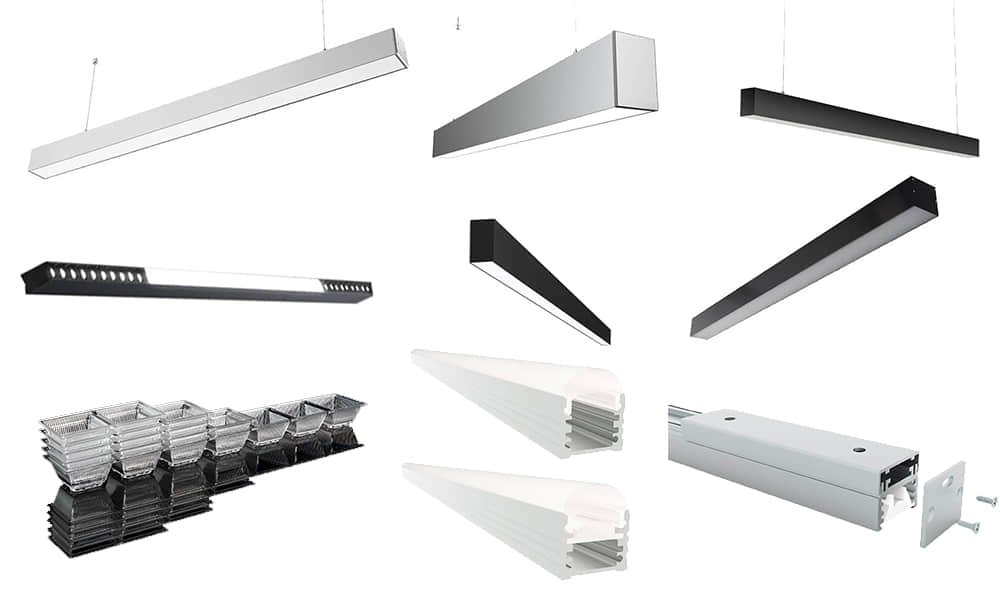
Suspended Linear Pendants
The hallmark of modern, minimalist office design is the suspended linear pendant. For this application, the extrusion linear lens is the absolute gold standard.
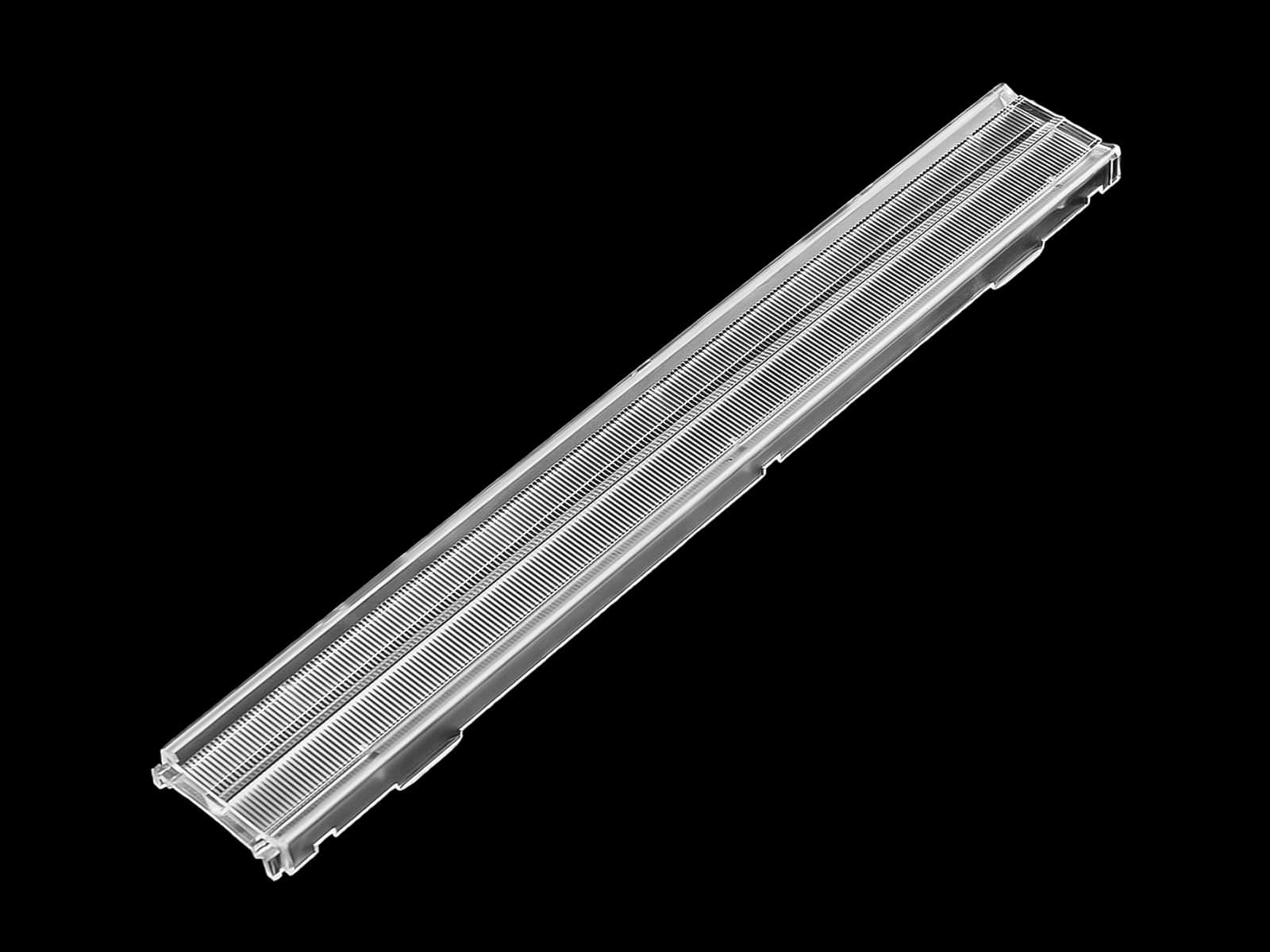
The primary engineering hurdle is avoiding light leaks and dark spots where standard plastic covers meet. High-quality polycarbonate (PC) extrusion lenses are manufactured in extremely long, continuous rolls. They feature sophisticated snap-fit mechanisms that accommodate thermal expansion, ensuring a perfectly seamless connection over dozens of meters. When equipped with a batwing light distribution, these extrusion lenses push light outward and downward, allowing for wider spacing while maintaining excellent illuminance uniformity.
Recessed Troffers & Modular Grilles
For high-end corporate environments using modular grid ceilings, recessed troffers are preferred. These often require Dark Light optical designs where the light source is virtually invisible from normal viewing angles.
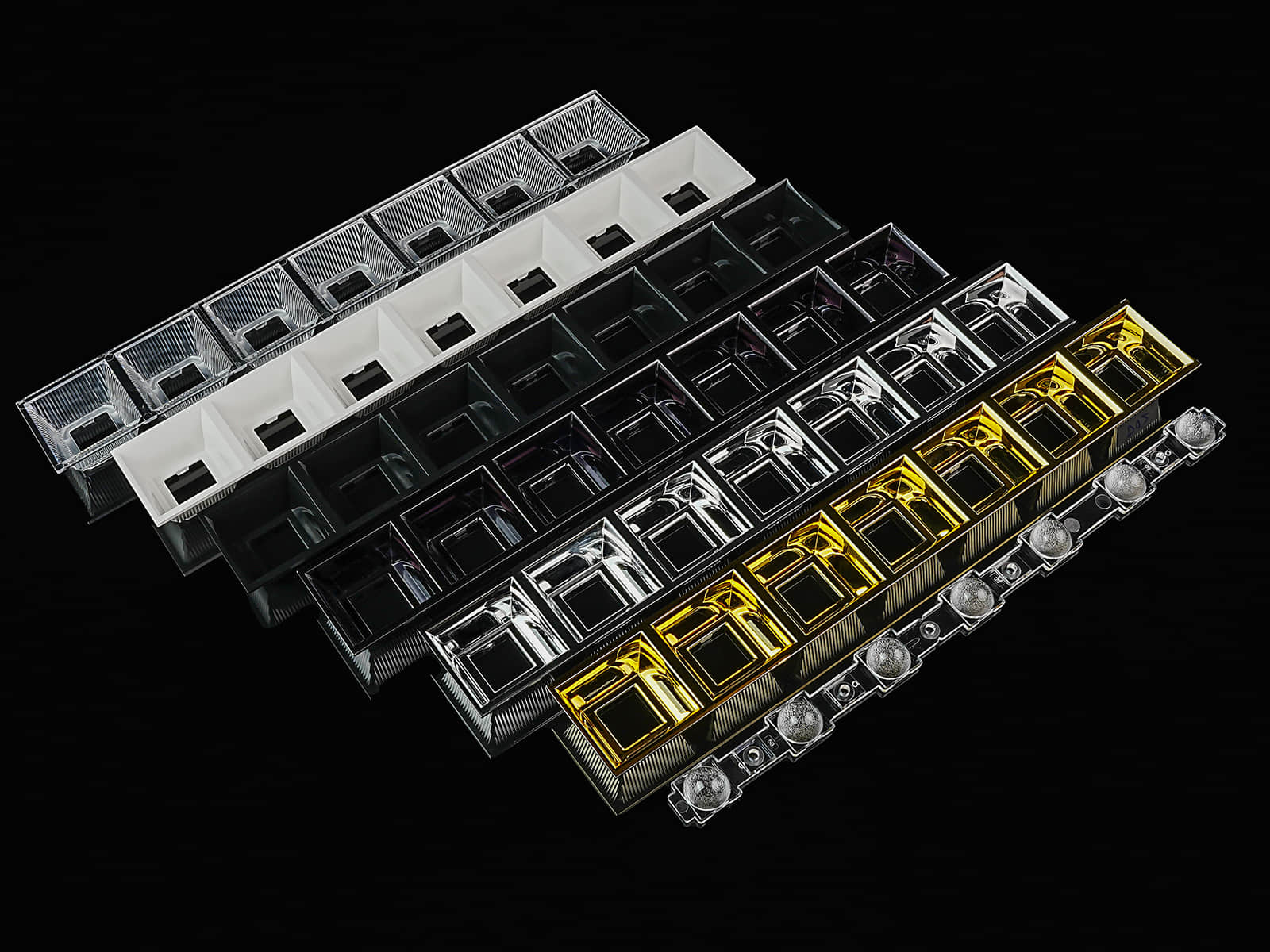
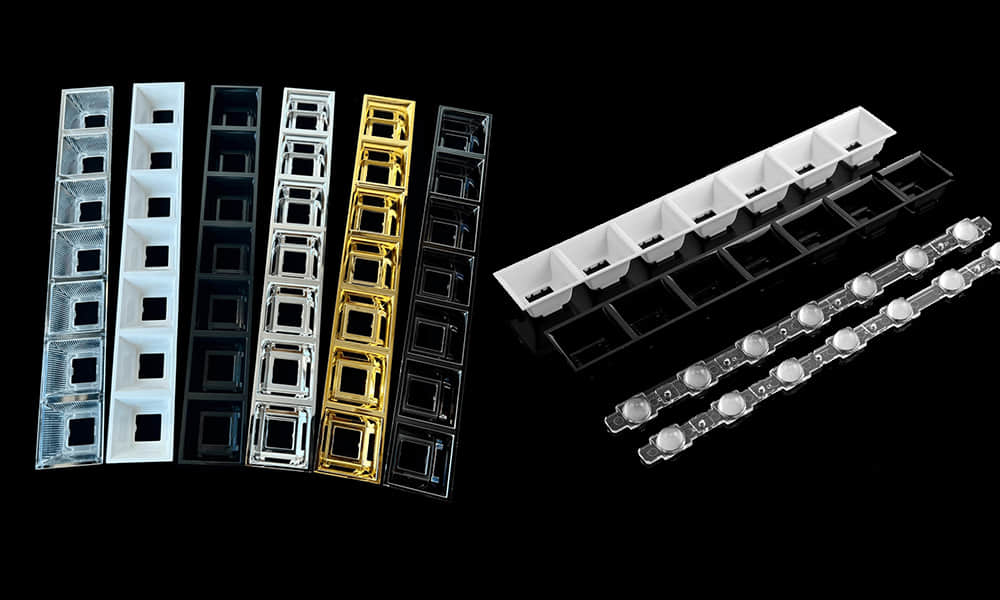
In this highly standardized sector, Asahi Optics leads with our premium linear lenses engineered to rigorous Zhaga standard specifications. Our flagship linear optics are designed at the standardized 280mm length, available in versatile configurations including 1x2, 1x3, 1x4, 1x5, and 1x7 linear lens layouts.
To give designers ultimate control over both aesthetics and UGR, these 280mm linear lenses are equipped with highly specialized holders:
-
The Black Holder: Acts as a micro-louvre, aggressively absorbing stray, high-angle light. This is the ultimate solution for achieving UGR < 19 and creating the luxurious Dark Light aesthetic.
-
The Crystal Holder: Maximizes light extraction and luminous efficacy (lm/W) , ideal for high-ceiling applications.
-
The White Holder: Blends seamlessly into traditional white ceiling grids, maintaining high efficiency and soft visual comfort.
Architectural Wall Washers
A truly Human-Centric office does not just illuminate desks; it illuminates vertical surfaces. By utilizing linear lenses with heavily asymmetric beam distributions, luminaires can evenly wash the walls or corridors with light. This bounced, indirect light makes the space feel substantially larger, brighter, and more welcoming, eliminating the oppressive cave effect.
Strategic Lens Selection for Diverse Office Zones
Open-Plan Workstations: The Domain of the Continuous Extrusion Lens
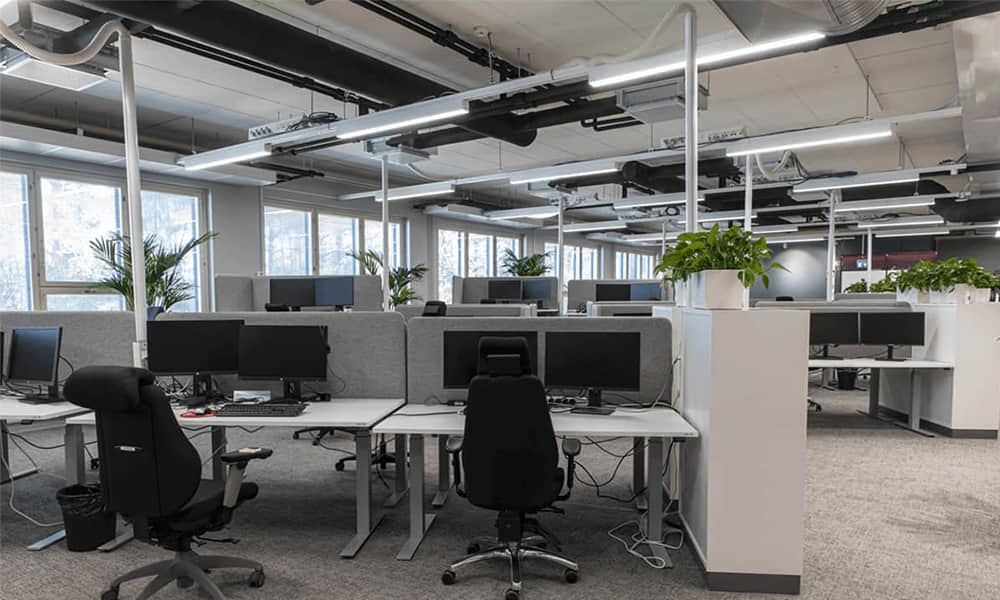
For vast open-plan areas, suspended continuous linear luminaires equipped with Linear Lenses are the indisputable choice. Products like the ASEL-AO20-CMB series extrusion linear lenses are engineered precisely for this environment.
By utilizing a wide batwing light distribution, these lenses push light sideways and downwards, efficiently covering the entire working plane. The advanced extrusion process guarantees a truly seamless connection, with no dark spots, light leaks, or harsh glare, creating a calm, uniform canopy of light.
Conference & Boardrooms: Precision Dark Light
Conference rooms present a unique dual challenge: clear document reading and frequent video conferencing, where cylindrical illuminance on faces is critical.
This is where modular Zhaga standard 280mm linear lens arrays truly shine. By recessing 1x5 or 1x7 linear optics into the ceiling grid, designers can achieve the ultimate Dark Light effect, while the precision optics deliver intense, perfectly controlled light downwards and onto faces, often synchronized with Tunable White systems.
Corridors, Circulation, and Breakout Areas: Guiding with Asymmetric Light
Transitional spaces do not require intense workstation-level illuminance. Instead, asymmetric linear lenses direct the light beam sideways onto the walls, eliminating the cave effect and making corridors feel wider. For breakout areas, extrusion lenses with heavily frosted surfaces provide a soft, diffuse glow that encourages relaxation.
Individual Task Lighting: The Micro-Structure Solution
For specialized tasks requiring extreme precision, individual task lights equipped with micro-structure single or multi-lenses are required. These specialized optical components offer very narrow beam angles (15° - 30°) with razor-sharp cut-off lines, delivering intense, shadow-free illumination onto the localized work area without disturbing neighboring colleagues.
Conclusion: Partnering for Workspace Optical Excellence
The evolution of the modern office has elevated lighting from a mere functional necessity to a critical driver of human health, productivity, and architectural beauty. As we have explored, achieving true Human-Centric Lighting and complying with European standards like EN 12464-1 is fundamentally impossible without superior optical engineering. Whether it is eradicating glare with a Zhaga standard 280mm dark light module, or creating flawless, seamless runs with advanced extrusion lenses, the lens is the defining soul of the luminaire.
At Asahi Optics, we are dedicated to pushing the boundaries of what is optically possible in workspace illumination. With our extensive portfolio of ready-to-deploy standard linear lenses, versatile extrusion profiles, and our world-class custom tooling capabilities, we empower luminaire manufacturers and lighting designers to turn visionary concepts into physical reality.