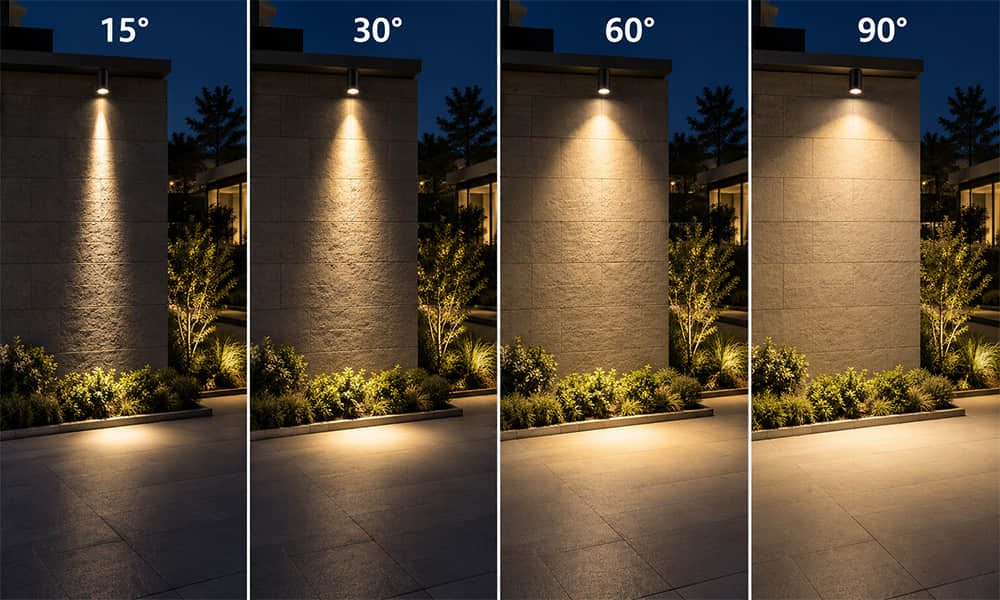
An IES file is a standardized digital file that describes the light distribution characteristics of a lighting fixture. It is mainly used in lighting design, simulation, and photometric analysis to show how a lamp or LED luminaire actually distributes light in real environments.
The full name is IES Photometric File, based on the standards developed by the Illuminating Engineering Society (IES).
What Information Does an IES File Contain?
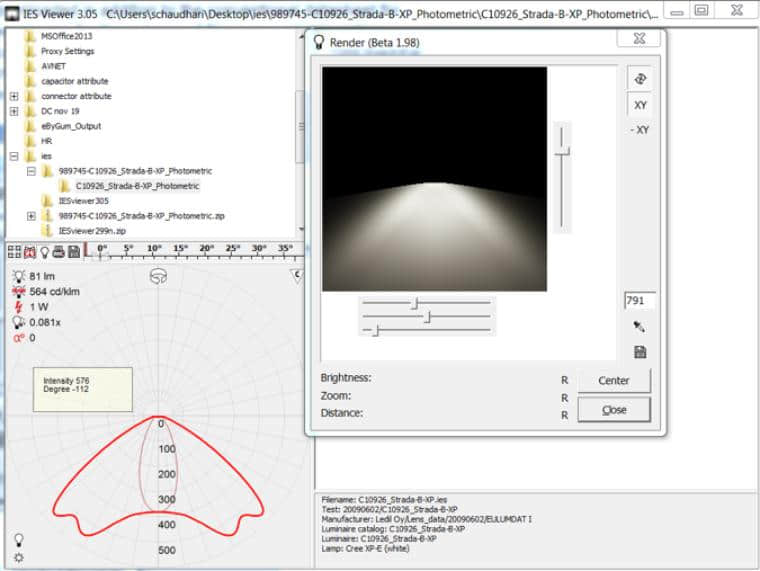
An IES file typically includes several types of photometric and fixture information.
1. Light Intensity Distribution
It records how much light is emitted at different angles.
For example:
- 0° → directly downward
- 30° → slightly angled
- 60° → wide angle
- 90° → horizontal direction
This creates the beam pattern of the fixture.
Example:
- Narrow beam spotlight: concentrated intensity at 0–15°
- Flood light: wider distribution at 30–60°
- Street light: asymmetric distribution to illuminate roads
2. Luminous Intensity Data (Candela)
The core data is usually measured in candela (cd).
| Angle | Candela |
|---|---|
| 0° | 12000 cd |
| 15° | 9500 cd |
| 30° | 4000 cd |
| 45° | 1200 cd |
| 60° | 300 cd |
Lighting software uses this data to calculate:
- illuminance (lux)
- beam angle
- uniformity
- spacing between fixtures
- lighting levels
3. Fixture Information
An IES photometric file may also contain:
- Manufacturer name
- Luminaire model
- LED source information
- Wattage
- Lumens
- CCT (color temperature)
- Photometric test information
Example:
| Manufacturer | ASAHI OPTICS |
|---|---|
| Luminaire | LED Lens Module |
| Power | 30W |
| Lumens | 4200 lm |
| CCT | 5000K |
Why Are IES Files Important for LED Lens Manufacturers?
For an LED lens company, an IES file is extremely valuable because the lens determines the final light distribution.
For example, a 5050 LED with different optics can create very different results:
- Without lens: LED → wide uncontrolled light
- With Type IV lens: LED + lens → road or tunnel asymmetric distribution
- With 30° spot lens: LED + lens → narrow beam spotlight
The IES file proves the actual optical performance. Customers can import it into lighting software and verify the design before purchasing.
For lighting engineers and OEM customers, this is much more practical than only reading a beam angle or product description. The IES file allows them to simulate how the LED lens or luminaire will perform in a real project environment.
Where Are IES Files Used?
Common lighting simulation software includes:
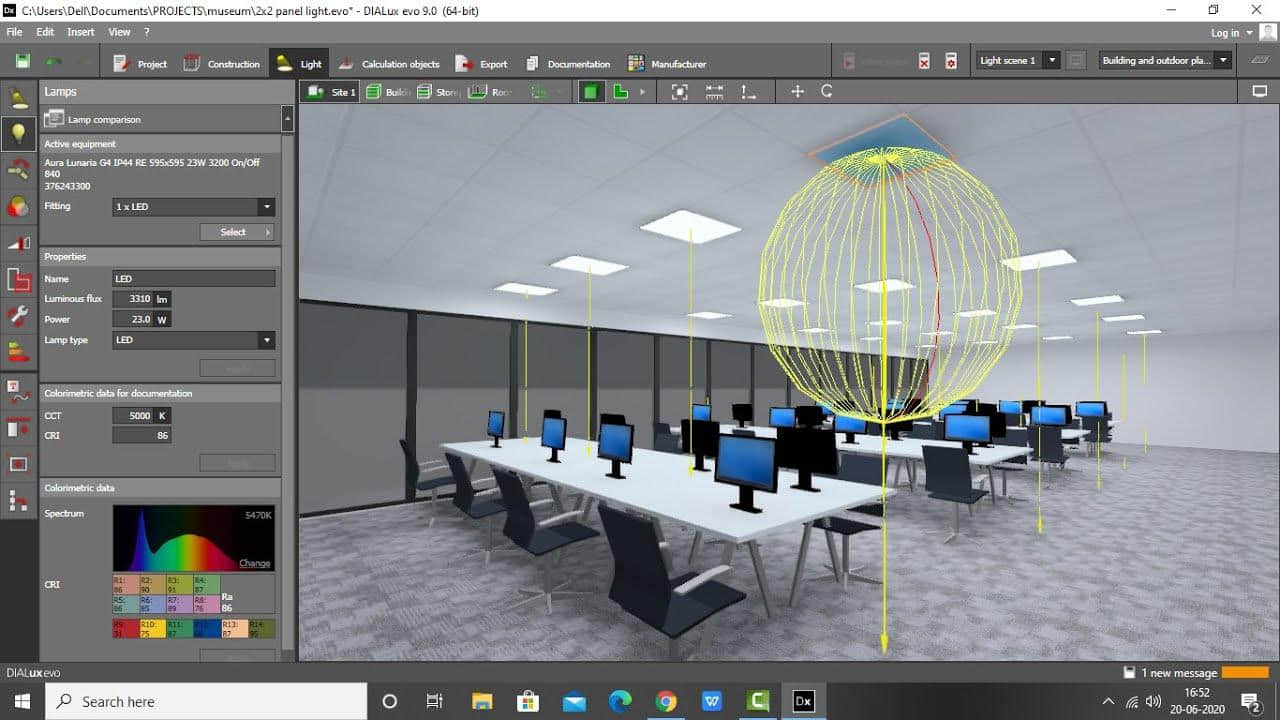
- DIALux evo
- Relux
- AGi32
- Autodesk Revit
- Autodesk 3ds Max
Lighting designers use IES files to simulate many types of projects, including:
- warehouses
- tunnels
- streets
- offices
- stadiums
- retail stores
IES File vs LDT File
In Europe, another common photometric format is LDT, also known as EULUMDAT.
| Feature | IES | LDT |
|---|---|---|
| Origin | USA | Europe / Germany |
| Common in | North America, global | Europe |
| Software support | Very high | Very high |
| Used for | LED luminaires, lenses | Professional lighting design |
Most LED manufacturers provide both IES and LDT files as part of their technical data package:
- Product name
- IES file
- LDT file
- LM-79 test report
- Spectral data
- 3D model (STEP / DWG)
How Is an IES File Created?
A typical workflow for creating an IES file includes the following steps:
- LED + lens assembly is mounted in a goniophotometer.
- The fixture rotates through different angles.
- Light intensity is measured.
- Data is converted into IES format.
- The customer downloads the file for simulation.
For an optical lens manufacturer, the measurement is usually done after:
LED + PCB + lens + holder + fixture design
This is because the lens performance depends on the complete optical system. The same lens may produce different results if the LED package, PCB layout, holder height, or fixture structure changes.
Why an IES File Is a Strong Technical Asset for LED Lens Products
For an LED lens website, an IES file is a strong technical asset. It helps customers understand the actual optical performance of a product instead of relying only on general descriptions.
For products such as:
- 5050 LED Type IV tunnel lens
- 26mm extrusion linear lens
- 40mm asymmetric linear lens
- 16mm spot lens
You can provide a clear technical data structure:
| Product Page Section | Available Data |
|---|---|
| Photometric Data | IES Download, LDT Download, Polar Curve |
| Optical Parameters | Beam Angle, Distribution Type, Efficiency, Application |
| Simulation Example | DIALux Lighting Project |
This significantly increases trust with lighting engineers and OEM customers because they can directly test your optics in their lighting designs.
Need IES or LDT Data for an LED Lens?
Asahi Optics provides LED lens solutions for street lighting, tunnel lighting, linear lighting, industrial lighting, stage lighting, and other applications. For suitable projects, photometric data such as IES files, LDT files, polar curves, and optical parameters can help customers evaluate lens performance more efficiently.
If you are selecting an LED lens for a lighting project, you can also review our LED optical design capability or contact Asahi Optics to request available photometric data for your application.