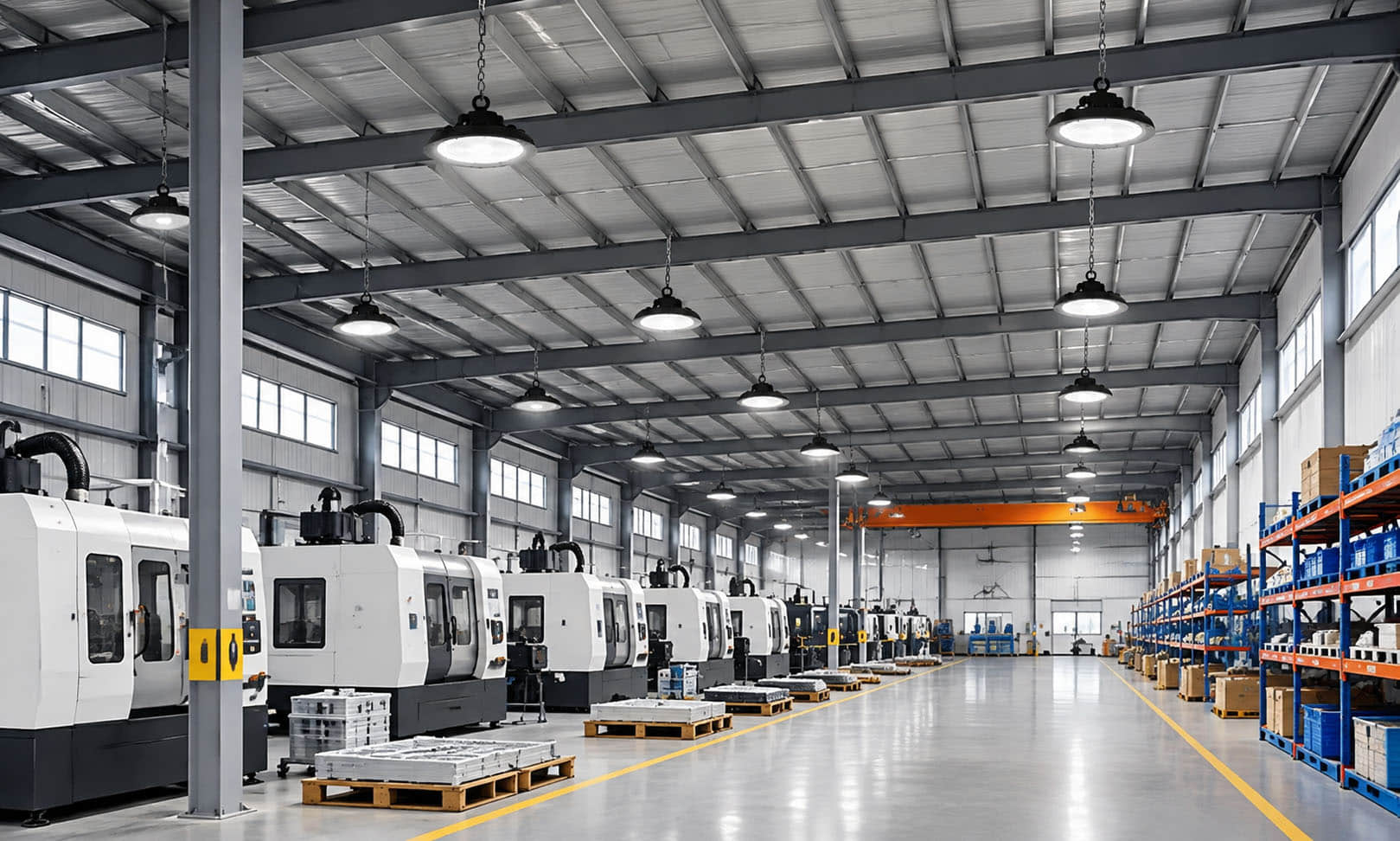
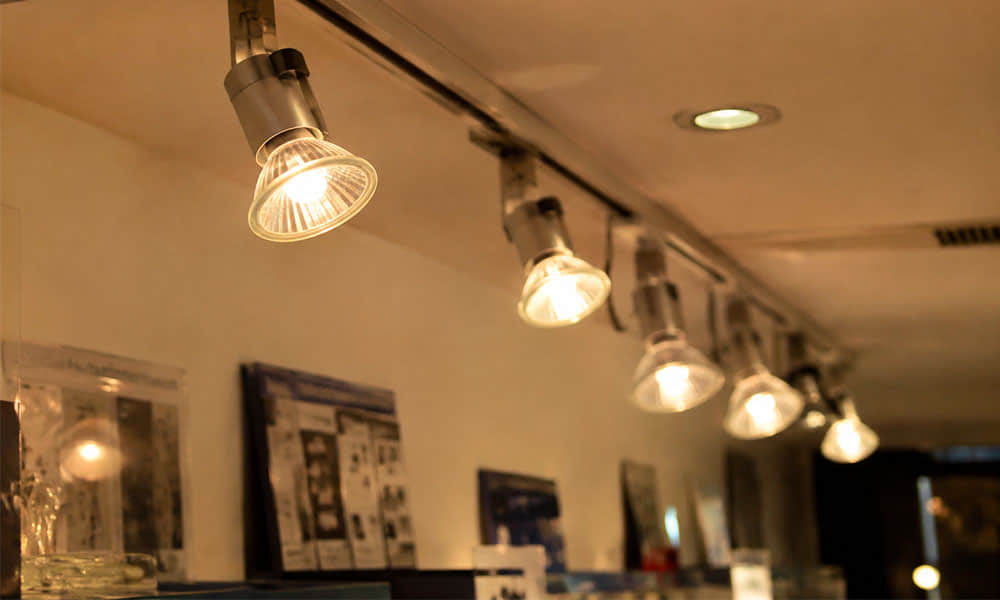
Explosion proof LED lights are commonly discussed as part of the broader category of lighting for hazardous locations. In technical use, however, “explosionproof” describes a particular protection approach; it is not a blanket description of every luminaire approved for flammable gas, vapor or combustible dust environments.
For manufacturers, engineers and maintenance teams, the practical question is whether the complete LED luminaire is suitable for the site’s classification, substances and operating conditions. An LED source, metal housing or IP rating alone does not establish that suitability.
What Does Explosion Proof Mean in LED Lighting?
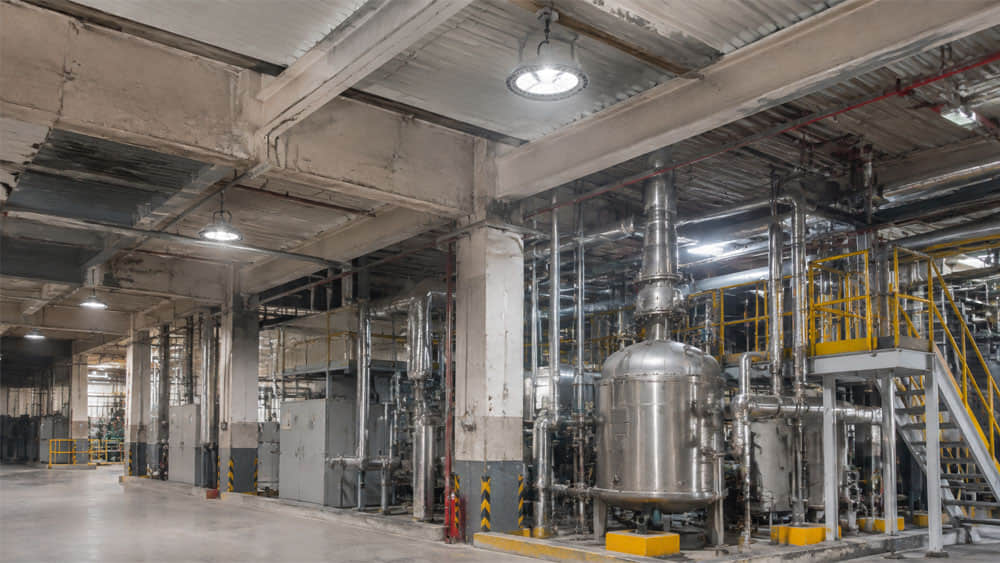
In one explosionproof protection approach used for specified gas or vapor hazards, an enclosure is designed to withstand an internal explosion and prevent it from igniting the surrounding atmosphere. Applicable surface-temperature requirements must also be met.
This does not mean that the fixture prevents every explosion, withstands any external blast or is suitable for every hazardous substance. Other equipment may use different approved protection methods to reduce ignition risk.
Combustible-dust locations require equipment suitable for the identified dust hazard. A gas-related explosionproof marking should not automatically be treated as approval for dust.
Start with the Hazardous-Area Classification
Obtain the classification for the exact installation area before comparing light output, power or beam angle. The assessment identifies the relevant hazardous material and the conditions under which a hazardous atmosphere may occur.
In the United States, OSHA’s hazardous-location requirements address locations involving flammable gases or vapors, combustible dusts and other relevant materials. They require each room, section or area to be considered individually.
In the U.S. Class/Division system:
- Class I: Locations involving flammable gases or vapors.
- Class II: Locations involving combustible dust.
- Class III: Locations involving ignitable fibers or flyings.
The Division provides additional information about the conditions under which the hazard may be present. Zone-based classification is also used in applicable jurisdictions. Do not directly convert a Class/Division marking into a Zone marking without checking the applicable rules and equipment documentation.
A facility name alone does not establish its classification. Different areas within the same plant may have different requirements. The classification should be determined by the team responsible for the site assessment.
Class/Division, IECEx and ATEX: What Is the Difference?
These terms answer different questions:
- Class/Division and Zone: Frameworks used to classify hazardous areas and describe the conditions under which equipment will be installed.
- IECEx: An international certification system for equipment and services associated with explosive atmospheres.
- ATEX: EU legislation and conformity-assessment requirements for equipment intended for potentially explosive atmospheres.
The European Commission’s ATEX guidance explains the EU requirements for placing relevant equipment on the market. An IECEx certificate can provide useful evidence, but it does not automatically replace the applicable ATEX conformity requirements. Confirm the required documentation for the destination market and product category.
How to Verify a Luminaire’s Approval Documents
Ask for the exact model’s certificate, product markings and manufacturer instructions. Then compare them with the site classification and the actual supplied configuration.
| Check | What to Confirm |
|---|---|
| Area and substance | The marking covers the applicable area classification and the relevant gas, vapor or dust group. |
| Temperature and environment | The temperature marking, ambient range and other rated conditions are suitable for the site assessment. |
| Model and configuration | The certificate covers the supplied luminaire model and configuration, including applicable options. |
| Certificate status | Check the issuing scheme’s official records where available for the certificate status, issue or revision, holder and covered models. |
| Conditions of use | Read the certificate and instructions for restrictions affecting installation, operation or maintenance. |
For an IECEx certificate, use the official IECEx certificate database to look up the certificate number. Compare the record with the product marking and supplier documentation. If the model, revision or conditions do not agree, ask the certificate holder or issuing certification body for clarification before proceeding.
An “X” suffix on an IECEx equipment certificate number indicates that the certificate contains Specific Conditions of Use. Read those conditions rather than treating the marking as a complete approval on its own. The absence of an “X” does not remove the need to check the certificate, product markings and instructions for applicable limitations.
For example, a product documented only for Class I, Division 2 should not be accepted for a site classified as Class I, Division 1. Even when the area designation matches, the substance group, temperature marking and other conditions still need review.
Why Temperature and IP Ratings Must Be Checked Separately
LED luminaires generate heat. The LED assembly, driver and construction can all influence temperatures in the finished product. A lower wattage or an LED label does not automatically establish a suitable temperature rating.
Compare the product’s temperature marking and permitted ambient conditions with the site assessment. For combustible dust, the assessment may also need to consider dust deposits and other site-specific conditions.
IP protection is a separate issue. An IP rating describes protection against the ingress of solid particles and water under specified test conditions. It does not, by itself, demonstrate that a luminaire is approved to control ignition risks in an explosive atmosphere. A project may require both suitable ingress protection and the applicable hazardous-location approval.
Internal Optical Lens or Protective Window?
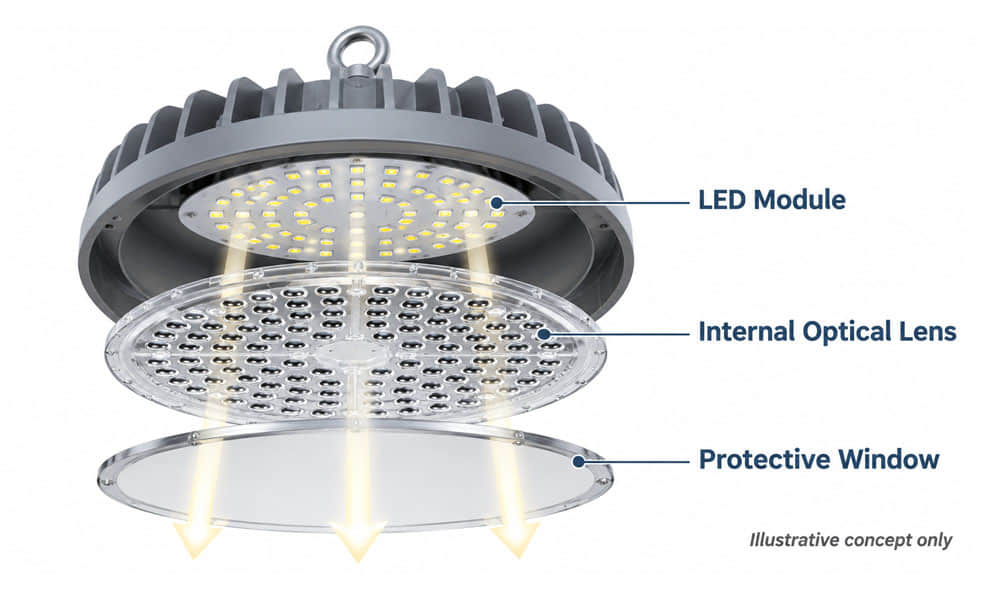
These components may have different roles in a hazardous-location luminaire:
- Internal secondary optical lens: Primarily redirects light from the LED to produce the intended distribution. When positioned inside a separate enclosure, it may not itself form the external protective boundary.
- Transparent protective window or cover: In some designs, this forms part of the assessed enclosure or protective boundary. Its material, dimensions, joining method and retention can be relevant to the approved construction.
The distinction depends on the actual design. One transparent part can perform both optical and protective functions, so its role cannot be determined from the word “lens” or “cover” alone.
An internal optic is not automatically outside the complete-luminaire assessment. Its material, location, temperature exposure or interaction with surrounding parts may still matter. Likewise, a component certificate, if applicable, is not the same as a certificate for complete equipment.
Before changing a lens, window, seal or other part in an existing fixture, consult the luminaire manufacturer and follow the applicable maintenance and certification requirements. Matching dimensions alone do not establish that a substitute is approved. Depending on the change, the manufacturer and certification body may need to review it.
Evaluate the Lighting Task as Part of the Complete Design
Once hazardous-area requirements are established, the luminaire still needs to deliver useful light to the work area. Review mounting position, target surfaces, obstructions, glare and the photometric data of the complete fixture.
For general guidance on how installation geometry affects distribution, see our industrial lighting optics guide. Optical calculations and measurements help evaluate lighting performance, but they do not replace hazardous-area assessment or approval.
Prepare an Optical Inquiry for an OEM Project
For a new luminaire design, share the following information with the optical supplier:
- The intended sales market and the hazardous-area classification and protection requirements already established by the responsible project team.
- Whether the optical part is an internal secondary lens, a protective window or a part expected to perform both roles. A sectional drawing is helpful.
- The LED part number, available optical space and relevant mounting interfaces.
- The target area, mounting geometry and required distribution.
- Any material, temperature or other constraints already specified for the assembly.
Contact Asahi Optics for an initial optical discussion. We can help identify existing components worth evaluating, apparent source or mounting constraints, and information needed for the next optical review.
The site classification and explosion-protection requirements remain the responsibility of the relevant site and luminaire teams. Any proposed component must be assessed within the complete product and its applicable certification process; an optical review is not an explosion-protection approval.