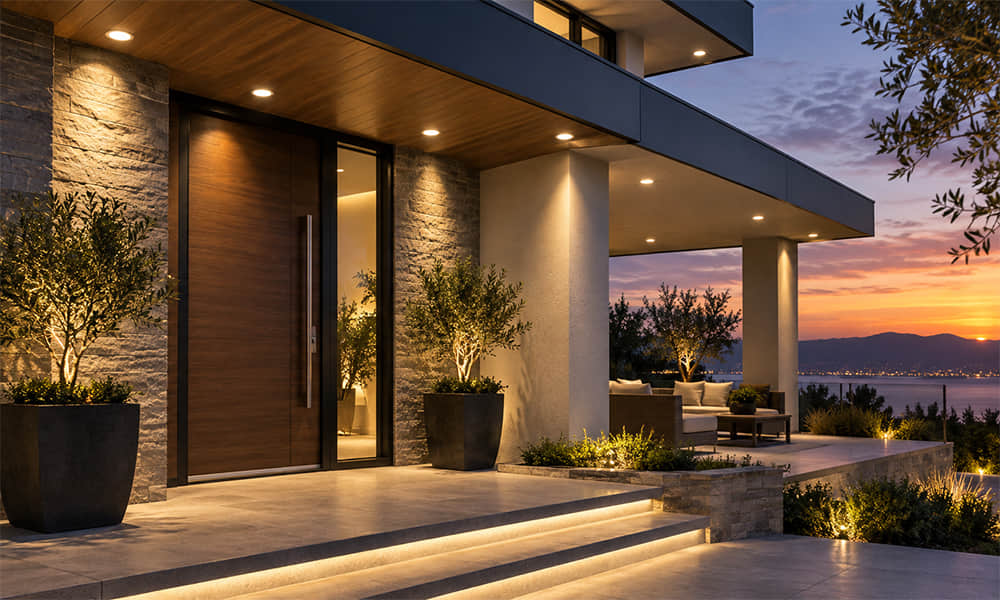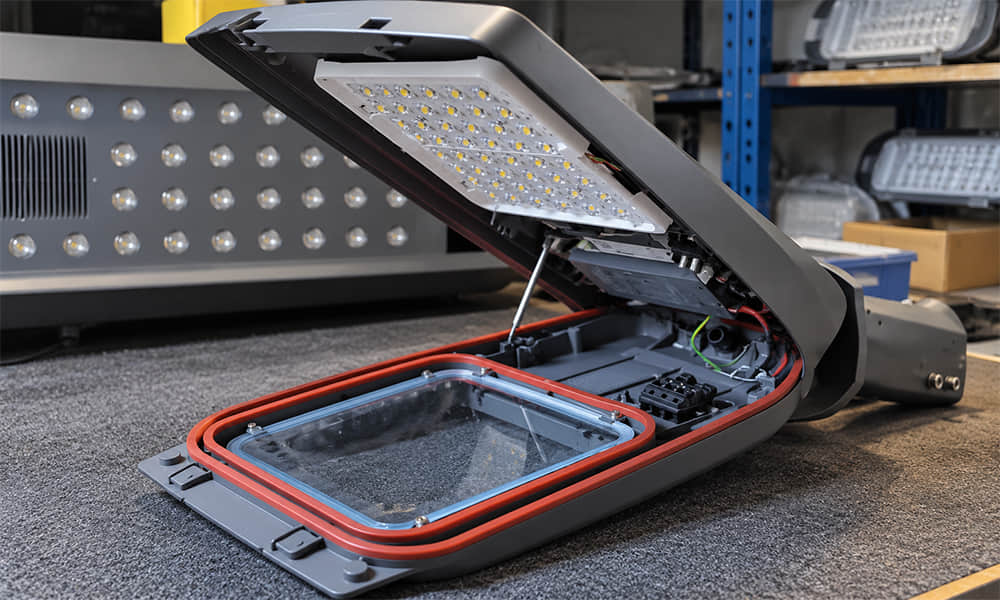
When customers step into a supermarket or a high-end boutique, they rarely look up at the ceiling. Yet, the commercial retail lighting suspended above them silently dictates their entire shopping experience. It is a well-established fact in retail design that strategic illumination does more than just brighten a room—it guides foot traffic, highlights product textures, and directly influences how long shoppers choose to browse. If the light is too harsh, it causes immediate eye fatigue; if it is too flat, premium merchandise looks dull and unappealing.
The single most destructive element in any commercial shopping environment is glare. A poorly engineered optical system spills light uncontrollably, blinding customers as they scan high shelves or navigate through long aisles. This visual discomfort physically forces shoppers to look away from the displays, disrupting their focus and shortening their dwell time. When evaluating the various types of lighting in retail stores—ranging from general ambient overheads to highly focused accent spots—the deciding factor between a fatiguing environment and a premium, inviting space is always the quality of the optical lens.
Today, the modern retail lighting industry is undergoing a profound technical shift. Fixture manufacturers and architectural designers are moving away from basic frosted diffusers and demanding absolute optical precision. The new standard focuses heavily on low-glare visual comfort and seamless linear optical solutions that deliver high-efficiency illumination without hurting the eyes. In this comprehensive guide, we will break down exactly how advanced optical lenses are solving the sector's toughest illumination challenges.
Mastering Aisle Lighting in Grocery Stores
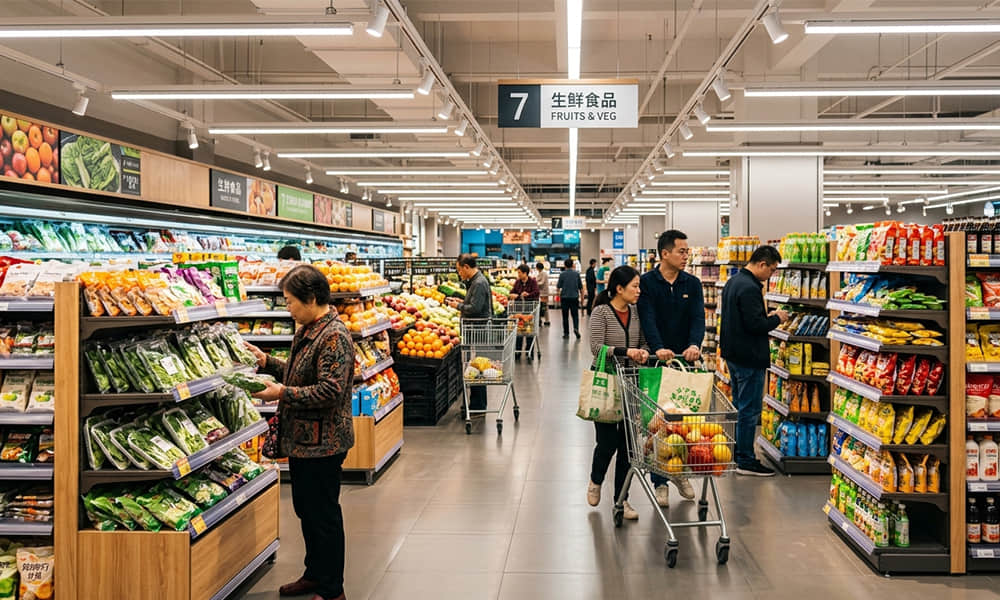
One of the most complex and demanding areas to illuminate effectively is the supermarket aisle. When analyzing typical grocery store lights, the immediate optical challenge becomes obvious: the geometry of the space is inherently difficult. Aisles are typically narrow corridors flanked by tall, vertical shelving units. If a lighting designer utilizes standard symmetric optics or basic flat diffusers, the majority of the lumen output is blasted directly down onto the floor. This creates dark, heavily shadowed shelves and forces customers to squint against severe glare when they look up to read product labels. True optical success in aisle lighting requires a completely different approach to light distribution.
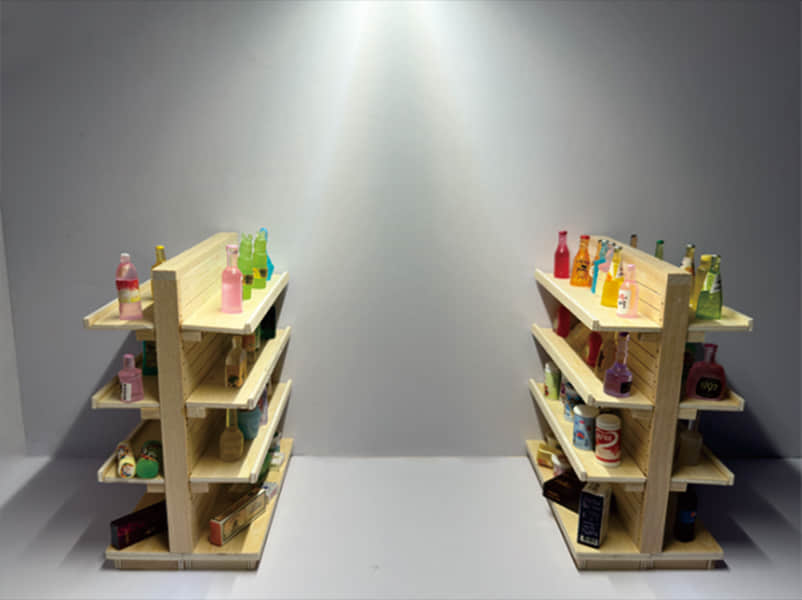
In the retail environment, the merchandise is the hero, and the merchandise lives on the shelves. Therefore, the primary objective of led shelf lighting for grocery stores is achieving high vertical illumination. The light must uniformly wash the products from the top shelf all the way down to the bottom rack, without creating harsh hotspots or deep shadows. To achieve this, the light beam must be precisely manipulated.
The ultimate engineering solution to this geometric problem is the batwing led lens. Unlike standard covers that emit light evenly in all directions, a batwing optic utilizes complex micro-structures to split and push the light outwards at specific angles. This highly controlled, double-asymmetric beam pattern ensures that the maximum light intensity is directed sideways onto the vertical shelving faces.
Simultaneously, the batwing profile significantly reduces the light intensity directly beneath the luminaire, eliminating the uncomfortable glare that normally strikes shoppers' eyes. By deploying a batwing distribution, store owners achieve a perfectly balanced visual environment: bright merchandise on the sides, and a comfortable, softly lit walkway in the center. Furthermore, because supermarket aisles are long, continuous spaces, these optics are most effective when integrated into seamless linear profiles, ensuring an unbroken, uniform wash of light across the entire length of the store.
The Dark Lighting Revolution and Glare Control
While mastering uniform light distribution across long supermarket corridors is essential, high-end boutiques demand an even more sophisticated approach to visual comfort. This specific demand has sparked one of the most significant trends in modern illumination: the dark lighting revolution. The core philosophy is technically challenging—illuminate the merchandise flawlessly, but make the luminaire itself practically invisible.
When a shopper scans the environment, a poorly designed ceiling will be dotted with blindingly bright LED chips. This harsh brightness causes the human pupil to constrict, which ironically makes the beautifully lit merchandise below appear darker. By implementing meticulously engineered anti glare lights, designers can dramatically lower the space's Unified Glare Rating (UGR) . In premium retail, achieving a UGR of less than 19 is the gold standard. A low-glare, quiet ceiling creates a relaxed atmosphere that eliminates eye fatigue, encouraging customers to linger longer.
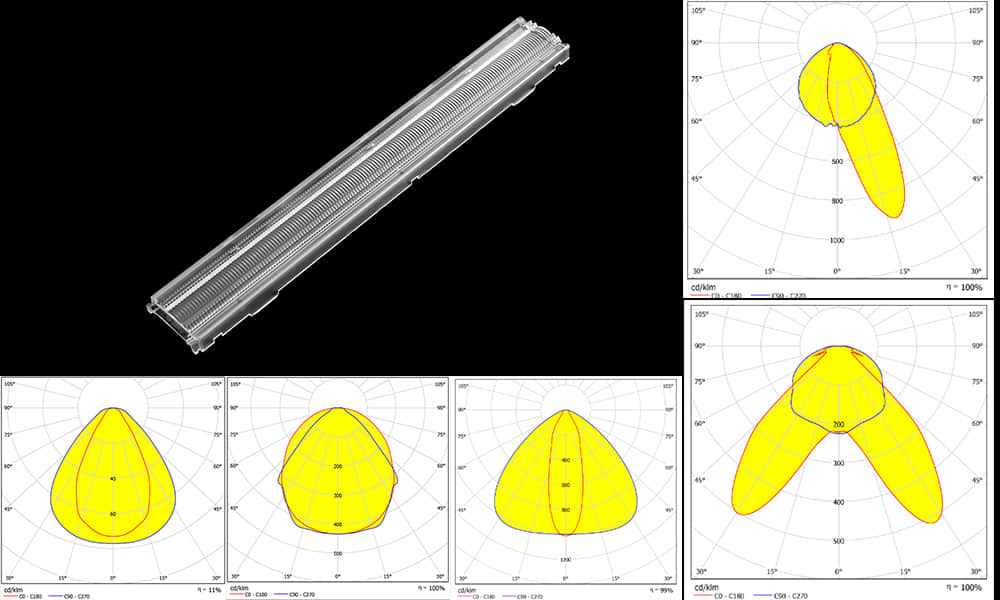
Achieving true dark lighting requires complex optical engineering. Manufacturers can no longer rely on simple opal diffusers, which scatter light uncontrollably. Instead, the ultimate solution lies in miniaturized optical systems. By utilizing advanced Total Internal Reflection (TIR) lenses paired with deeply recessed micro-reflectors, optical engineers can trap and direct light with pinpoint accuracy, ensuring that high-intensity rays are pushed downward before they can spill into the shopper's line of sight.
However, general low-glare ambient lighting is only one piece of the puzzle. To create a dynamic shopping experience, retailers must strategically guide the eye toward high-margin merchandise. This requires intense, high-contrast illumination from high-performance retail display spotlights.
To make specific textures pop, designers rely on the narrow beam spotlight. By tightly restricting the light distribution to a very specific angle (typically between 10° and 15°), a narrow beam spotlight delivers a powerful, concentrated punch of center-beam candlepower (CBCP) . This tightly controlled beam acts like a theatrical spot, painting the product with intense light while leaving surroundings shadowed. When combined with dark light shielding techniques, the luminaire delivers dramatic accent lighting without ever blinding the customer.
The Extrusion Linear Advantage
While advanced batwing distributions and specialized glare-control reflectors solve specific photometric challenges, the physical construction of supermarket luminaires presents its own hurdle. Standard injection-molded arrays are restricted to fixed dimensions. When strung together to illuminate a long aisle, these individual blocks create mechanical joints and frustrating light leakage.
To deliver truly flawless illumination, the industry is shifting toward continuous linear lighting solutions. The definitive optical upgrade for long retail spaces is the extrusion optic, commonly referred to as an pmma stripe lens. Unlike injection-molded arrays, an extrusion profile is manufactured through a precise, continuous drawing process. This allows for the creation of virtually endless optical lenses, guaranteeing a perfectly smooth, unbroken line of light that eliminates all dark spots and unsightly mechanical joints.
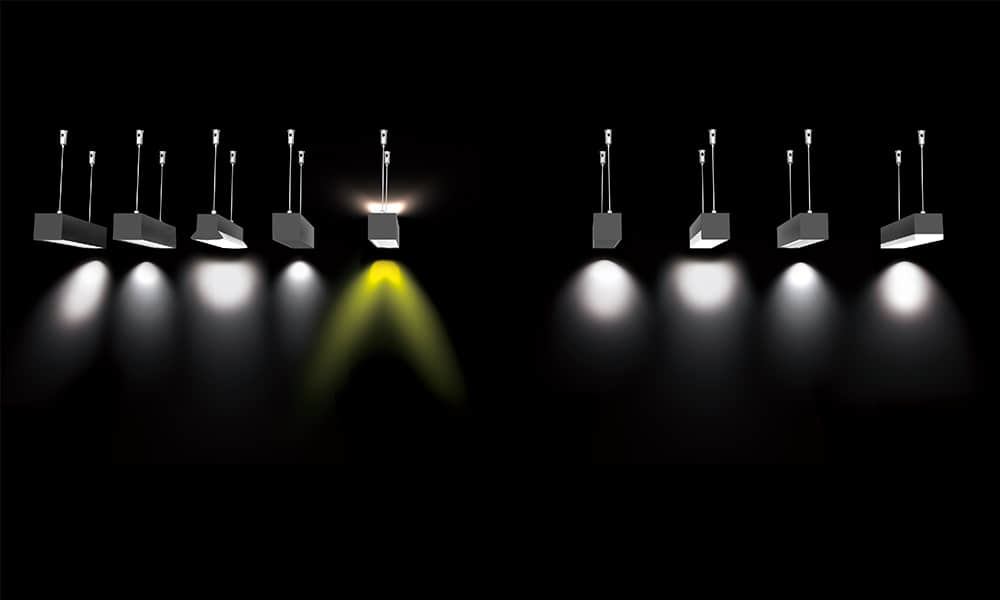
Beyond aesthetic superiority, extrusion optics offer unprecedented manufacturing flexibility. Because the pmma stripe lens can be precision-cut to any custom length, it perfectly accommodates bespoke architectural profiles. This continuous process does not sacrifice photometric precision. Advanced extrusion profiles are engineered to meticulously control the led light beam angle across the entire span of the fixture, whether a project requires a focused 30° led light beam angle or a wide 90° spread. This powerful combination of endless length, flawless aesthetics, and precise manipulation of the led light beam angle makes extrusion the ultimate optical choice.
Material Science: Solving the Yellowing Dilemma
When designing commercial lighting systems, manufacturers must look beyond initial performance and consider long-term material stability. Retail luminaires often operate for 12 to 18 hours a day, exposing led lighting optics to continuous thermal stress. One frequent question is: will polycarbonate yellow over time?
Standard polycarbonate is highly susceptible to photo-oxidation. While PC offers incredible impact resistance, prolonged exposure to heat and light causes polymer degradation, resulting in a distinct yellow tint. In a premium retail setting, this is disastrous. A yellowed lens reduces light transmittance and alters color temperature, casting a dull hue over merchandise.
To solve this, premium extrusion lenses are manufactured using high-grade Polymethyl Methacrylate (PMMA) . PMMA serves as the ultimate non-yellowing solution, inherently UV-stable and highly resistant to thermal degradation. It maintains pristine optical clarity for the entire operational life of the LED fixture. Furthermore, PMMA boasts a superior initial light transmittance rate of over 92%, making it more optically efficient than standard polycarbonate. By specifying PMMA for continuous linear profiles, fixture builders guarantee that their led lighting optics will deliver crisp, color-accurate illumination for years.
Conclusion: Elevate Your Fixtures with Asahi Optics
In the hyper-competitive retail landscape, lighting is about precision, visual comfort, and seamless aesthetics. From eliminating harsh glare with advanced dark lighting technologies to achieving flawless vertical illumination across grocery store aisles, the right optical system dictates success. For progressive luminaire manufacturers, transitioning to continuous, non-yellowing linear extrusion lenses is the key to building premium, high-performance lighting fixtures.
At Asahi Optics, we understand that exceptional commercial lighting requires exceptional engineering. As a trusted manufacturing partner for top-tier luminaire builders globally, we specialize in high-quality PMMA extrusion lenses tailored precisely for the rigorous demands of the modern retail sector. Our state-of-the-art extrusion processes create seamless optical profiles that eliminate frustrating light leakage and dark joints.
Elevate your commercial product lines by integrating optics that prioritize both visual comfort and structural elegance. Partner with Asahi Optics to provide your clients with the ultimate low-glare, high-efficiency shopping experience. Our premium extrusion lenses are engineered to integrate flawlessly with standard linear aluminum profiles.