An LED extrusion diffuser is an important optical cover used with LED aluminum profiles, LED strip channels, and linear lighting fixtures. It helps soften the light, reduce visible LED dots, improve glare control, and create a cleaner continuous light line.
For linear lighting manufacturers, the diffuser is not only a plastic cover. It directly affects the final appearance of the fixture, including brightness, uniformity, visual comfort, and product quality. A suitable LED aluminum profile diffuser can make the same LED strip look much more professional in real applications.
Asahi Optics provides LED optical components for different lighting applications. In addition to LED lenses for linear lighting projects, we can also support LED extrusion diffuser solutions for manufacturers who need profile-matched diffuser covers for LED strip channels and linear light fixtures.
What Is an LED Extrusion Diffuser?
An LED extrusion diffuser is a translucent or semi-transparent cover installed on the front of an LED aluminum profile or LED strip channel. Its main purpose is to diffuse the light emitted by the LEDs before the light reaches the viewer or illuminated surface.
In a typical linear lighting fixture, the LED strip or LED module is mounted inside an aluminum profile. Without a diffuser, the individual LED chips may be clearly visible, especially when the fixture is viewed directly. This can create a dotted light effect, harsh brightness, and poor visual comfort.
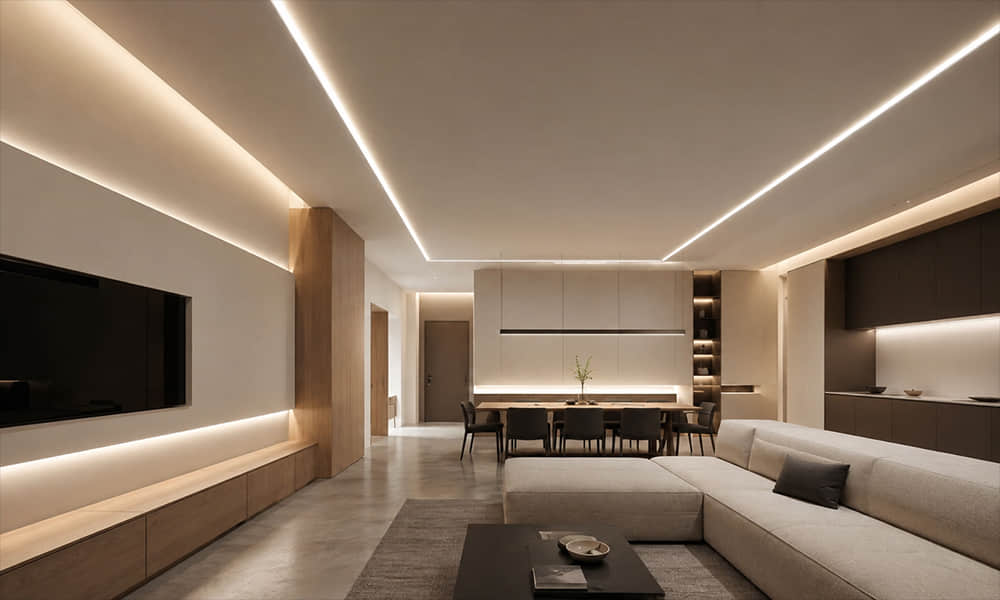
By adding an LED strip diffuser cover, the light is spread more evenly across the surface. The result is a softer, cleaner, and more continuous light output. This is why diffusers are widely used in cabinet lighting, shelf lighting, commercial display lighting, architectural linear lighting, and decorative LED profile systems.
Why LED Aluminum Profiles Need a Diffuser
LED aluminum profiles are commonly used to hold and protect LED strips or linear LED modules. The aluminum body provides mechanical support, heat dissipation, and a finished product appearance. However, the aluminum profile alone does not solve all optical problems.
A LED profile diffuser helps improve the final light quality by solving several common issues.
Visible LED Dots
One of the most common problems in LED strip lighting is visible LED dots. When the distance between the LED chips is large, or when the profile is shallow, the viewer may see each individual LED point instead of a smooth light line.
A suitable LED channel diffuser can reduce this dot effect by scattering light before it exits the fixture. The result depends on LED pitch, profile depth, diffuser material, diffuser thickness, and surface finish.
Harsh Glare
LED strips can appear very bright when viewed directly. In retail shelves, display cabinets, offices, hotels, and residential interiors, uncontrolled brightness may cause discomfort.
A diffuser softens the output and reduces direct glare. This helps improve visual comfort, especially in applications where the light source is visible to users.
Uneven Light Line
Without a diffuser, the light line may look uneven or broken. This can reduce the perceived quality of the fixture, even if the LED strip itself has good electrical performance.
A linear lighting diffuser helps create a more uniform luminous surface, making the fixture look cleaner and more suitable for architectural and decorative applications.
Exposed LED Strip or PCB
The diffuser also works as a protective cover. It helps keep dust, touch, and minor external contact away from the LED strip or PCB. For many indoor linear lighting products, this improves both appearance and basic protection.
Main Functions of an LED Extrusion Diffuser
Softening the Light Output
The most basic function of an LED extrusion diffuser is to soften the light. Instead of allowing the LED light to leave the profile as strong point sources, the diffuser spreads the light across a larger surface.
This creates a more comfortable lighting effect, especially in short-distance applications such as cabinets, wardrobes, shelves, stairs, and display lighting.
Reducing LED Dot Visibility
Dot-free appearance is one of the main reasons customers choose a diffuser for LED aluminum profiles. A diffuser cannot always completely remove LED dots in every fixture, but it can significantly reduce their visibility when properly matched with the profile and LED strip.
For better dot-free performance, manufacturers should consider the LED density, distance from LED to diffuser, diffuser opacity, and diffuser shape. A deeper profile and a more diffusing material usually help improve uniformity.
Improving Glare Control
A diffuser changes how the light is perceived by the human eye. By spreading the light and reducing sharp point brightness, it can make the fixture more comfortable to view.
This is especially important for linear lighting installed under shelves, inside cabinets, around mirrors, near work areas, or in places where people may look directly at the light source.
Protecting the LED Strip or Module
Although the main purpose is optical, a diffuser also provides basic physical protection. It covers the LED strip and helps prevent direct contact with the light source.
For indoor lighting products, this can improve the finished appearance and reduce the chance of visible contamination on the LED strip surface.
Creating a Clean Linear Lighting Appearance
In many projects, appearance is just as important as brightness. A clean light line gives the fixture a more professional look and helps it blend into furniture, architecture, and commercial interiors.
This is why LED diffuser for linear lighting applications is widely used in modern lighting products.
Common Types of LED Extrusion Diffusers
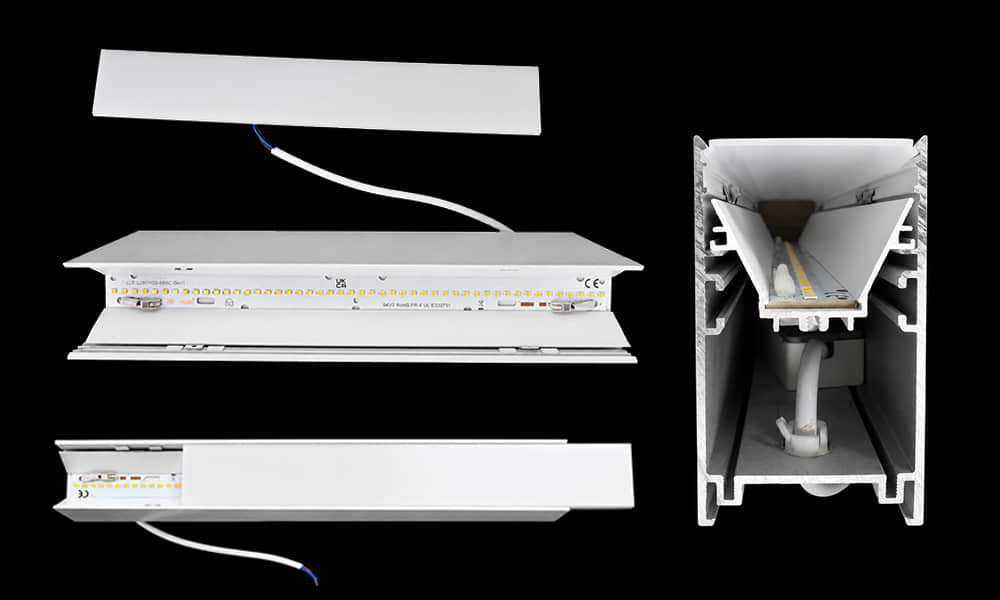
Different diffuser types create different optical effects. When choosing an LED extrusion diffuser, manufacturers should balance light transmission, dot hiding ability, surface appearance, and cost.
Clear LED Diffuser
A clear diffuser allows more light to pass through and usually provides higher brightness. However, it has limited ability to hide LED dots because the LED chips may still be visible through the cover.
Clear diffusers are suitable when maximum light output is more important than a fully uniform luminous surface.
Frosted LED Diffuser
A frosted diffuser provides a balance between light transmission and diffusion. It can soften the light and reduce LED dot visibility better than a clear diffuser while still maintaining reasonable brightness.
Frosted diffuser covers are commonly used in general LED profile lighting, shelf lighting, and decorative linear lighting.
Opal LED Diffuser
An opal diffuser creates a softer and more uniform light appearance. It is often used when the visual quality of the light line is important.
Compared with a clear diffuser, an opal diffuser may reduce more light output, but it usually provides better dot hiding and a cleaner luminous surface. This makes it useful for visible linear lighting fixtures and decorative applications.
Textured or Milky Diffuser
Some LED extrusion diffusers use textured, milky, or specially treated surfaces to improve diffusion. These options can help adjust the balance between brightness and uniformity.
The final result should be tested with the actual LED strip and aluminum profile because the optical effect depends on the complete fixture structure.
PC vs PMMA Diffuser: Which Material Should You Choose?
Material selection affects mechanical strength, optical appearance, temperature performance, and long-term reliability. The two common materials for LED extrusion diffuser products are PC and PMMA.
PC Diffuser
A PC diffuser offers good impact resistance and toughness. It is often selected when the diffuser needs better mechanical strength or when the fixture may face handling, assembly, or installation stress.
PC is commonly used for LED profile covers where durability is important. It can be a practical choice for linear lighting fixtures used in commercial, industrial, or semi-protected environments.
PMMA Diffuser
A PMMA diffuser usually provides good optical clarity and light transmission. It is often selected for linear lighting products where appearance and optical quality are important.
PMMA can be suitable for decorative lighting, furniture lighting, commercial displays, and architectural linear lighting where a clean visual surface is required.
How to Choose Between PC and PMMA
The choice between PC and PMMA depends on the application environment, required optical effect, mechanical requirements, temperature conditions, and fixture design.
If the project needs higher impact resistance, PC may be preferred. If the project focuses more on optical clarity and visual appearance, PMMA may be a suitable option. For the best result, the diffuser material should be evaluated together with the LED strip, aluminum profile, and installation environment.
How an LED Extrusion Diffuser Affects Brightness and Uniformity
Every diffuser changes the light output. A diffuser can improve visual uniformity, but it may also reduce a portion of the transmitted light. This is a normal trade-off in linear lighting design.
A clear diffuser usually keeps more brightness but hides LED dots less effectively. An opal diffuser creates a softer and more uniform line but may reduce more light output. A frosted diffuser often sits between these two options.
The final lighting effect depends on several factors:
- LED strip density
- LED pitch
- distance from LED to diffuser
- profile depth
- diffuser thickness
- diffuser material
- surface finish
For an LED extrusion diffuser for uniform light, the diffuser should not be selected alone. It should be tested as part of the complete aluminum profile and LED strip system.
How to Choose the Right LED Extrusion Diffuser
Check the Width and Shape of the Aluminum Profile
The diffuser must match the aluminum profile mechanically. Width, locking structure, curved or flat shape, and installation method all need to be confirmed.
If the diffuser does not fit the profile correctly, it may be difficult to assemble or may create gaps that affect the final product appearance.
Confirm the LED Strip Density and LED Pitch
LED density has a major effect on dot visibility. A low-density LED strip usually needs stronger diffusion or a deeper profile to achieve a smooth light line.
For high-density LED strips, a lighter diffuser may be enough to create a uniform appearance while maintaining better brightness.
Define the Required Light Appearance
Some projects need maximum brightness. Others need a soft, dot-free line. Before choosing the diffuser, manufacturers should define the target appearance clearly.
For example, a display shelf light may need high brightness and clean product visibility, while a decorative wall profile may need a softer and more continuous luminous surface.
Balance Light Transmission and Dot-Free Effect
The more a diffuser scatters light, the better it may hide LED dots. However, stronger diffusion can also reduce light output. The right choice depends on the product positioning and application.
This is why sample testing is important. A diffuser that looks good in one profile may not perform the same way in another profile with different depth or LED spacing.
Consider Indoor, Outdoor or High-Temperature Use
The application environment also affects diffuser selection. Indoor decorative lighting, commercial shelf lighting, and outdoor linear lighting may require different material properties.
Temperature, UV exposure, humidity, and mechanical protection should be considered before confirming the diffuser material and structure.
Where Are LED Extrusion Diffusers Used?
LED extrusion diffusers are widely used in linear lighting products where visual appearance and light comfort are important.
Common applications include:
- cabinet lighting
- shelf lighting
- display lighting
- office linear lighting
- architectural linear lighting
- signage lighting
- stair lighting
- indirect lighting
- commercial decorative lighting
- furniture lighting
In these applications, the diffuser helps create a more finished and comfortable lighting effect. It also helps manufacturers improve product appearance without changing the whole fixture structure.
What Information Helps Us Recommend a Diffuser?
To recommend a suitable LED extrusion diffuser, Asahi Optics needs to understand the aluminum profile, LED strip, and target lighting effect.
Useful information includes:
- aluminum profile drawing
- diffuser width
- diffuser shape
- LED strip width
- LED pitch
- target appearance
- clear, frosted, or opal preference
- PC or PMMA material preference
- indoor or outdoor application
- sample photo or existing fixture reference
With this information, it is easier to evaluate whether a standard diffuser option can be used or whether the project requires a profile-matched diffuser solution.
Diffuser or Lens: Which One Does Your Linear Lighting Project Need?
A diffuser and a lens solve different optical problems.
If the main goal is a soft, uniform, and comfortable light appearance, an LED extrusion diffuser is usually the right choice. It is especially useful for LED strip channels, furniture lighting, decorative profiles, and short-distance linear lighting.
If the project requires beam angle control, wall washing, asymmetric light distribution, or stronger optical control, an optical lens may be needed. For these applications, you can also review Asahi’s linear LED lens solutions as a related optical option.
In many linear lighting projects, the key is to choose the component that matches the real lighting target. A diffuser improves visual comfort and appearance, while a lens provides stronger light distribution control.
Asahi Optics Can Supply LED Extrusion Diffusers for Linear Lighting Projects
Asahi Optics is known for LED optical lens solutions, but we can also support LED extrusion diffuser needs for linear lighting manufacturers. This is useful for customers who work with LED aluminum profiles, LED strip channels, and linear light fixtures.
Depending on the project, Asahi can help with:
- PC diffuser options
- PMMA diffuser options
- opal diffuser covers
- frosted diffuser covers
- clear diffuser covers
- profile matching support
- sample evaluation
- diffuser recommendation for LED aluminum profiles
For manufacturers who need both optical components and diffuser covers, Asahi can support early evaluation and help identify a suitable direction based on the profile design and lighting requirement.
Conclusion
An LED extrusion diffuser plays an important role in LED aluminum profile and linear lighting products. It affects light uniformity, glare control, LED dot visibility, fixture appearance, and basic protection for the LED strip or module.
Choosing the right diffuser requires balancing brightness, diffusion, material, profile depth, LED pitch, and application environment. Clear, frosted, opal, PC, and PMMA diffuser options can create different results, so the final choice should be based on the actual fixture design.
If you are developing an LED aluminum profile, LED strip channel, or linear lighting fixture, contact Asahi Optics to discuss a suitable LED extrusion diffuser option for your project.