Why look at European architecture for outdoor lighting inspiration?
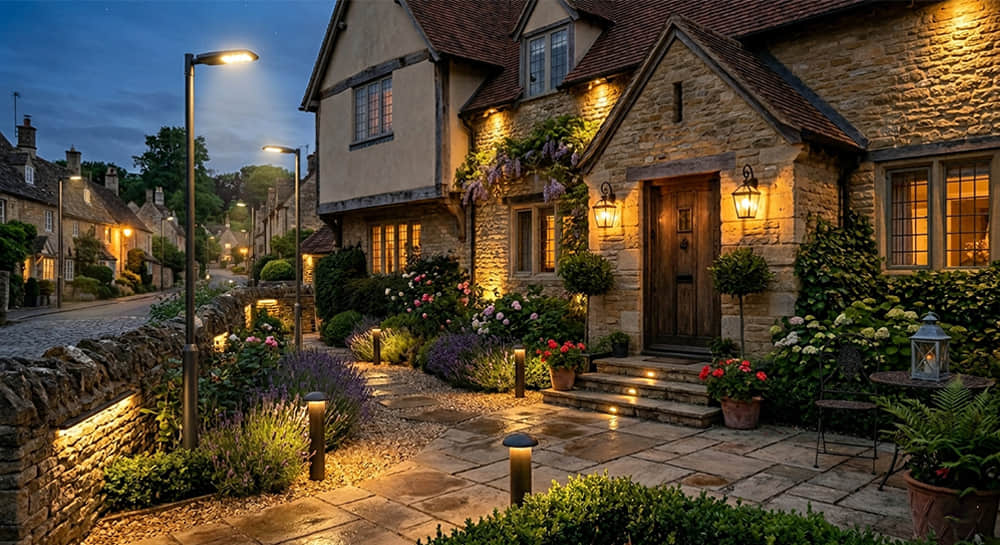
When developing and selecting outdoor lighting fixtures, European courtyard and architectural design serves as an excellent reference model. This design philosophy prioritizes a structured, layered approach to illumination rather than relying on overwhelming, uniform brightness. The focus is always on practical safety, strict glare control, and seamless integration with both the building and the surrounding natural environment.
To achieve this balance, understanding the physical environment and the specific pain points of different outdoor zones is essential. In this guide, we will explore the core challenges of illuminating key exterior areas and examine how selecting the appropriate LED fixtures—backed by precise internal optical designs—can effectively resolve these issues and meet the rigorous demands of modern outdoor lighting projects.
How can you safely illuminate walkways and driveways without causing glare?
Illuminating the approach to a property involves distinct challenges depending on the scale of the road. Pedestrians need clear visibility to navigate uneven surfaces, while vehicles require adequate light to identify boundaries and obstacles. In both cases, the primary enemy is glare: a bright, uncontrolled light source that temporarily blinds the user, creates harsh shadows, and detracts from the property's overall aesthetic.
Low-level bollard lights for standard pathways
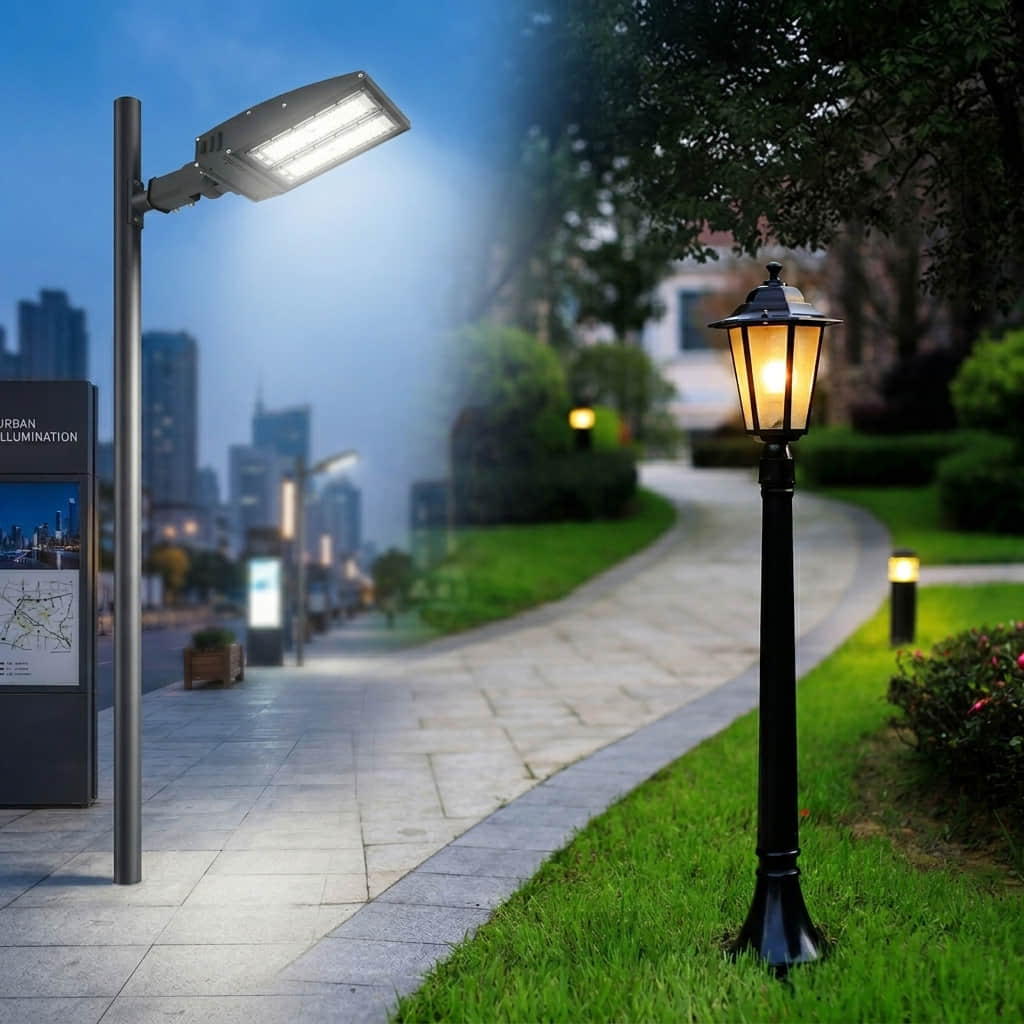
For standard pedestrian walkways, narrow garden paths, and small borders, low-level bollard lights are the most practical choice. These fixtures are designed to stay below eye level, casting a soft, localized glow directly onto the walking surface. Because their primary function is simple pathway delineation and close-range visibility, standard bollard lights typically rely on basic mechanical shielding or standard diffusers. They generally do not require complex secondary optics to function effectively.
High-performance street and area lights for main driveways
However, when dealing with main driveways, trunk access roads, or larger courtyard entry routes, low bollard lights are insufficient. These areas require pole-mounted street or area lights to provide wider, continuous coverage. This is the exact point where advanced secondary optics become absolutely essential.
Unlike a bollard, a high-mounted street light must project light over a large, specific target area while aggressively cutting off the high-angle beams that cause glare or light trespass into nearby residential windows. To achieve this precise optical control, high-quality area lights are frequently equipped with standardized 50x50mm square lens modules.
These precision lenses are engineered with specific asymmetric geometries (such as Type II or Type III). By placing these 50mm square lenses directly over the LED arrays, the fixture can optically steer the light sideways along the driving axis. This ensures highly uniform road illuminance without wasting lumens on the surrounding landscape or contributing to upward light pollution.
For fixture manufacturers, integrating the correct optical module is what separates a compliant, high-performance area light from a basic floodlight.
Highlighting the structural details of exterior walls and main entrances
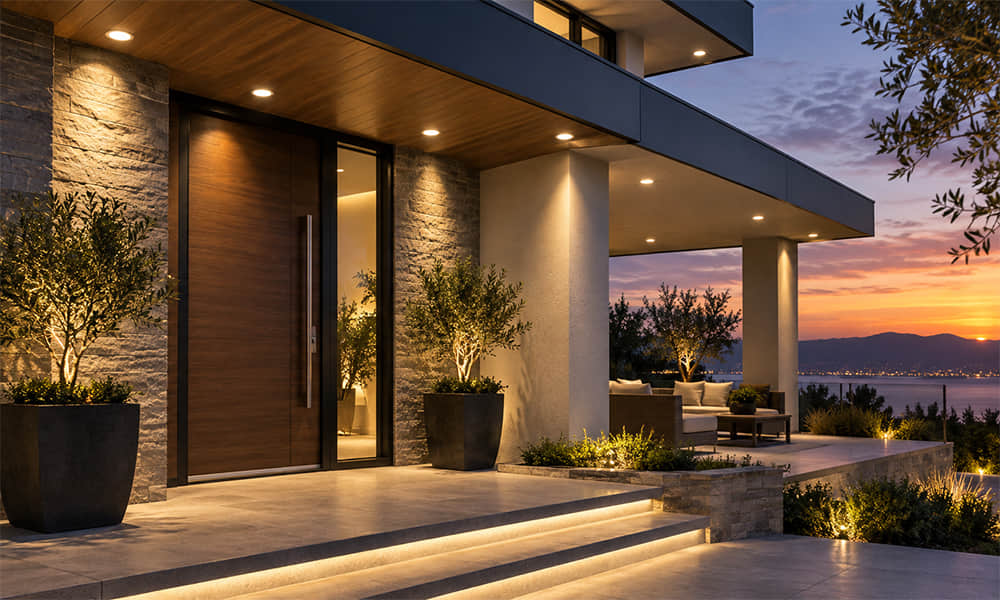
The exterior facade and main entrance of a building serve a dual purpose at night: they must provide essential security lighting while simultaneously enhancing the architectural character of the property. When illuminating vertical surfaces like stone walls, brickwork, or entrance columns, the lighting must be smooth and consistent. An improperly designed fixture will create glaring hotspots near the light source and leave the rest of the wall in shadow.
Using wall washers and sconces effectively
To achieve a premium lighting effect, European-inspired designs frequently utilize compact wall washers and architectural sconces. High-quality fixtures in this category are designed with discreet profiles, robust thermal management systems, and easy-to-install backplates.
However, the true performance of a wall washer relies entirely on its internal optics. The lens must efficiently capture the light and project it seamlessly across the vertical plane. A prime example of the precision optical technology used in these high-end applications is the Asahi Optics AX Series-22mm Lens.
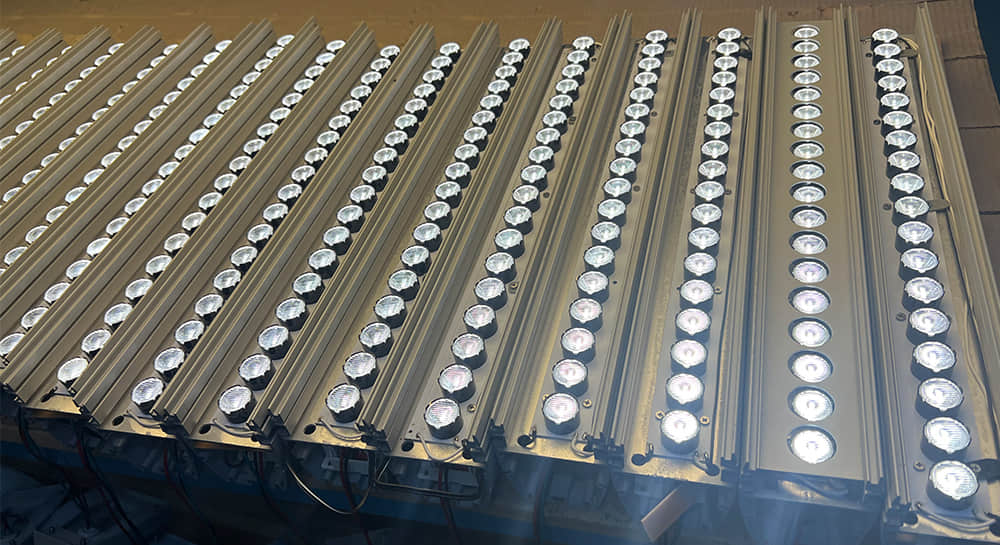
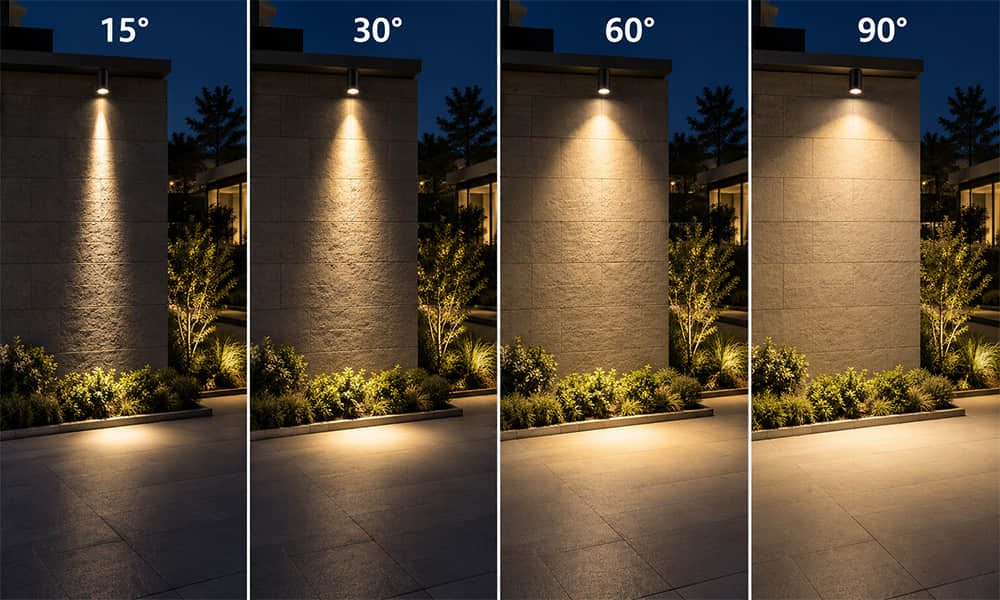
Specifically engineered for 3535 LEDs, the AX Series utilizes a high-transmittance (>93%) PMMA lens paired with a durable PC holder. What makes this series particularly effective for wall washers and linear architectural fixtures is its versatile range of beam angles—including 10°, 25°, 40°, 60°, and a specialized elliptical 30x65° distribution.
For instance, the narrow 10° optic can be used in a sconce to shoot a tight, dramatic beam up a tall entrance column, while the 30x65° lens is perfect for a linear wall washer, casting a wide, overlapping wash of light across a textured brick wall. Because of its compact Ø22.4mm diameter, it integrates flawlessly into slim linear fixture channels.
Dedicated lighting is critical for steps and elevation changes
Navigating steps, terraced levels, and subtle elevation changes is the most hazardous aspect of moving through an outdoor space at night. Relying on general ambient light or distant floodlights is a common mistake; overhead lighting often casts sharp shadows on the stair treads, obscuring the edges and significantly increasing the risk of tripping.
Seamless integration with step and brick lights
To eliminate these hazards, professional lighting layouts utilize dedicated step lights or brick lights. These fixtures are recessed directly into the stair risers or adjacent low walls. For a manufacturer, producing a high-quality step light means prioritizing a rugged, low-profile faceplate, alongside excellent ingress protection (IP65 or IP66) .
Crucially, a step light must project illumination downwards and horizontally across the tread, while ensuring the light source remains completely hidden from the eyes of someone ascending the stairs. This demands extremely compact and precise internal optics.
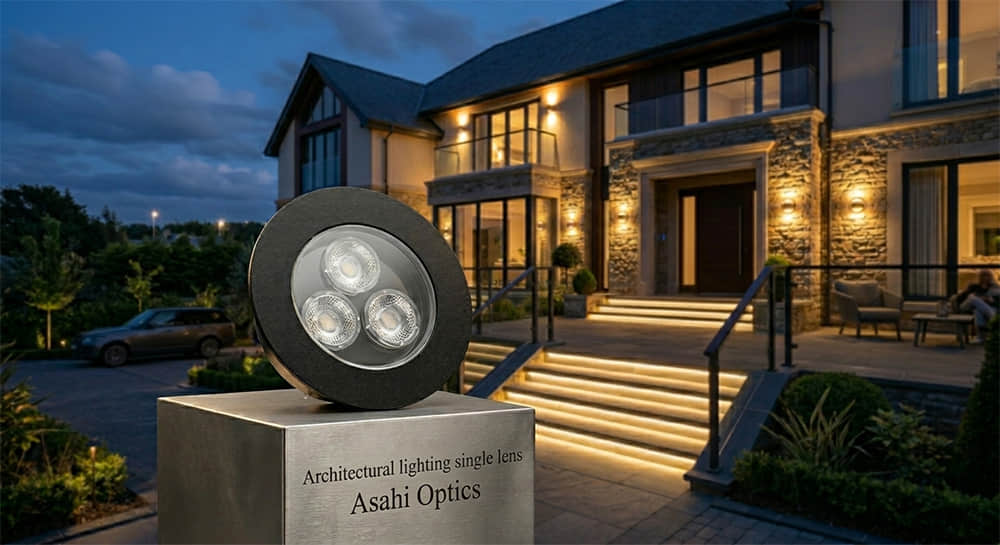
For manufacturers looking to optimize internal fixture space while closely managing production budgets, the Asahi Optics AW Series-22mm Lens provides an ideal optical solution. Designed specifically for 3535 LED packages, this high-transmittance PMMA optic features a streamlined, integrated one-piece construction. By entirely eliminating the need for a separate PC holder, the AW Series significantly reduces both raw component costs and factory assembly time, while maintaining exceptional optical precision for safe, glare-free illumination.
Creating precise visual focus for trees and landscape features
Beyond pathways and architecture, the natural elements require targeted lighting. Instead of flooding the entire garden with high-lumen ambient light, modern landscape design favors highlighting specific trees, shrubs, or sculptures. This selective approach creates visual depth and distinct focal points.
Deploying accent lighting across the yard
To achieve this layered effect, different types of landscape fixtures are strategically deployed:
-
Spike Lights (Adjustable Spotlights) : Placed directly into soft soil of garden beds. Used at the base of prominent trees or sculptures to cast a focused beam upward (uplighting), emphasizing height and texture.
-
Inground Well Lights: Installed flush with lawns or pathways. Deployed beneath large tree canopies to provide upward illumination while keeping the fixture body completely hidden.
-
Mini Accent Lights / Shrub Lights: Positioned within low bushes or planters. Used to gently wash light over ground-level foliage, defining the borders of the yard.
Building a cohesive outdoor lighting system
A well-designed, safe, and visually comfortable front yard is never illuminated by just one type of fixture. It requires a coordinated system where bollards, wall washers, step lights, and landscape spotlights all work together, each performing its specific task.
Discover our complete outdoor lighting solutions
For lighting manufacturers and project developers, success relies on selecting fixtures that not only survive the outdoor elements but also deliver precise, controlled light exactly where it is needed. From robust exterior housings to the highly engineered internal optical lenses that prevent glare, every component matters.
Explore our complete catalog of outdoor lighting solutions and high-performance LED lenses, or contact our engineering team today to discuss the specific requirements of your next commercial or residential lighting project.