Modern architecture and interior design are increasingly driven by minimalism and open-plan concepts. Today's designers and architects seek incredibly clean, uninterrupted spatial lines, particularly when it comes to the ceiling plane. This has led to the widespread popularity of "trimless" or "no main light" design philosophies, which aim to eliminate visual clutter and hide the light source as much as possible.
However, a well-designed space inherently requires multiple layers of light to function properly. It needs uniform, soft ambient light for general visibility and spatial orientation, alongside precise point (accent) lighting to highlight specific areas like workstations, dining tables, or artwork.
Historically, accommodating these dual needs meant installing a chaotic mix of independent fixtures. To provide ambient light, contractors would have to build complex ceiling coves for hidden LED strips. To provide accent lighting, they would simultaneously need to cut multiple holes for recessed downlights or install bulky, surface-mounted track systems.
This traditional approach presents a significant inherent problem: it forces the ceiling to become a patchwork of different hardware, shapes, and structural cut-outs. Treating linear ambient lighting and point accent lighting as two completely separate systems not only disrupts the architectural purity of the room but also breaks the visual continuity of the space. This underlying conflict between the demand for clean aesthetics and the functional need for layered lighting is exactly what has driven the industry toward a new, integrated design solution.
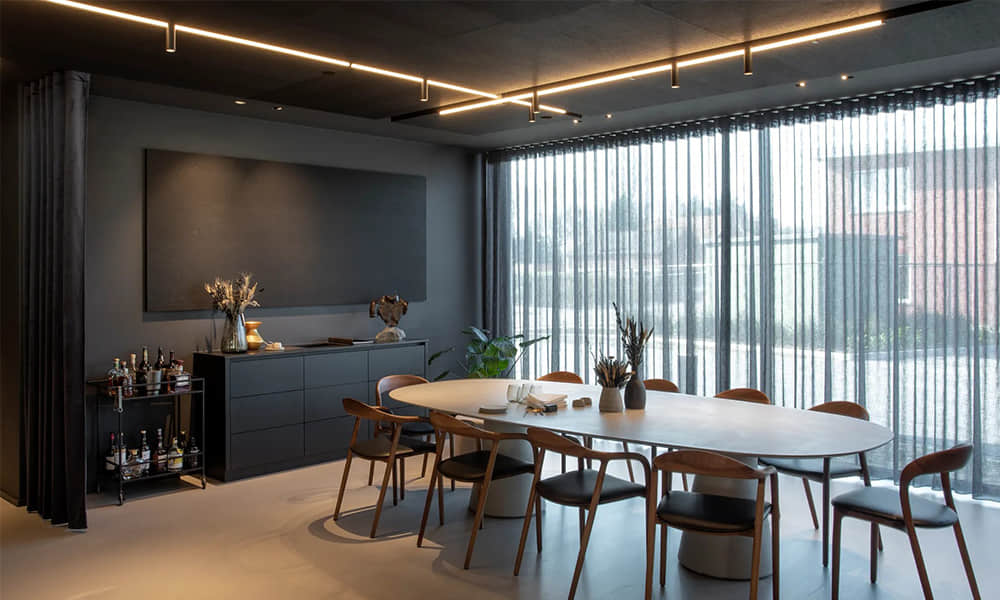
Combining two lighting layers into a single infrastructure significantly reduces installation complexity.
Beyond aesthetics, the true driving force behind the adoption of integrated "line and point" systems is the massive leap in engineering efficiency and installation simplicity. In traditional setups, creating a layered lighting effect requires independent power supplies, separate LED drivers, and distinct wiring routes for both the ambient ceiling lights and the accent spotlights. This duplication of infrastructure is labor-intensive and costly for contractors.
The integrated modular approach resolves this by utilizing a unified, low-voltage conductive structure—typically operating on a 24V or 48V micro-track framework. In these advanced systems, the extruded linear profile serves a dual purpose: it acts as the primary luminaire delivering continuous ambient light, while simultaneously functioning as the power-delivering track for additional fixtures.
Because the physical structural frame carries the electrical current safely, an entire room's multi-layered lighting layout can often be powered from a single electrical connection point. This design completely eliminates the need for electrical contractors to cut multiple trenches into the drywall, pull redundant cables, or hide bulky drivers across different ceiling zones. By consolidating two separate lighting layers into one cohesive infrastructure, manufacturers are providing a solution that drastically cuts down on on-site labor time, reduces material waste, and makes long-term maintenance remarkably straightforward.
How does the physical design of these integrated systems offer unprecedented flexibility?
The true genius of combining linear and point lighting lies in its modularity and the unprecedented physical flexibility it offers to both designers and end-users. These systems function less like static light fixtures and more like an adaptable architectural toolkit.
The Line as the Architectural Framework
The linear component serves as the backbone of the system. It delivers a continuous, soft, and glare-free wash of diffuse light that establishes the baseline ambient brightness and guides the visual flow or circulation paths of the room. However, its most innovative feature is its structural capability. Using specialized horizontal and vertical connection nodes, these linear tracks can break away from the flat ceiling plane. They can drop down, turn corners, and intersect in mid-air to form intricate, three-dimensional geometric grids, turning the lighting infrastructure itself into a striking architectural statement.
The Point as Dynamic Accentuation
While the lines provide the structural framework and ambient glow, the point lights—typically micro-spotlights or miniature wash lights—provide dynamic contrast and focus. Designed with intuitive "clamp-on" or magnetic mounting mechanisms, these accent fixtures can be attached directly onto the electrified linear profile. This allows users to add, remove, or effortlessly slide the spotlights to any position along the track at any time. If a retail store updates its displays, a gallery changes its exhibition, or an office reconfigures its desk layout, the lighting can instantly adapt without the need for rewiring, delivering true "light on demand."
Where are these integrated lighting systems being adopted and applied most frequently?
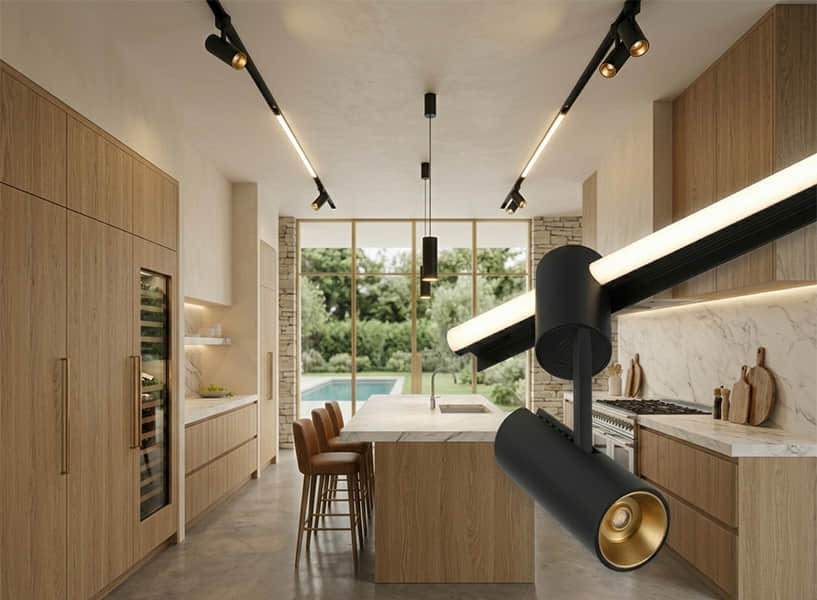
This sophisticated approach to spatial illumination has found strong footholds in specific markets and applications where design aesthetics and operational functionality carry equal weight.
Geographically, this highly integrated, minimalist lighting trend originated and flourished in Europe—particularly in regions like Italy, Germany, and Scandinavia, which are historically known for their rigorous industrial design and emphasis on architectural integration. However, as the demand for cleaner ceiling planes and smarter lighting control grows, the North American market is rapidly adopting these systems for premium commercial and residential projects.
In terms of specific applications, these systems are most frequently deployed in environments that require both high visual comfort and high adaptability:
-
High-End Retail and Art Galleries: These spaces are inherently dynamic. Exhibits, seasonal collections, and floor layouts change frequently. An integrated system provides the foundational linear wash needed to illuminate the general circulation areas, while the clamp-on spotlights can be constantly repositioned and re-aimed to precisely highlight new merchandise or artwork, all without calling an electrician.
-
Modern Corporate and Reception Areas: Moving away from the sterile, flat-panel lighting of traditional offices, modern corporate spaces use these integrated tracks to make a statement. By utilizing 3D geometric configurations, designers can elevate the architectural feel of corporate lobbies, boardrooms, and open-plan workspaces, providing adequate task lighting while enhancing the brand's premium image.
-
Luxury Residential Spaces: In high-end apartments and custom homes, the "trimless" or "no main light" design trend is at its peak. Homeowners want the ceiling to remain an uninterrupted, pristine surface. These integrated linear-and-point systems offer the perfect solution, delivering sophisticated, multi-layered ambient and accent lighting from a remarkably slim and unobtrusive physical footprint.
Achieving visual perfection in these modular systems relies on specialized optics.
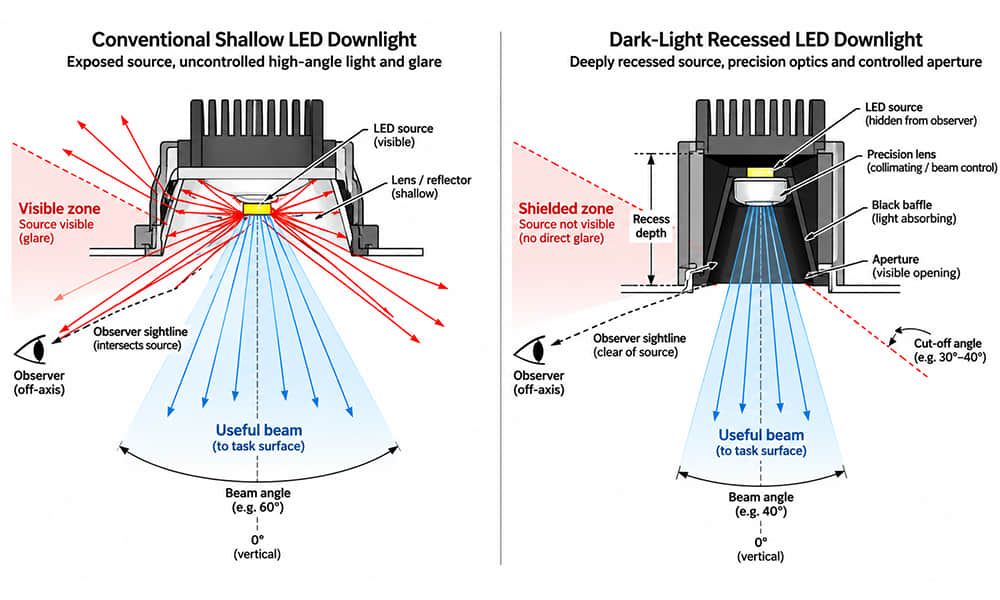
While the mechanical track design and low-voltage infrastructure provide the structural flexibility of these integrated systems, their ultimate visual success—the ability to perfectly illuminate a space while maintaining visual comfort—depends entirely on the internal optical components. To achieve the premium, glare-free aesthetic expected in high-end architecture, the actual light delivery must be meticulously controlled.
For the "line" component to succeed as an ambient light source, it must deliver a flawless, continuous wash of light without any visible LED hotspots or pixelation. To achieve this perfectly uniform glow, fixture manufacturers rely on high-quality continuous optics. Custom extrusion linear lenses are engineered to blend the LED light seamlessly, ensuring the track provides smooth ambient illumination or precise wall washing, cut to the exact length of the architectural profile.
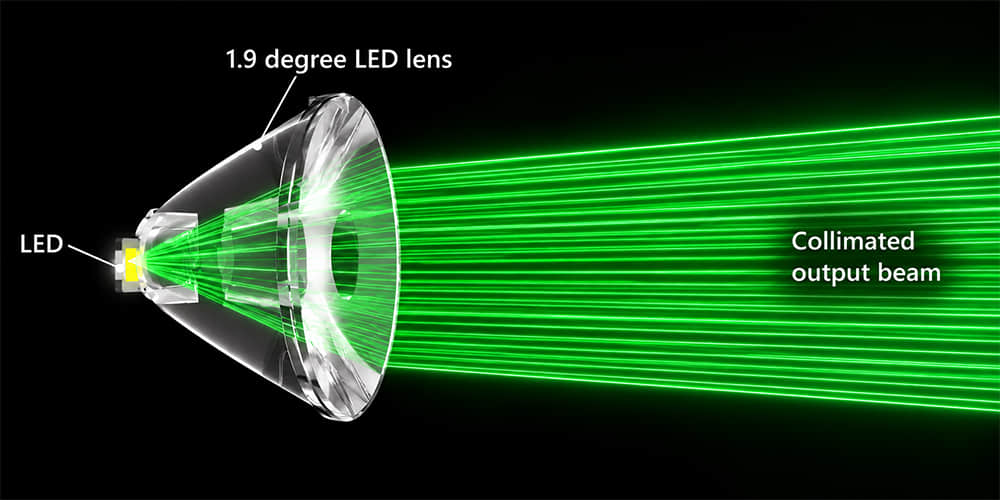
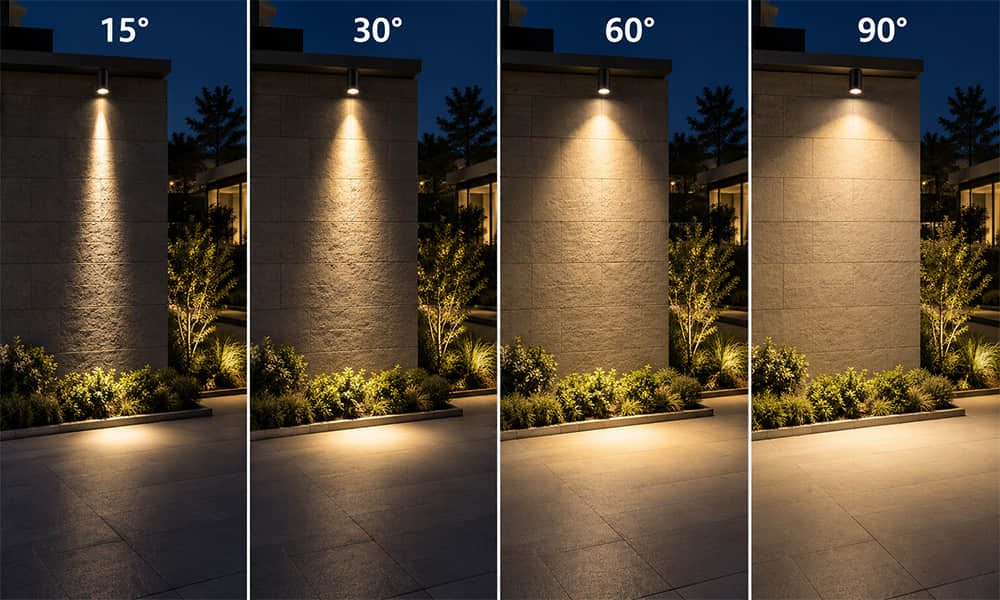
Conversely, the miniature spotlights that form the "point" layer present a completely different optical challenge. Because the physical footprint of these clamp-on fixtures is drastically reduced to maintain a minimalist look, delivering a powerful, clean, and glare-free narrow beam requires immense precision. This is where advanced architectural single lenses become critical. These compact, high-transmittance optical components allow micro-fixtures to project extremely tight, controlled beams (such as 10° or 15°) that precisely illuminate target objects without spilling unwanted stray light into the carefully curated environment.
Ultimately, the future of architectural illumination lies in this seamless integration of line and point. For fixture manufacturers looking to capture the high-end commercial and residential markets, building these next-generation modular systems requires not just innovative track engineering, but the integration of precision optics to ensure the final light quality perfectly matches the premium design of the space.