Modern linear LED lighting is no longer used only to provide basic illumination. In many commercial and architectural spaces, a linear fixture is also part of the ceiling design, wall detail, spatial rhythm, and visual identity of the room. People may notice a clean recessed slot, a suspended light line, a glowing cove, or a curved luminous shape before they think about the optical components inside the fixture.
Behind that clean light line, however, the optical design is doing important work. A linear fixture needs to control LED dots, dark zones, glare, beam angle, surface brightness, and the visual continuity of the light. This is where an extruded linear lens becomes valuable.
Instead of starting from the lens itself, it is better to start from the lighting application. A recessed linear fixture, a suspended direct-indirect fixture, a surface-mounted light, a cove light, and a wall wash system all have different optical needs. The same lens profile may not work equally well in every fixture.
A well-matched extrusion lens helps the luminaire produce the right visual effect for the space. It can support a continuous light band, improve optical uniformity, reduce visible LED points, and help the fixture fit its architectural purpose. For lighting brands and fixture manufacturers, choosing or developing the right LED linear lens is not only a product decision. It is a design decision connected with the final lighting scene.
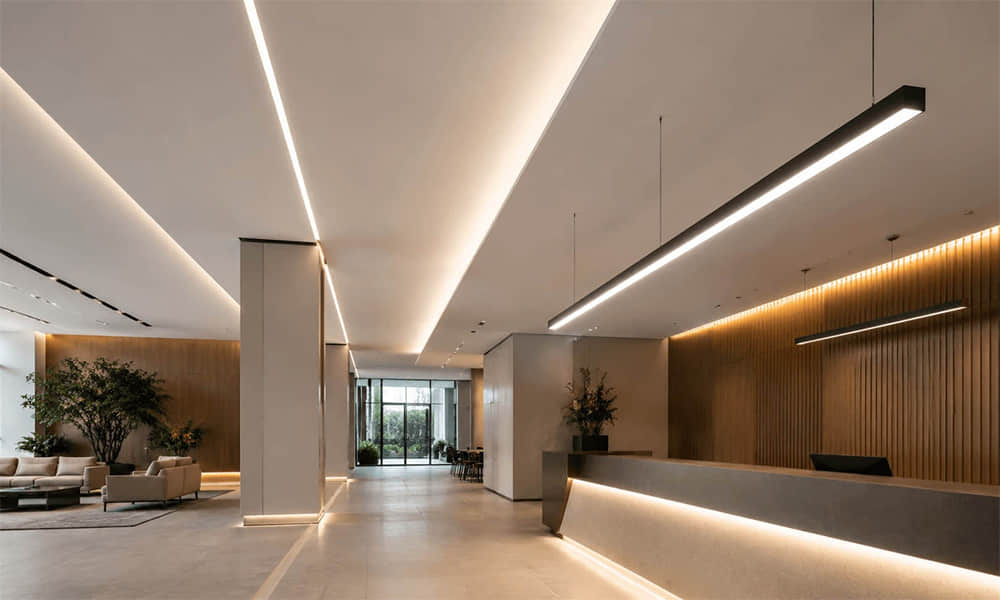
Recessed Linear Lighting: Clean Ceilings and Controlled Light Lines
Why Recessed Linear Fixtures Need Precise Optical Fit
Recessed linear lighting is widely used in offices, corridors, classrooms, conference rooms, healthcare spaces, libraries, and commercial interiors. It is often selected because it can create a clean ceiling appearance while delivering functional illumination.
Unlike surface-mounted or suspended fixtures, recessed linear luminaires are integrated into the ceiling. The fixture may be installed in a grid ceiling, drywall ceiling, wood ceiling, hard surface ceiling, or specialty ceiling system. In many projects, the goal is to make the light line look as clean as possible while keeping the ceiling visually organized.
This creates a clear requirement for the optical component. The lens must not only transmit light. It also needs to match the fixture opening, ceiling structure, visible aperture, and target beam effect. If the lens surface is uneven, the light band may look broken. If the optical distribution is not suitable, the ceiling may look clean, but the lighting performance may still be poor.
A suitable extruded linear lens can help recessed fixtures create a smooth and continuous luminous line. It can reduce visible LED points, soften brightness, and support a controlled beam from a narrow ceiling slot. This is especially important in spaces where people look across the ceiling from different angles, such as open offices, corridors, classrooms, and public interiors.
Lens Design for Trimless, Grid, Drywall, and Specialty Ceilings
Different ceiling systems create different lens requirements. A recessed fixture used in a grid ceiling may need a different visible aperture from a trimless drywall installation. A mud-in fixture may require a very clean edge, while a wood ceiling or specialty ceiling may create stricter requirements for alignment and appearance.
In these applications, the LED linear lens becomes part of the final architectural detail. The lens should sit correctly in the housing, maintain a consistent light line, and avoid visible gaps, shadows, or uneven brightness near the edges.
The optical profile also matters. A shallow recessed fixture may require stronger light mixing because there is less space between the LEDs and the lens. A wider aperture may need broader distribution. A narrow slot may need a profile that balances brightness and glare more carefully.
Suspended Linear Lighting: Direct, Indirect, and Visual Comfort
Suspended Fixtures Are Both Light Source and Design Element
Suspended linear lighting is common in open offices, conference rooms, libraries, classrooms, lobbies, collaborative spaces, and modern commercial interiors. These fixtures are usually visible in the room, so they must perform well both optically and visually.
A suspended linear fixture is not hidden in the ceiling. It becomes part of the space. Its shape, length, light surface, and brightness all influence the room’s design. A clean continuous light line can make the space feel organized and modern, while visible LED dots or uneven brightness can reduce the perceived quality of the fixture.
Many suspended systems use direct light, indirect light, or direct-indirect distribution. Direct light provides illumination downward toward desks, tables, or circulation areas. Indirect light sends light upward to the ceiling, creating a softer ambient effect. In both cases, the optical design needs to match the fixture purpose.
Extruded Lens Design for Smooth Direct Light
The direct light portion of a suspended linear fixture must balance brightness and comfort. If the lens is too clear or the LED spacing is too wide, users may see individual LED points. If the diffuser is too opaque, the light may become soft but inefficient. If the beam is too uncontrolled, glare can become a problem.
An extrusion lens can help solve this by shaping the output more carefully. The lens profile can spread LED light across the visible surface, blend light between LED positions, and reduce harsh brightness from small points. This helps create a smoother direct light appearance.
For commercial interiors, a suspended linear fixture is often seen from many directions. A clean LED linear lens can help the product look more refined and make the lighting experience more comfortable.
Surface-Mounted Linear Lighting: Flexible Installation for Finished Spaces
When Surface-Mounted Fixtures Are Used
Surface-mounted linear lighting is often used when recessed installation is not practical. It can be installed on finished ceilings, hard surfaces, corridors, offices, classrooms, retail areas, and renovation projects where cutting into the ceiling may not be possible.
Because surface-mounted fixtures are exposed, their appearance matters. The housing, end caps, lens surface, and light line are all visible. This makes the lens an important part of the fixture’s visual quality.
A good extruded linear lens helps surface-mounted fixtures produce a smoother and more controlled light line. It can reduce dots, soften brightness, and improve the overall appearance of the visible luminaire.
Lens Requirements for Visible Fixtures
Since surface-mounted linear fixtures are visible, the lens must do more than transmit light. It should also support the product’s external appearance. The lens surface should look clean, the light band should be continuous, and the fit between lens and housing should be stable.
If the lens does not match the fixture profile well, users may see edge shadows, uneven brightness, or mechanical gaps. If the optical structure is not suitable, the fixture may create glare or visible LED points, especially when installed in corridors or lower ceilings.
For these applications, a custom extrusion lens can be useful when the housing has a special size, shallow depth, or unique appearance requirement.
Cove and Perimeter Lighting: Soft Indirect Light for Architectural Spaces
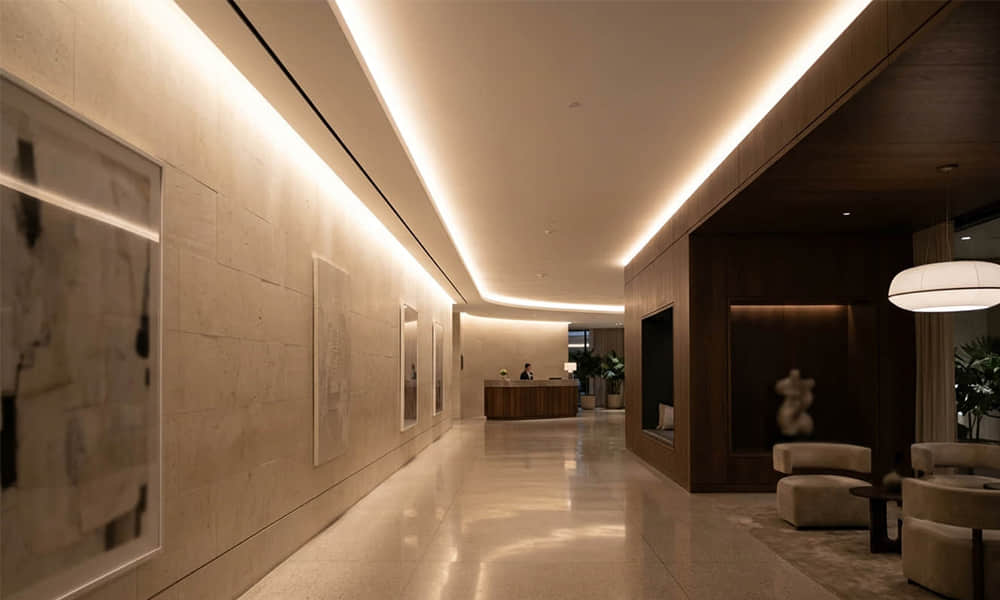
Cove Lighting Creates Ambient Glow
Cove lighting and perimeter lighting are often used to create soft ambient illumination in architectural interiors. Instead of placing the fixture directly in the center of the visual field, the light is usually hidden in a ceiling cove, wall edge, perimeter slot, or architectural detail.
These lighting methods are common in hotels, lobbies, reception areas, conference rooms, retail interiors, cultural spaces, and high-end commercial projects. In these environments, the lighting is not only functional. It also shapes mood, depth, and visual comfort.
A suitable extruded linear lens can help control how light leaves the fixture and reaches the surrounding surface. It can support a wider, softer, or more directional beam depending on the cove depth, fixture position, and target surface.
Why Lens Shape Matters Even When the Fixture Is Hidden
Some people may think that if a cove fixture is hidden, the lens design is less important. In reality, the opposite is often true. Since the user mainly sees the reflected light, the quality of the beam becomes very important.
If the beam angle is too narrow, the surface may show a strong bright line instead of a soft gradient. If the beam is too wide or uncontrolled, light may spill into unwanted areas. If the fixture depth is shallow, LED dots or uneven output may still appear on the illuminated surface.
This is why the extrusion lens should match the fixture position and architectural detail. The right linear lighting lens design can make the difference between a clean ambient glow and an uneven line of light.
Wall Wash and Wall Graze Lighting: Linear Light for Vertical Surfaces
Wall Wash Needs Even Vertical Illumination
Wall wash lighting is used when a vertical surface needs smooth and even illumination. It can be used in galleries, corridors, retail display walls, hospitality interiors, offices, public spaces, and brand presentation areas.
Linear fixtures are often used for wall wash because they can create a long, continuous source of light. However, even wall illumination is not easy to achieve. If the optical distribution is not suitable, the wall may show strong hot spots, uneven brightness, or visible banding.
An LED linear lens designed for wall wash can help guide light toward the vertical surface in a more controlled way. The lens profile can influence beam spread, direction, and surface coverage.
Wall Graze Emphasizes Texture and Direction
Wall graze lighting is different from wall wash lighting. Instead of hiding surface texture, wall grazing often emphasizes it. It is used on stone walls, wood panels, brick surfaces, textured finishes, decorative facades, and architectural feature walls.
In wall graze applications, the light is usually placed close to the surface and directed at a sharper angle. This creates shadows that reveal texture and depth. The effect can be dramatic and highly architectural, but it also requires careful optical control.
A suitable extrusion lens can help control the direction and spread of the beam. It can support a more consistent grazing effect along the length of the wall, helping the surface appear intentional and visually balanced.
Task and Undercabinet Lighting: Compact Profiles with Clear Working Light
Small Fixtures Need Efficient Optical Control
Task lighting and undercabinet lighting often use compact linear fixtures. These lights may be installed under shelves, cabinets, workstations, display cases, bookcases, counters, or small architectural details.
In task lighting, the goal is to provide clear working light for a specific surface. This may be a desk, countertop, product shelf, reading area, or preparation space. The light should be useful and comfortable, without excessive glare or distracting shadows.
An extruded linear lens can help balance these needs. It can soften the LED points, guide light toward the working area, and support a cleaner visual appearance in compact fixtures.
Lens Design for Shallow and Slim Profiles
Compact linear fixtures often have shallow profiles. This leaves very little space between the LEDs and the lens. When the optical cavity is shallow, it becomes more difficult to hide LED dots and blend the light evenly.
A simple diffuser may reduce harshness, but it may also reduce efficiency. A more carefully designed LED linear lens can help mix light within a limited depth while still maintaining useful output.
For undercabinet and task lighting, the lens is a small component, but it strongly affects how comfortable and useful the fixture feels.
Healthcare, Education, and Office Spaces: Comfort-Driven Linear Lighting
Long-Stay Spaces Need Comfortable Light
Healthcare facilities, education spaces, offices, libraries, and conference rooms are all places where people may stay for long periods. In these environments, lighting comfort is not a secondary detail. It directly affects how the space feels and how people experience daily activities.
For these spaces, problems such as glare, visible LED dots, uneven brightness, and harsh light lines can become more noticeable over time. Even if the fixture looks bright enough, poor optical control can make the environment feel uncomfortable.
A well-designed extruded linear lens can help create a smoother light surface and reduce distracting brightness differences.
Extruded Linear Lenses Support Uniform and Low-Glare Light
In comfort-driven spaces, the role of the lens is to help the fixture deliver usable light without creating visual stress. The lens can spread light more evenly, reduce LED point visibility, and support better glare control.
This does not mean the lens alone determines the final glare rating or lighting quality. The complete luminaire, installation height, room layout, surface reflectance, and lighting design all matter. However, the extrusion lens is still one of the key components that affects the visible light surface and beam distribution.
For more indoor application ideas, see Asahi Optics’ indoor lighting applications.
Retail and Hospitality Spaces: Linear Lighting as Visual Presentation
Lighting Helps Shape Brand Atmosphere
In retail and hospitality spaces, lighting is not only used to make a room bright. It also helps shape how people feel about the brand, the products, and the space. Linear lighting is often used in boutiques, supermarkets, hotels, restaurants, cafes, bars, reception areas, and display zones because it can create clean lines and a modern visual rhythm.
If the light line has visible LED dots, dark spots, uneven brightness, or inconsistent color appearance, the space may feel less refined. For retail and hospitality design, small visual defects can be easy to notice because the lighting is part of the customer experience.
A well-matched extruded linear lens can help create a cleaner and more continuous light appearance.
A Clean Light Line Improves Fixture Appearance
A continuous light band can make a linear fixture look more premium. In retail spaces, this helps shelves, aisles, display walls, and product zones appear more organized. In hospitality interiors, a smooth linear glow can support a warmer and more designed atmosphere.
An extrusion lens helps by blending light from individual LEDs and reducing visible bright points. It can also help control the beam so the light is sent toward the intended surface or area.
Curvilinear and Architectural Shapes: When Linear Light Is Not Straight
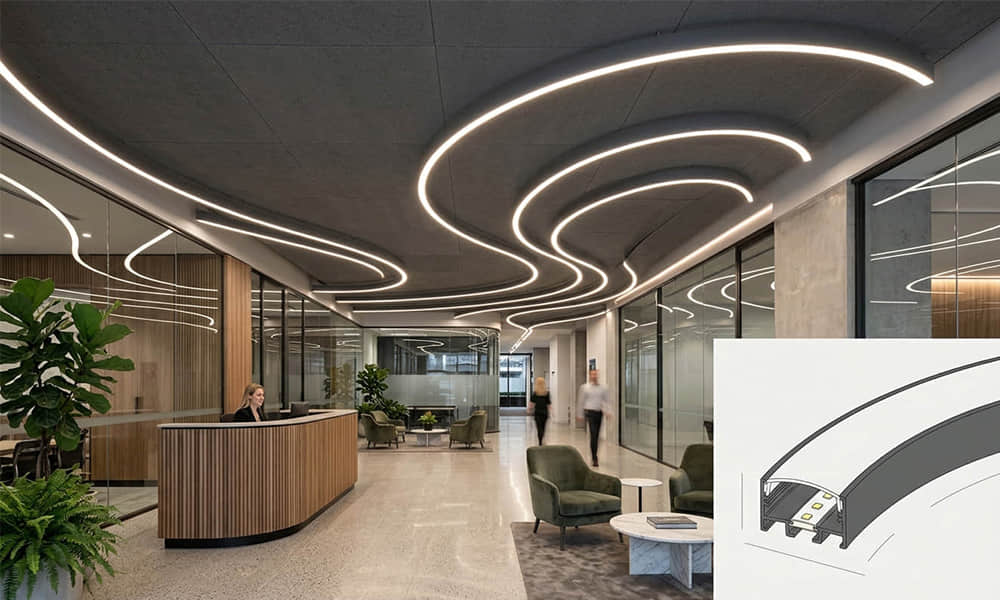
Curved Linear Lighting Is Growing in Architectural Design
Linear lighting does not always need to be straight. In modern architectural design, curved linear lighting is increasingly used to create circles, arcs, waves, S-shapes, rounded corners, and custom ceiling forms.
Curved lighting can make a space feel more dynamic and custom-designed. It can soften strict geometry, guide movement, or create a strong visual feature in the ceiling or wall.
However, curved lighting also creates new optical and mechanical challenges. The light line should remain continuous through the curve. The lens should fit the profile without creating gaps, stress, uneven brightness, or visible transitions.
Lens Profiles Must Match Bending and Visual Continuity
For curvilinear lighting, the lens profile must match both the fixture structure and the visual effect. If the lens is too stiff, too thick, or not suitable for the bending condition, it may create assembly problems. If the optical profile does not maintain consistent output along the curve, the light line may show bright and dark areas.
A properly designed extruded linear lens can support better visual continuity in curved and architectural linear lighting projects. It helps the fixture keep a consistent luminous appearance while adapting to non-standard forms.
How to Match an Extruded Linear Lens to a Lighting Application
Start with Mounting Type
The first step in selecting an extruded linear lens is understanding the mounting type. A recessed fixture, suspended fixture, surface-mounted fixture, wall-mounted light, cove light, perimeter light, and wall wash system all create different optical requirements.
Because the mounting type changes the way people see the fixture, it also changes the lens requirement. The lens should be chosen based on the real installation condition, not only by size.
Define the Visual Goal
After the mounting type is clear, the next step is to define the visual goal. Does the fixture need a seamless light band? Does it need low glare? Does it need to wash a wall evenly? Does it need to highlight texture? Does it need to provide task light on a working surface?
Different goals require different lens profiles. The clearer the visual goal, the easier it is to choose or design the right LED linear lens.
Check LED Layout and Fixture Depth
The LED layout and fixture depth strongly affect the final light result. LED spacing, PCB width, LED package type, distance from LED to lens, and profile depth all influence uniformity and glare.
This is why lens selection should happen together with fixture design. A good linear lighting lens design connects the optical profile with the LED platform and mechanical structure.
Decide Whether Standard or Custom Lens Is Needed
A standard lens profile may be enough for many common linear fixtures. However, a custom extrusion lens may be better when the project has special requirements, such as shallow housing, unusual aperture size, curved profiles, strict visual appearance, specific beam direction, or a need to reduce visible LED dots.
How Asahi Optics Can Support Linear Lighting Lens Projects
Lens Matching for Linear Lighting Fixtures
Asahi Optics can support lens matching for different linear LED lighting applications. The process usually starts from the fixture structure and lighting goal: mounting type, aluminum profile, LED layout, lens opening, beam requirement, and visual expectation.
By reviewing the application first, it becomes easier to decide whether an existing profile can work or whether a new lens profile is needed.
Custom Extrusion Lens for Special Profiles
If standard lens profiles cannot meet the fixture’s optical or structural needs, Asahi Optics can help discuss a custom LED linear lens solution. This may include adjusting the lens profile, visible aperture, surface finish, material, length, or optical distribution.
The goal is not simply to create a new lens. The goal is to make the lens fit the lighting application better. For customers developing linear lighting products, this can help reduce mismatch between fixture design and final light effect.
Conclusion
The value of an extruded linear lens is best understood through lighting applications. In modern architectural and commercial lighting, the same linear fixture idea can appear as a recessed ceiling slot, a suspended office light, a surface-mounted fixture, a cove glow, a perimeter line, a wall wash system, a task light, or a curved architectural feature.
Each application creates different requirements for the lens. Recessed lighting needs clean ceiling integration. Suspended lighting needs visual comfort. Surface-mounted fixtures need a clean visible light surface. Cove and perimeter lighting need soft indirect glow. Wall wash and wall graze lighting need controlled vertical distribution. Task lighting needs compact and useful illumination. Healthcare, education, office, retail, and hospitality spaces all require lighting that looks clean and feels comfortable.
This is why an extrusion lens should not be treated as a simple cover. It is an optical component that helps the fixture match its environment. The right lens profile can improve light continuity, reduce visible LED dots, support glare control, and help the luminaire achieve the visual effect expected by the space.
If your linear lighting project has a special fixture profile, shallow structure, curved form, or specific light distribution requirement, Asahi Optics can help discuss a custom extrusion lens solution based on your application and product design.
FAQ About Extruded Linear Lens Applications
Q: What lighting applications use extruded linear lenses?
A: Extruded linear lenses are commonly used in recessed, suspended, surface-mounted, cove, perimeter, wall wash, task, office, healthcare, education, retail, and hospitality linear lighting.
Q: Are extruded linear lenses mainly used indoors?
A: Yes, they are most commonly used in indoor architectural and commercial linear LED lighting, especially where visual comfort and continuous light lines matter.
Q: Can one lens fit all linear lighting fixtures?
A: No, the lens should match the mounting type, aluminum profile, LED spacing, fixture depth, and optical target.
Q: When should I choose a custom extrusion lens?
A: Choose a custom extrusion lens when standard profiles cannot meet uniformity, glare, appearance, bending, or installation requirements.
Q: Why does the lighting application matter before choosing a lens?
A: Because each lighting scene has different requirements for beam direction, visual comfort, fixture appearance, mounting structure, and light continuity.