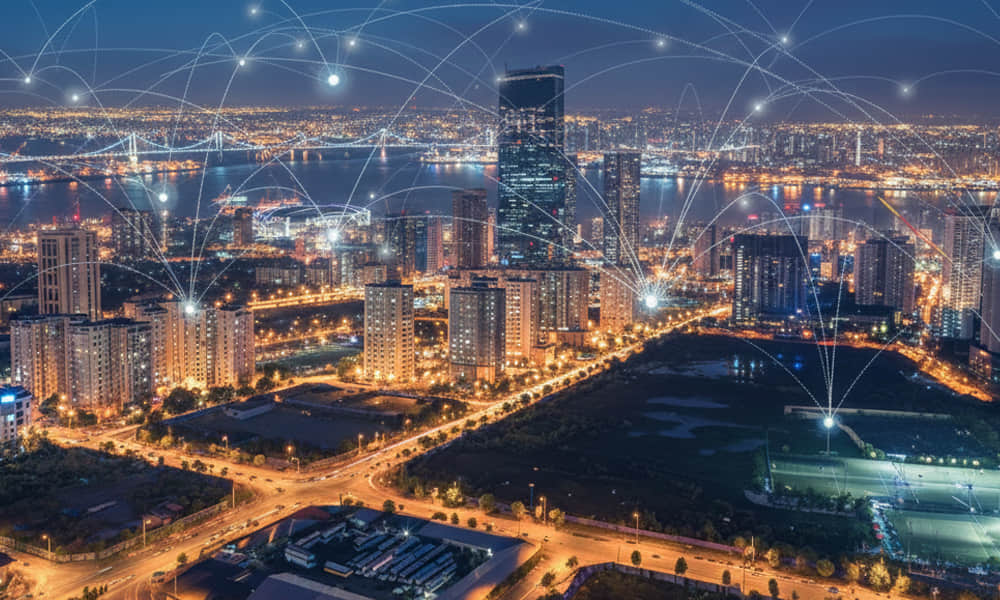
The lighting industry is currently undergoing its second major revolution. The first was the transition from conventional sources to LED, driven by the imperative of energy efficiency. The second, and perhaps more profound shift, is Digitalization. In our view, a street light is no longer just a static pole that emits photons; it is evolving into the neural network of the smart city—a prime real estate for data collection, connectivity, and intelligent urban management.
However, this transition to Smart Lighting is not without its perils. As we move from simple on/off switches to complex ecosystems involving Central Management Systems (CMS) , wireless protocols, and sensor integration, the complexity for municipal planners and manufacturers skyrockets. The challenge is no longer just about how bright the light is, but how well it communicates with the cloud.
At Asahi Optics, we observe a clear trend: The future belongs to interoperability. The era of proprietary, closed systems is ending. To truly unlock the potential of smart lighting—from predictive maintenance algorithms to real-time adaptive dimming—we must bridge the gap between robust, long-lasting hardware and rapidly evolving software. This article explores the critical challenges of this digital transformation and why a standardized, modular approach is the only way to future-proof your infrastructure.
The Opportunities: Why Smart is Worth the Hype
While the transition to LED brought a 50% reduction in energy consumption, the integration of Smart Controls unlocks the next 30-40% of savings—and more importantly, drastically reduces Operational Expenditure (OpEx) . The industry buzz is justified, but the value proposition has shifted from hardware efficiency to data intelligence.
1. Adaptive Lighting: Software-Defined Visibility
The most immediate opportunity lies in Adaptive Lighting algorithms.
Instead of a static ON/OFF schedule, smart street lights equipped with motion sensors or radar can communicate with a Central Management System (CMS) . The software dynamically adjusts brightness based on real-time traffic density.
The trend is moving toward Follow-Me lighting logic, where a bubble of light travels with a vehicle or pedestrian, ensuring safety while the rest of the street remains dimmed to 20%. This is software intelligence at its finest.
2. Predictive Maintenance & Digital Asset Management
For municipal operators, the real killer application is Predictive Maintenance.
Through the D4i (Digital Illumination Interface Alliance) protocol, the LED driver acts as a data logger, reporting critical metrics—voltage, current, temperature, and burning hours—back to the CMS dashboard.
Instead of relying on citizens to report broken lights, the software analyzes data to predict failure before it happens. This eliminates night patrols and optimizes maintenance routing, transforming a manual headache into a streamlined digital workflow.
The Challenges: The Tower of Babel in Connectivity
However, realizing this smart future is not as simple as screwing in a sensor. The current landscape is fragmented, presenting a significant barrier known as the Interoperability Crisis.
1. Protocol Fragmentation
The market is flooded with competing communication protocols: LoRaWAN, NB-IoT, Zigbee, Bluetooth Mesh, and more.
A city manager faces a dilemma. Choosing a proprietary system based on Zigbee today risks vendor lock-in. If that supplier ceases software updates, the city is left with orphaned hardware that cannot communicate with new systems. This fragmentation often paralyzes decision-making.
2. The Hardware-Software Lifespan Mismatch
This is a critical insight that Asahi Optics emphasizes to our partners.
-
Hardware Reality: A high-quality street light—built with robust die-cast aluminum and durable PMMA/PC optics—is designed to last 15 to 20 years.
-
Software Reality: Telecommunication standards evolve every 3 to 5 years. The sunset of 2G and 3G networks has already rendered millions of early smart devices useless.
If the intelligence (the modem/controller) is hard-wired inside the luminaire, the entire fixture becomes obsolete when the network standard changes. The industry needs to decouple the rapidly changing software layer from the enduring hardware layer.
Optical Integration for Sensors
At Asahi, we design our optical modules to be Sensor Friendly. Smart lighting is not just about communication; it is about sensing.
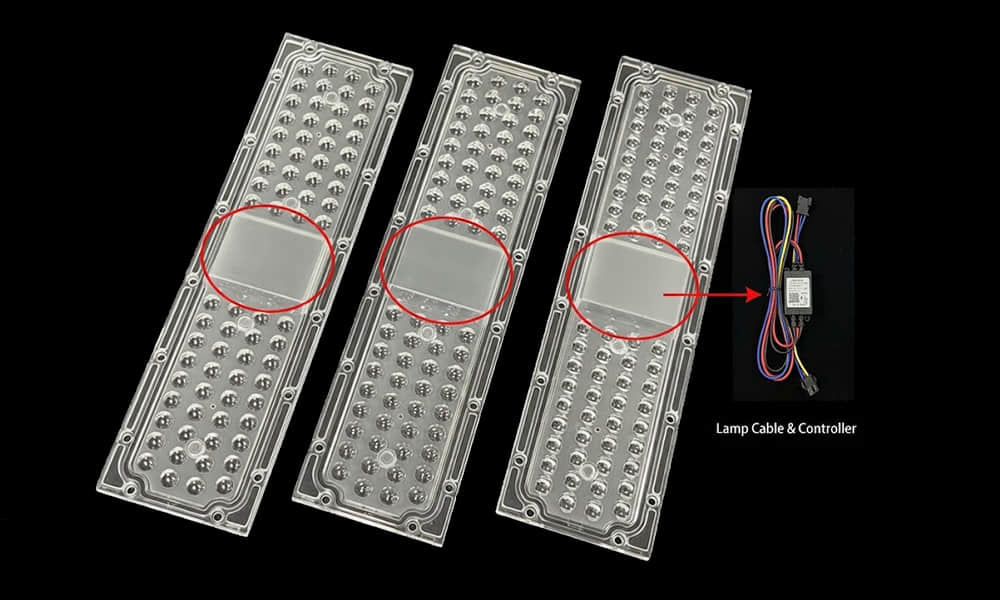
Our R&D team now integrates specific mounting zones within the lens array for PIR or Microwave sensors. This ensures the sensor has a clear field of view without obstructing the photometric distribution of the street light. This physical integration is crucial for reliable data collection.
Our Perspective: The Future is Modular and Open
At Asahi Optics, we believe the winners of the smart lighting revolution will not be those who build walled gardens, but those who embrace Open Ecosystems.
1. Hardware Readiness is Non-Negotiable
Every street light installed today must be capable of becoming smart tomorrow—even if a project lacks current budget for full CMS deployment. The hardware must be ready.
We call this Future-Proofing. By choosing optical modules that are mechanically compatible with NEMA, municipalities avoid the nightmare of replacing entire fixtures just to add a simple motion sensor years later.
2. The Convergence of D4i and Optics
We strongly advocate for the D4i standard, which standardizes data flow inside the luminaire.
While D4i is a protocol for drivers, it has physical implications. As an optical partner, we are evolving our designs to accommodate the physical requirements of these new drivers and sensor nodes. We ensure our lenses minimize interference with wireless signals and provide robust environmental protection for sensitive electronics. By choosing Asahi Optics, you are not just buying a lens; you are investing in a component platform designed to survive the digital evolution.
Conclusion
Smart lighting is a marathon, not a sprint. The technologies we use to communicate—5G, 6G, and beyond—will inevitably change, but the need for precise, high-quality light distribution will remain constant.
The industry is moving away from fragmented, proprietary gadgets toward a mature, standardized infrastructure. By decoupling the rapidly changing software layer from the enduring hardware layer, we can build cities that are both intelligent and resilient.
Asahi Optics stands ready to support this transition. We offer optical solutions that are not only photometrically superior but also structurally ready for the IoT era. Let us help you build the neural network of tomorrow, starting with the right lens today.