In the realm of modern commercial and industrial illumination, designing a truly successful luminaire goes far beyond simply stuffing a light-emitting diode (LED) into a metal fixture. Every exceptional optical design, thermal management system, and final visual presentation begins with the most fundamental and critical engineering decision: selecting the correct LED packaging architecture.
While the lighting industry is leveraging the wave of LED innovation for new growth opportunities, the inherent complexity of LED technology has unfortunately given rise to the sneaky business practice of fooling consumers with substandard, entry-level products. Rather than maximizing value delivery through sophisticated engineering, some manufacturers attempt to gain instant market share by offering killing prices at the expense of compromised performance, reliability, or safety. The truth is, different LED packaging architectures possess fundamentally different physical characteristics. The selection of an LED package architecture directly dictates the light output, optical design constraints, form factor, and the ultimate application scenario of the lighting system.
Currently, the lighting industry relies primarily on four main LED package platforms: Mid-power LEDs, High-power LEDs, Chip-on-board (COB) LEDs, and Chip scale package (CSP) LEDs. Each architecture has its unique physical advantages and thermodynamic bottlenecks.
However, a bare LED package is merely a photon-generating engine. An LED lamp or luminaire typically must be equipped with secondary optics to modify the output beam of the LEDs, regulate the distribution of luminous flux, and eliminate visible hot spots from pinpoint LEDs to provide visual comfort. In this comprehensive guide, we will explore the core technological characteristics of mainstream LED chips, explain why they dominate specific commercial and industrial applications, and reveal how Asahi Optics matches these specific chips with the perfect secondary optical lenses—such as PMMA extrusion lenses and Zhaga standard linear modules—to unleash their full photometric potential.
Mid-Power LEDs (0.1 - 0.9W)
Core Physical Characteristics and Thermal Challenges
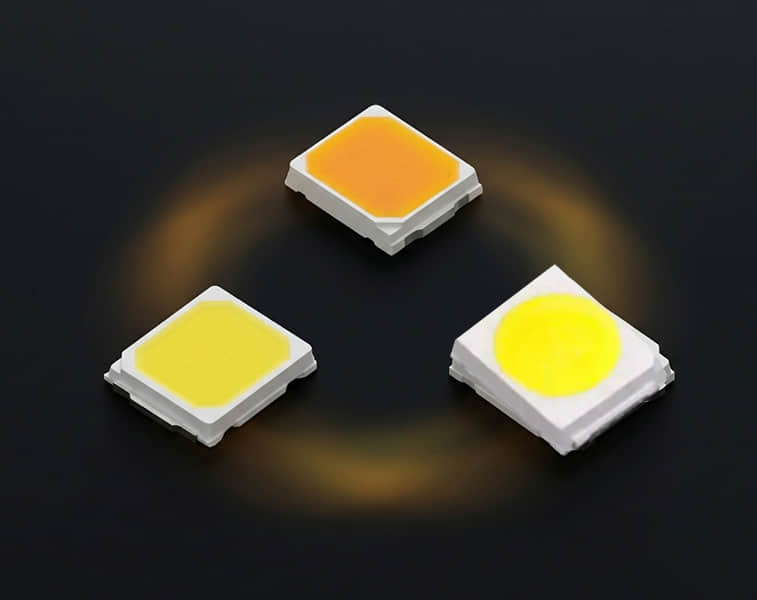
Mid-power LEDs, operating typically within the 0.1 to 0.9W range, are the universal choice for applications where high density or high center beam candlepower (CBCP) lighting is not required. Instead, these packages are favored when factors such as overall cost, luminous efficacy, and LED mounting flexibility are the primary concerns.
However, lighting engineers must be highly aware of their thermodynamic limitations. The main challenge with mid-power LEDs lies in their limited thermal performance, primarily because these LED packages typically use plastic resins such as polyphthalamide (PPA) or epoxy molding compound (EMC) as the package substrate. At high drive currents and over long operating times, this plastic resin substrate can discolor, crack, or delaminate. When this physical degradation occurs, it inevitably results in irreversible lumen depreciation and noticeable color shift. Therefore, exceptional thermal management and high-quality optical shielding are absolute necessities when deploying mid-power arrays.
Common Application Scenarios
Because they offer an incredibly cost-effective way to distribute light evenly over a large surface area, mid-power LEDs dominate the indoor ambient lighting market. They are typically used as the primary light sources for LED lamps, linear light modules, and a vast array of interior light fixtures. This includes everyday light bulbs, light tubes, ceiling lights, troffers, wall lights, continuous channel systems, edge-lit LED panel lights, and flexible LED strip lights.
Why are they applied here? Indoor commercial and residential spaces—such as open-plan offices, supermarket aisles, and retail corridors—require broad, uniform, and visually comfortable ambient lighting. They do not need the aggressive "punch" of a narrow spotlight. Mid-power LEDs, arranged in long arrays or dense matrices, perfectly fulfill this requirement by producing a wide, homogenous wash of light that eliminates harsh shadows.
Perfect Optical Compatibility with Asahi Optics
To maximize the lifespan and visual comfort of mid-power LEDs, Asahi Optics provides industry-leading secondary optical solutions specifically engineered for these arrays:
-
PMMA Extrusion Linear Lenses: When dozens of mid-power chips are arranged on a linear PCB, the immediate visual issue is the glaring "dotted" diode effect. Our continuous PMMA extrusion lenses (PMMA stripe lenses) completely obscure the internal chips, blending the individual points of light into a flawless, unbroken luminous surface. Furthermore, because cheap plastic substrates on mid-power LEDs are prone to heat degradation, using premium, UV-stable PMMA ensures that the lens itself will never succumb to yellowing, protecting the fixture's long-term color temperature stability.
-
280x40mm Zhaga Standard Linear Lenses: For high-volume commercial projects utilizing mid-power LED trunking systems, our Zhaga-compliant multi-lens arrays are the ultimate engineering shortcut. These modular lenses snap directly over standard mid-power LED boards, instantly upgrading a basic, wide-angle ambient light into a highly controlled photometric tool. Whether the space requires a tight 30° beam for specific retail aisles or a complex double-asymmetric batwing distribution for high shelving, our modular optics provide exact beam control without changing the underlying mid-power hardware.
High-Power LEDs (1 - 5W)
Core Physical Characteristics and Thermal Challenges
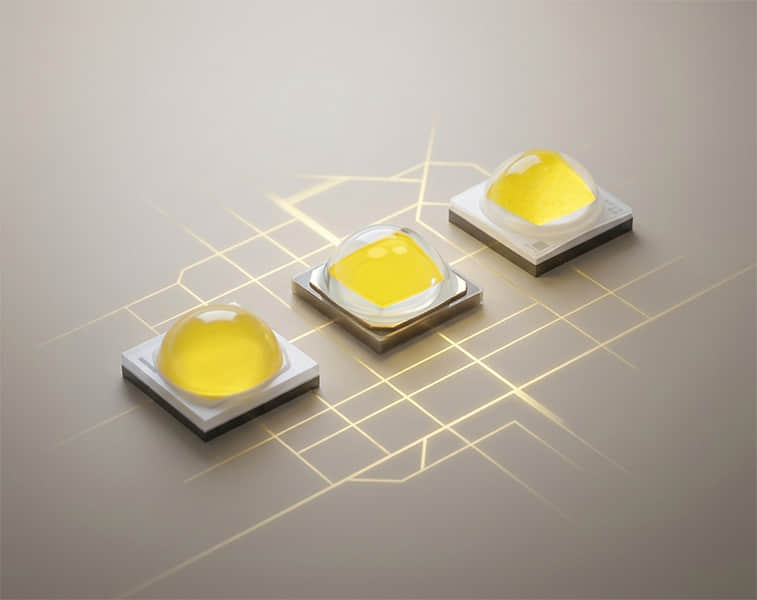
When a lighting project demands an immense amount of light to be projected over vast distances or from extreme ceiling heights, mid-power plastics simply cannot survive. Enter the high-power LED platform. Operating typically between 1 and 5 watts, high-power LEDs are engineered to deliver an exceptionally high luminous flux density from a remarkably small package footprint. Their architecture usually consists of a single large die or multiple small dies connected in series to form a high-voltage package.
The greatest engineering hurdle for high-power LEDs is the massive amount of heat generated within a minuscule area. This heat originates from both the P-N junction and the phosphor conversion process (known as the Stokes shift). To prevent catastrophic thermal droop and ensure long-term lumen maintenance, high-power LEDs abandon cheap plastic substrates. Instead, the LED dies are mounted onto highly thermally conductive ceramic substrates. This robust ceramic foundation allows high-power LEDs to withstand brutal operating environments, extreme drive currents, and severe temperature fluctuations without degrading.
Common Application Scenarios
Because of their rugged durability and high lumen density, high-power LEDs are the undisputed champions of outdoor and heavy industrial lighting. You will almost exclusively find them powering street lights, stadium floodlights, high mast lighting, and industrial high bay luminaires.
Why are they applied here? In applications like highway lighting or industrial warehouses with 40-foot ceilings, the luminaire must punch light forcefully down to the ground. This requires a highly concentrated, powerful light source that can survive in harsh, unconditioned environments for decades.
Perfect Optical Compatibility with Asahi Optics
Controlling the intense, blinding output of a high-power LED requires incredibly robust and precise secondary optics. Asahi Optics delivers exactly what industrial manufacturers need:
-
Multi-Lens Arrays (2x2, 2x6,3x8, etc.): For street lighting and high bay applications, we provide multi-lens arrays molded from high-impact, UV-resistant Polycarbonate (PC) or optical-grade PMMA. These arrays are designed to perfectly align with the standard spacing of high-power LED boards.
-
Complex Asymmetrical Distributions: High-power outdoor applications rarely require a simple round beam. Our engineering team designs these lenses with complex, asymmetrical photometric patterns—such as Type II, Type III, or Type V distributions for street lights, and aggressive rectangular footprints for aisle-specific high bays. By capturing the intense raw light from the ceramic LED and precisely redirecting it via advanced refraction and Total Internal Reflection (TIR) , our lenses ensure that not a single lumen is wasted on light pollution, delivering maximum lux exactly where the safety standards require it.
COB LEDs (Chip-on-Board)
Core Physical Characteristics and Thermal Challenges
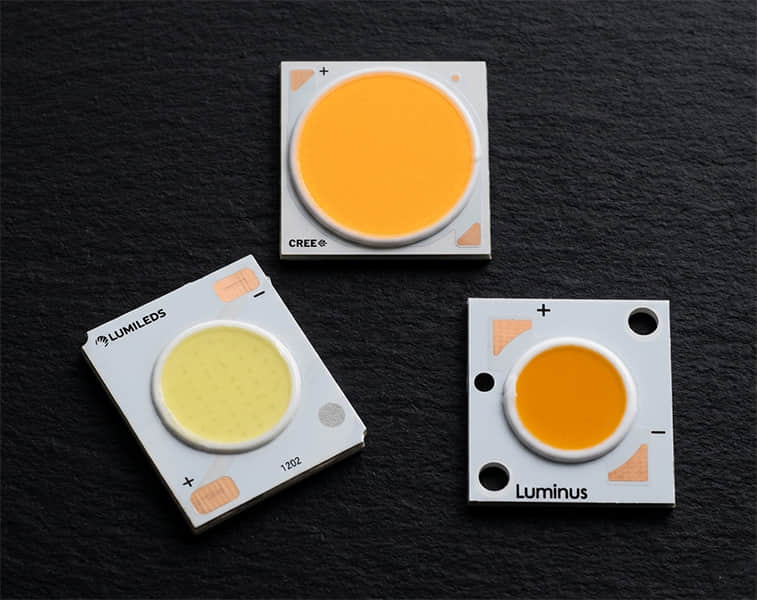
The Chip-on-Board (COB) architecture represents a radical departure from individual discrete packages. In a COB LED, a massive array of small, bare semiconductor dies is directly attached to a metal-core printed circuit board (MCPCB) or a ceramic substrate. The entire array is then covered with a single, uniform layer of phosphor.
Thermally, COB is a highly efficient platform. Because the bare dies are directly bonded to the substrate without an intermediate lead frame, the thermal resistance is incredibly low. This direct thermal path efficiently funnels heat away from the sensitive P-N junctions into the luminaire's heat sink, allowing the COB to operate reliably even when packing massive lumen output into a small Light Emitting Surface (LES) .
Common Application Scenarios
COB LEDs are the absolute gold standard for high-end commercial, retail, and hospitality lighting. They are the engine behind premium track lights, architectural downlights, museum spotlights, and recessed directional fixtures.
Why are they applied here? When illuminating high-end merchandise or art, designers demand extremely high Center Beam Candlepower (CBCP) and flawless color uniformity. Because the COB acts as a single, intensely bright, and uniform Light Emitting Surface (LES) , it completely eliminates the frustrating "multi-shadow" effect that occurs when using arrays of discrete LEDs. It produces a clean, crisp, and beautifully singular shadow, which is essential for dramatic accent lighting.
Perfect Optical Compatibility with Asahi Optics
The single-point nature of a COB LED makes it the perfect candidate for high-precision, narrow-beam optical manipulation:
-
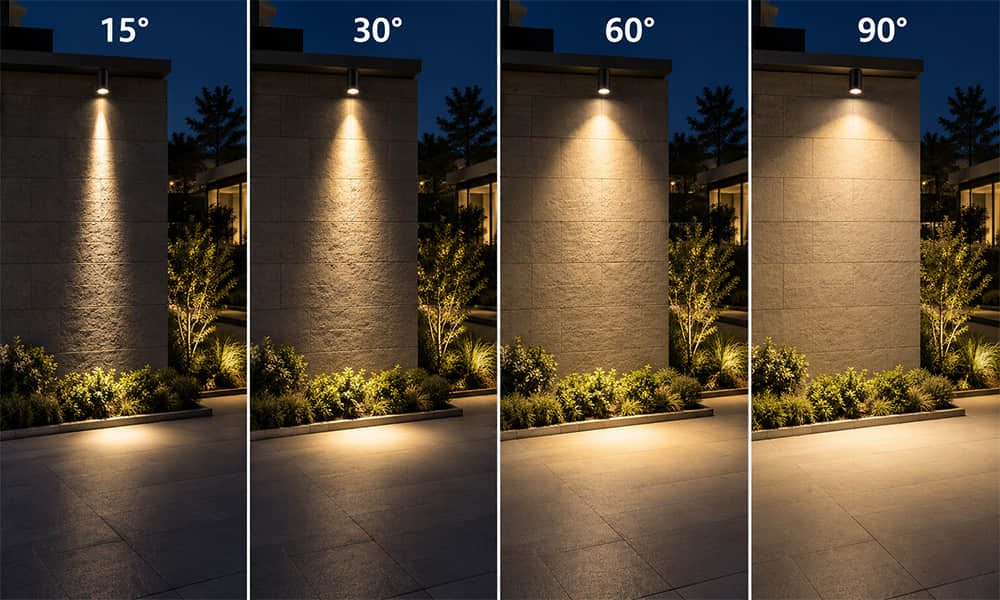
Utilizing both refraction and Total Internal Reflection, our lenses capture nearly 100% of the COB's emitting light. We can sculpt this light into ultra-narrow 10° beams for museum artifact highlighting, or smooth 24° to 36° floods for general retail displays.
-
Dark Lighting & Anti-Glare Integration: A bare COB is intensely bright and can cause severe visual discomfort. Our optical solutions for COB LEDs frequently incorporate specialized anti-glare structures, textured micro-surfaces, and perfectly calculated cutoff angles to ensure a low Unified Glare Rating (UGR) . We help luminaire designers achieve the highly sought-after dark light effect—where the target is brilliantly illuminated, but the light source itself remains comfortably hidden from the shopper's view.
CSP LEDs (Chip Scale Package): The Micro-Miniaturization Trend
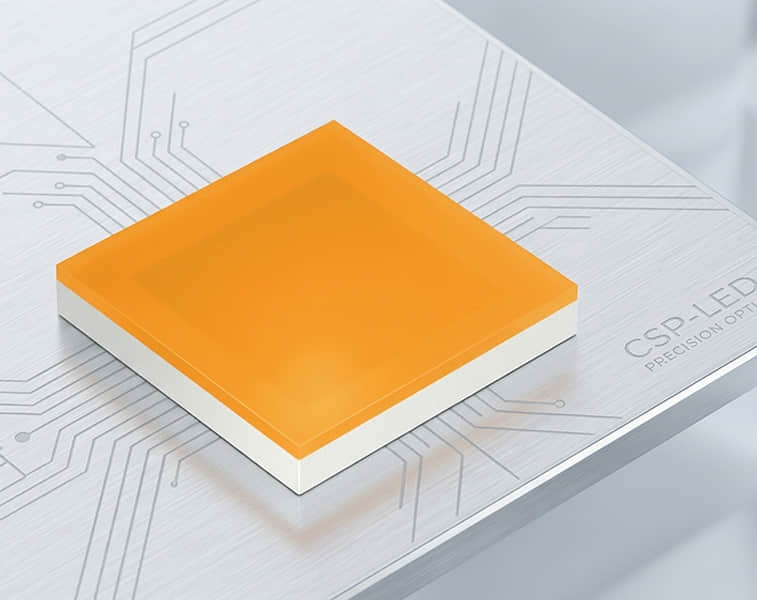
Briefly, the Chip Scale Package (CSP) represents the latest evolution in LED miniaturization. CSP eliminates the traditional wire-bonding and packaging substrates entirely, directly soldering the P and N metal contacts of a flip-chip onto the MCPCB. While their ultra-compact size offers extreme flexibility for certain specialized, ultra-slim luminaire designs, the core principles of secondary optical control remain the same. As the industry explores CSP integration, Asahi Optics continues to develop micro-optics capable of managing these increasingly concentrated light sources.
Conclusion: Unlocking the True Potential of LEDs with Precision Optics
The rapid evolution of LED packaging—from versatile mid-power arrays and rugged high-power ceramics to the high-CBCP brilliance of COB technology—has given luminaire manufacturers an unprecedented toolkit. However, understanding the physical and thermal characteristics of these chips is only the first half of the engineering equation.
An LED chip, no matter how advanced, is essentially just a raw engine generating photons. Without a steering mechanism, that energy is scattered, uncontrollable, and visually uncomfortable. Secondary optics are the steering wheel of your lighting system. Whether you are designing a seamless linear fixture with mid-power LEDs that requires our continuous PMMA extrusion lenses, engineering a brutalist high-bay with high-power chips that demands our asymmetrical PC arrays, or crafting a premium retail track light around a COB that relies, Asahi Optics is your definitive partner.
We bridge the gap between raw semiconductor power and flawless visual environments. Do not let standard, off-the-shelf plastics compromise the sophisticated engineering of your chosen LED platform. Contact Asahi Optics today to discover how our custom and standard secondary optical solutions can perfectly match your LED architecture, elevating your luminaire from simply functional to truly exceptional.