
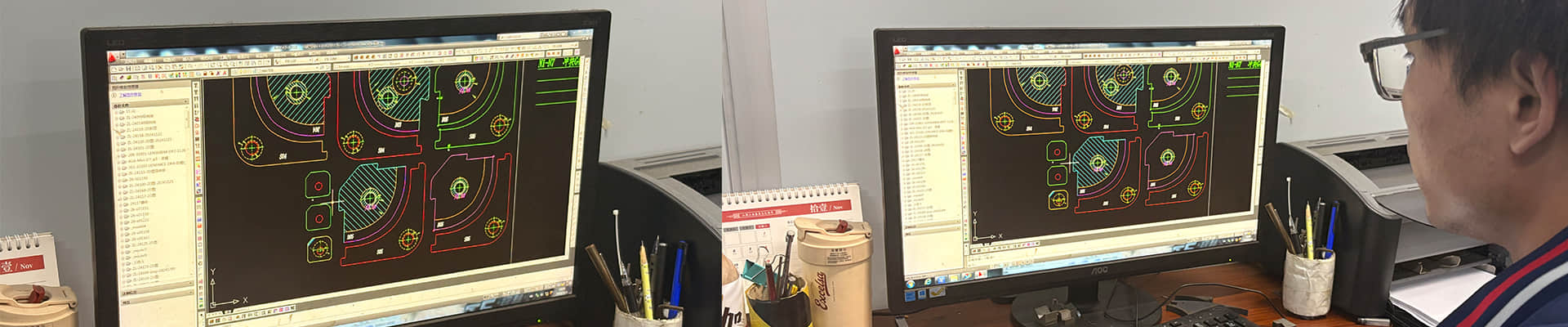
Wire EDM, fully known as "Computer Numerical Control Wire Electrical Discharge Machining," operates on a fundamentally different principle from CNC machining. Instead of relying on mechanical force to "cut" materials, it utilizes the instantaneous high temperatures generated by pulsed spark discharges between a charged metal wire (electrode) and a conductive workpiece (mold steel) to melt and vaporize localized metal, thereby achieving "erosive" cutting.
A dielectric fluid is maintained between the wire and the workpiece. When the distance between them is reduced to a critical value, the dielectric breaks down, forming a transient discharge channel.
Electrons and ions, accelerated by the electric field, strike the workpiece surface at high speed. Their kinetic energy is converted into thermal energy, generating extreme temperatures (over 10,000°C) that instantly melt and vaporize the metal.
Each pulse discharge creates a micro-crater on the workpiece surface. The molten material is rapidly flushed away from the machining area by high-pressure deionized water.
Through hundreds of thousands of continuous pulse discharges per second, combined with the precise movement of the workpiece table controlled by the CNC system, a continuous and precise cut is progressively formed.
Wire EDM offers distinct advantages compared to traditional CNC machining:
The electrode wire and workpiece remain physically separated without direct contact, eliminating mechanical cutting forces. This enables the processing of extremely fine and thin components without risk of deformation.
Any electrically conductive material - regardless of hardness (including hardened mold steel and tungsten carbide) - can be effectively processed. This capability enables precision machining after mold heat treatment, effectively avoiding distortions caused by thermal processes.
Through precise control of discharge energy and cutting paths, micron-level accuracy (±0.005mm) can be achieved, meeting the stringent requirements for optical molds.
Typical application scenarios of wire EDM in lens mold fabrication:
Precision inserts in the mold used to form lens edges, ensuring accurate lens dimensions.
Non-circular cooling channels on the mold that optimize cooling efficiency and improve production effectiveness.
Through-holes for ejection pins that remove molded lenses, ensuring smooth ejection.
Cleaning machining performed at right angles or narrow slots inaccessible to CNC, guaranteeing structural integrity of the mold.
A complete wire EDM workflow from preparation to post-processing.
The workpiece (mold insert or plate) typically undergoes CNC rough machining and heat treatment beforehand. A threading hole is pre-drilled into the workpiece - this essential process hole allows the electrode wire to pass through to initiate cutting. Specialized wire EDM programming software imports the CAD model to set cutting paths, offset values, and number of cutting passes.
The workpiece is precisely secured on the wire EDM machine table, with alignment verified using dial indicators or edge finders. The machine threads the electrode wire from the spool through the workpiece's threading hole. The CNC-controlled process begins cutting, typically divided into rough cutting and multiple finishing stages.
Upon completion, the electrode wire automatically returns to the start point or breaks. The workpiece is removed, with EDM byproducts and deionized water residue cleaned from the surface. Projectors or CMMs inspect dimensional accuracy of cut profiles, particularly verifying sharp corners and critical dimensions remain within tolerance.
A rigorous precision control process ensures wire EDM machining meets the highest standards.
Through precise control of discharge energy and cutting paths, machining accuracy achieves micron-level standards, satisfying stringent requirements for optical molds.
The electrode wire can be tilted at specific angles to process shapes with different upper and lower profiles, meeting the needs of specialized lens molds.
Multiple finishing passes progressively improve dimensional accuracy and surface finish, ensuring superior machining quality.
Asahi Optics welcomes your questions, inquires and feedback. Please use the form below or contact us at any of the addresses below. Our sales team will get back to you shortly.