
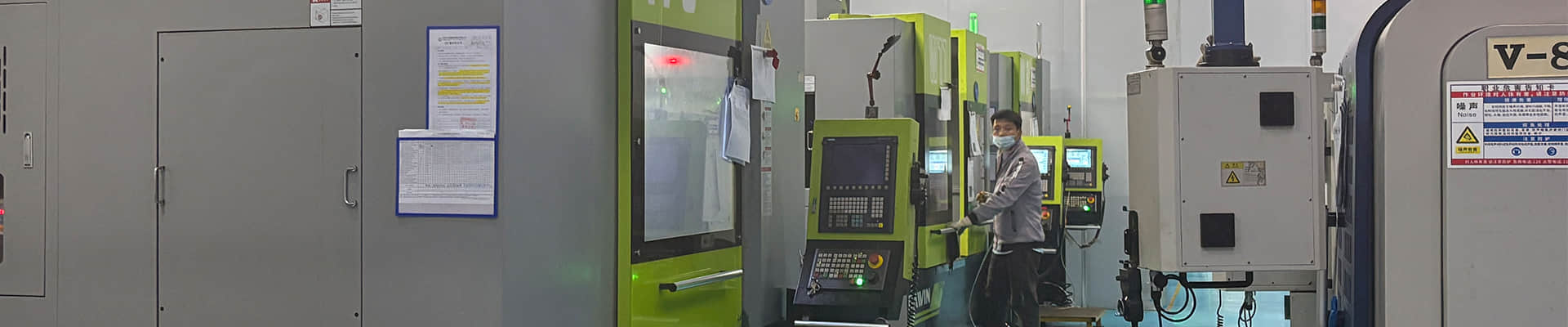
We operate advanced CNC equipment to ensure precision and efficiency in mold manufacturing.
Japanese Toshiba ultra-precision CNC machines with accuracy up to 0.002mm, ensuring precision machining of optical molds.
German Rodes, Chinese Apas, and Taiwanese Xinquan high-speed CNC machines with maximum spindle speeds up to 45,000 RPM.
14 standard CNC machining centers capable of meeting various mold component processing requirements, ensuring production capacity and efficiency.
A complete CNC machining workflow from CAD design to finish machining, ensuring mold precision and quality.
Based on the optical design data of the lens, designers use CAD software to complete the comprehensive structural design of the mold, including the cavity, core, runner system, gate, cooling channels, and ejection mechanism. Engineers then utilize CAM software to generate machining paths for the mold's cavity and core.
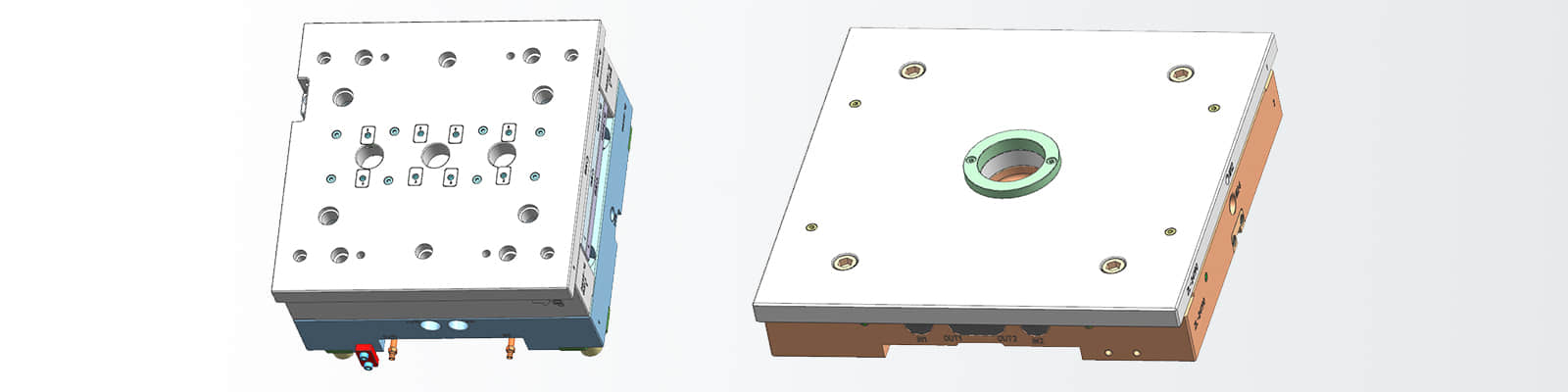
Pre-heat-treated mold steel blanks are precisely secured on the CNC machine worktable, ensuring firm clamping without deformation. Large-diameter tools are used with high feed rates and cutting depths to rapidly remove excess material, leaving an allowance of approximately 0.2-0.5mm.
Smaller-diameter tools are employed with denser toolpaths to remove uneven stock left from rough machining, creating a uniform "platform" for finish machining. This stage leaves an allowance of approximately 0.05-0.1mm, ensuring stable tool load during final precision machining.
Utilizing small ball-nose end mills (e.g., R0.5, R1.0) with minimal stepover and point spacing to precisely machine the entire optical surface. Strict control of cutting parameters, machining environment, and coolant prevents thermal deformation, ensuring smooth, tool-mark-free surfaces that meet final form and dimensional requirements.
A rigorous quality control process ensures CNC machining meets the highest standards.
High-precision CMM (Coordinate Measuring Machine) guarantees machining dimensional accuracy up to 0.002mm, fulfilling stringent requirements for optical molds.
Strict regulation of the machining environment temperature combined with efficient cooling systems prevents thermal deformation from affecting machining precision.
Strict adherence to ISO 9001 Quality Management System ensures every machining stage complies with the highest quality standards.
Asahi Optics welcomes your questions, inquires and feedback. Please use the form below or contact us at any of the addresses below. Our sales team will get back to you shortly.